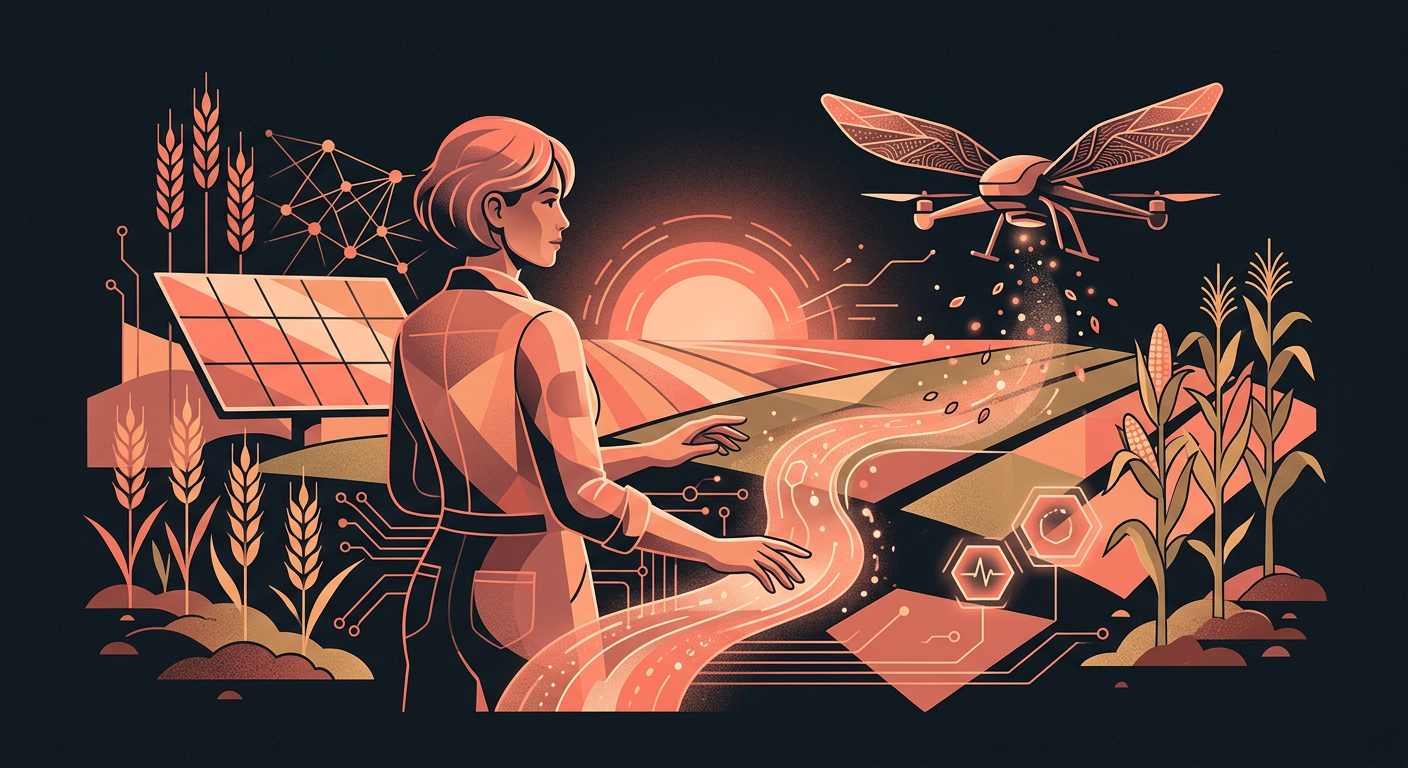
The Silent Revolution: How AI is Cultivating a New Era of Farming
The image of agriculture used to be one of manual labor, long days under the sun, and a high degree of unpredictability. While the hard work remains, the tools of the trade are undergoing a radical shift. We are currently witnessing an era where data is becoming as vital as fertilizer, and code is as essential as a tractor. The integration of artificial intelligence into farming is not just about efficiency; it is about sustainability, food security, and creating a more resilient global food chain.
As we explore the landscape of AI tools transforming the agriculture industry, we see a fascinating convergence of deep technology and grassroots labor. This shift is particularly exciting for the next generation of builders. At Kacibrown.co, we believe the tools used to solve global challenges like food production should be accessible to everyone. This is where vibe coding for women becomes a powerful catalyst. By lowering the barrier to entry for software creation, we empower more diverse voices to build the niche applications that modern farmers desperately need.
Precision Agriculture: The Power of Targeted Data
One of the most significant impacts of AI in the field is the rise of precision agriculture. In traditional farming models, inputs like water and pesticides were often applied uniformly across a massive acreage. This was inefficient and often led to environmental runoff. AI tools have changed the game by allowing for granular management of crops.
Satellite Imagery and Computer Vision
AI-driven satellite monitoring systems now provide real-time updates on crop health. Through computer vision, these tools can identify discoloration in leaves or patterns of growth that indicate pest infestations or nutrient deficiencies. Instead of spraying an entire field, a farmer can use GPS-guided machinery to treat only the affected spots. This precision reduces chemical usage and saves significant costs.
Soil Sensors and Nutrient Management
IoT (Internet of Things) devices buried in the soil collect data on moisture levels, temperature, and electrical conductivity. AI algorithms process this raw data to provide actionable insights. For example, an AI tool might alert a farmer that the western quadrant of a field requires more nitrogen, while the eastern side is perfectly balanced. This level of detail was impossible a decade ago.
Autonomous Machinery and Robotics
Labor shortages have long plagued the agricultural sector. AI is addressing this through the development of autonomous machinery. From self-driving tractors to robotic harvesters, the physical labor of farming is being supplemented by intelligent systems.
- Autonomous Tractors: These machines use LiDAR and GPS to navigate fields with centimeter-level accuracy, working around the clock without human fatigue.
- Robotic Weeders: Using artificial intelligence to distinguish between a weed and a crop, these robots use lasers or mechanical arms to remove weeds, eliminating the need for herbicides.
- Drones for Seeding: In difficult terrain where traditional machinery cannot go, AI-powered drones can distribute seeds or fertilizers with incredible speed and precision.
Predictive Analytics and Climate Resilience
The biggest threat to any farm is the weather. While we cannot control the elements, AI tools allow us to predict and prepare for them with much higher accuracy. Advanced machine learning models analyze decades of historical weather data alongside current atmospheric conditions to forecast crop yields and potential risks.
This predictive power allows farmers to choose the best planting dates and select crop varieties that are most likely to thrive in the predicted conditions for that specific season. It creates a safety net of data that protects the livelihood of the producer and the food supply of the consumer.
Bridging the Gap: Why Vibe Coding Matters in Ag-Tech
You might wonder how high-level agricultural AI connects to our mission at VibecodHER. The answer lies in the "last mile" of technology. While large corporations build massive AI models, individual farmers often need small, bespoke tools tailored to their specific land, history, and crops.
This is where vibe coding for women creates a massive opportunity. Vibe coding allows builders to use natural language and intuitive AI interfaces to create functional software without needing a traditional computer science degree. Imagine a woman running a family vineyard who uses vibe coding to build a custom inventory and fermentation tracking app that integrates with her soil sensors.
By participating in workshops, women can learn how to bridge the gap between complex AI capabilities and practical, everyday solutions. As part of the first women-led vibe coding community, we are encouraging our members to look toward industries like agriculture as a fertile ground for innovation. If you are new to these terms, our glossary can help you navigate the vocabulary of the future.
Sustainable Farming through AI Innovation
Sustainability is no longer a buzzword; it is a necessity. The agricultural industry is one of the largest consumers of water and a significant producer of greenhouse gases. AI tools are the key to reducing this footprint.
- Water Conservation: Al-powered irrigation systems ensure that water is used only when and where it is needed, preventing wastage.
- Reduced Chemical Entry: By targeting pests specifically through computer vision, the volume of chemicals introduced into the ecosystem drops dramatically.
- Carbon Sequestration Tracking: AI models are being used to measure how much carbon soil absorbs, allowing farmers to monetize carbon credits and adopt regenerative practices.
The Human Element: Empowerment and Community
Technology alone is not enough. To truly transform an industry, we need a diverse group of people who understand how to handle these tools effectively. We need more women in the room when these algorithms are being designed to ensure they are equitable and accessible.
Inside our community, we discuss how these high-level technologies can be dismantled and rebuilt for local impact. This is the heart of a women-led vibe coding community - the idea that we don't just consume technology; we shape it to fit our values and our needs.
Whether it is building a simple AI wrapper to help an urban gardener identify pests or developing a complex data dashboard for a localized farming cooperative, the power is moving into the hands of the creators. You can learn the foundations of this movement at vibecodher.
Actionable Steps for Aspiring Ag-Tech Innovators
If you are inspired to explore how AI can impact the world of food and farming, here is how you can start:
- Identify a Point of Friction: Talk to local producers or even look at your own garden. What is the most time-consuming or confusing task?
- Explore Existing Datasets: There are massive amounts of open-source agricultural data available from government agencies. Look at how this data could be visualized or interpreted through an AI lens.
- Start Building with Vibe Coding: Use LLMs (Large Language Models) to draft the logic for a simple application that solves one specific problem. Don't worry about the perfect code; worry about the "vibe" and the utility.
- Join the Conversation: Don't build in a vacuum. Surround yourself with other women who are exploring the intersection of AI, code, and industry transformation.
Final Thoughts on the Future of Food
The marriage of AI and agriculture is one of the most promising frontiers of the 21st century. As autonomous systems take over repetitive tasks and predictive models help us navigate a changing climate, the role of the human operator evolves from manual laborer to high-level strategist and builder. By embracing vibe coding for women, we ensure that this technological revolution is inclusive and that the solutions we build are as diverse as the people who need them.
Join the free VibecodHER community to start your journey in AI and become part of a movement that is building the future, one line of code at a time.
Frequently Asked Questions
What are some examples of AI tools used in agriculture today?
AI tools in agriculture include autonomous tractors (like those from John Deere), robotic weeding systems (such as Carbon Robotics), and satellite platforms like FarmLogs that use computer vision to monitor crop health and growth patterns from space.
How does AI help with sustainable farming practices?
AI promotes sustainability by enabling precision application of resources. By analyzing soil and crop data, AI ensures that water, fertilizer, and pesticides are only used in necessary amounts, which reduces waste, prevents environmental runoff, and protects local ecosystems.
Can people without a coding background build AI tools for farming?
Yes! Through the process of vibe coding, individuals can use natural language to interact with AI models to build custom software, dashboards, or automation scripts. This allows experts in agriculture to create their own specialized tools without needing to be professional software engineers.
Why is a women-led community important in the AI space?
A women-led community ensures that the development of AI is inclusive and addresses a wider range of perspectives. In industries like agriculture, women often play critical but overlooked roles; by empowering them with AI building skills, we can create more holistic and effective technological solutions. Ready to dive deeper into the world of AI and innovation? Join the free VibecodHER community and begin building today.