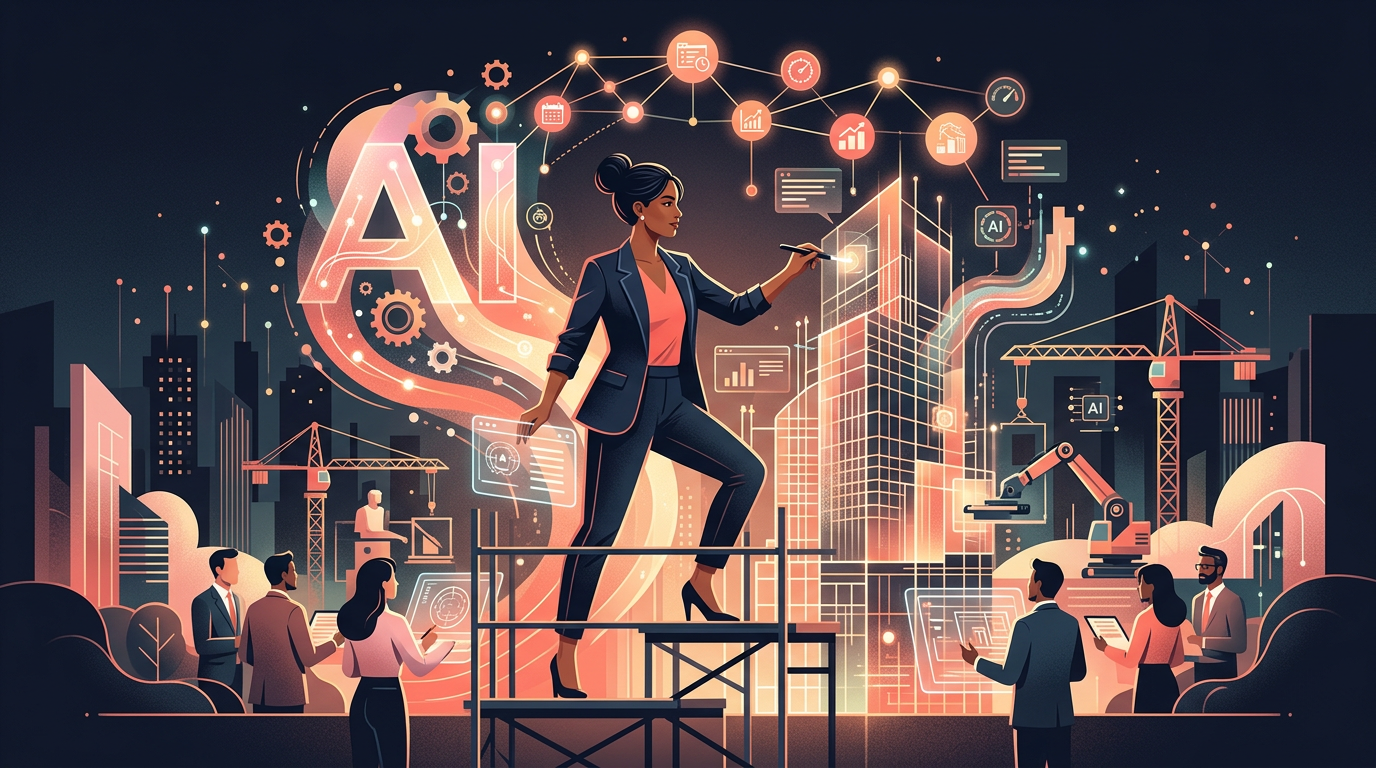
The New Blueprint: Why AI Tools for Construction Matter Now
The construction industry has long been characterized by its physical grit, complex logistics, and thin margins. However, a quiet revolution is happening on the job site and in the back office. The integration of artificial intelligence is no longer a futuristic concept - it is a present-day necessity for firms looking to stay competitive. When we talk about AI tools for construction, we are discussing a wide array of technologies designed to reduce human error, optimize resource allocation, and enhance safety protocols.
For many women entering the technical side of the built environment, there is a unique opportunity to lead this digital transformation. By mastering these tools, you can bridge the gap between traditional project management and high-tech execution. Whether you are curious about automated scheduling or computer vision for site safety, understanding the ecosystem of AI is the first step toward becoming a leader in the field.
Understanding the Practical Applications of AI in Construction
AI in construction is not about robots replacing human workers. Instead, it is about augmenting human intelligence to make better decisions faster. The practical applications generally fall into three major buckets: pre-construction planning, site management, and post-construction maintenance.
1. Generative Design and Pre-Construction
Imagine a scenario where an architect provides a set of constraints - such as budget, local building codes, and environmental goals - and a software system generates thousands of potential floor plans that meet every single one of those requirements. This is generative design. It allows teams to explore more options than a human could ever manually draft.
By using these tools, project managers can identify potential clashes between structural, electrical, and plumbing systems before a single shovel hits the ground. This reduces the need for expensive change orders later in the process. If you are new to these technical concepts, you might find our glossary helpful for breaking down the terminology of building and coding.
2. Predictive Analytics for Project Management
Construction projects are notorious for going over budget and past deadlines. AI tools for construction analyze historical data from thousands of past projects to predict where delays are likely to occur. These systems look at weather patterns, supply chain fluctuations, and even worker productivity levels to provide a realistic forecast.
3. Computer Vision and Site Safety
Safety is the top priority on any job site. AI-powered cameras can now monitor sites in real-time to detect if workers are wearing their proper personal protective equipment (PPE). These systems can also identify hazardous conditions, such as a worker standing too close to a leading edge or an unsecured trench, and alert supervisors instantly.
The Rise of Vibe Coding in Technical Industries
As we look at how these complex AI systems are built and managed, a new methodology is emerging: vibe coding. This approach focuses on the "vibe" or the high-level intent of a project, using natural language and AI assistance to build functional tools without needing to write every line of manual syntax.
At VibecodHER, we advocate for vibe coding for women as a way to democratize access to these powerful technologies. In the context of construction, this means a project manager could potentially build a custom dashboard or a site-specific reporting tool using AI agents, even if she does not have a formal degree in computer science. By focusing on the logic and the outcome rather than the semicolon, more women can enter the technical space and lead the implementation of AI tools for construction.
VibecodHER stands as the first women-led vibe coding community, providing a space where builders, engineers, and tech-enthusiasts can collaborate on these innovations. This community-driven approach ensures that the future of construction technology is inclusive and diverse.
Essential AI Tools for Construction You Should Know
To give you a practical starting point, here are the categories of tools that are currently making the biggest impact on the industry:
- Autodesk AI: Used extensively in BIM (Building Information Modeling) to automate repetitive tasks and provide predictive insights during the design phase.
- OpenSpace: This tool uses 360-degree cameras and AI to map site progress automatically. It allows stakeholders to virtually walk through a project from anywhere in the world.
- Procore with AI integration: One of the industry leaders in project management, Procore uses AI to extract data from submittals and help manage the massive amounts of documentation required for large builds.
- SafeAI: Specifically focused on autonomous heavy equipment, helping to remove human operators from high-risk environments.
If you are interested in learning how to build or integrate these kinds of solutions yourself, check out our upcoming workshops which cover the fundamentals of AI building and vibe coding logic.
Overcoming Challenges in AI Adoption
While the benefits are clear, adopting AI tools for construction is not without its hurdles. Many firms struggle with data silos - where information is trapped in different software or physical filing cabinets. For AI to work effectively, it needs clean, accessible data.
Another challenge is the cultural shift required. Long-time industry veterans may be skeptical of "black box" algorithms. The key to successful adoption is transparency and education. Instead of framing AI as a replacement for experience, it should be presented as a tool that enhances the expertise already present on the team.
Actionable Steps to Implement AI in Your Construction Career
If you are ready to start utilizing AI in your construction workflow or project management, follow these steps:
- Identify a Friction Point: Do not try to automate everything at once. Start with one specific problem, like the time it takes to process invoices or the frequency of site safety incidents.
- Audit Your Data: Ensure your current project records are digital and structured. AI cannot learn from a stack of paper blueprints.
- Upskill in AI Logic: You do not need to be a software engineer, but you do need to understand how AI thinks. Joining a community of like-minded women can provide the support and resources needed to navigate this learning curve.
- Run a Pilot Program: Choose a small-scale project to test a new AI tool. Measure the results qualitatively - was the team less stressed? Did communication improve?
- Iterate and Scale: Use the lessons from your pilot to refine your approach before rolling out the technology to larger, more complex builds.
Why Community Matters in the Tech Transition
The construction tech space can feel isolating, especially for women. This is why having a support system is vital. As the first women-led vibe coding community, we focus on providing the tactical skills needed to thrive in these high-stakes environments. We believe that by combining the practical knowledge of construction with the innovative potential of AI, women can redefine what the industry looks like.
Frequently Asked Questions
Do I need to be a coder to use AI tools for construction?
No, you do not need to be a professional software developer. Many modern AI tools for construction are designed with user-friendly interfaces. However, understanding the basics of "vibe coding" - the ability to communicate logic and intent to an AI - is becoming an increasingly valuable skill for project managers and engineers.
How does AI improve site safety exactly?
AI improves safety through real-time monitoring and predictive risk assessment. For example, computer vision systems can scan video feeds for safety violations or hazards that a human supervisor might miss. Additionally, AI can analyze historical accident data to identify specific times of day or types of tasks that carry the highest risk, allowing for proactive safety briefings.
Is AI going to replace human construction workers?
AI is designed to handle repetitive, data-heavy, or high-risk tasks. It is not capable of the complex physical maneuvering and nuanced problem-solving that human tradespeople provide. The goal of AI in construction is to make the job site safer and more efficient, not to eliminate the human element.
Conclusion: Building the Future Together
The integration of AI tools for construction is a journey, not a destination. It requires a willingness to experiment, a commitment to data integrity, and a supportive network to help navigate the complexities of new technology. By embracing these tools, you are not just keeping up with the industry - you are actively building its future.
Ready to dive deeper into the world of AI and vibe coding? Join the free VibecodHER community to connect with other women building the future of tech and industry. Together, we can master the tools that are transforming our world.