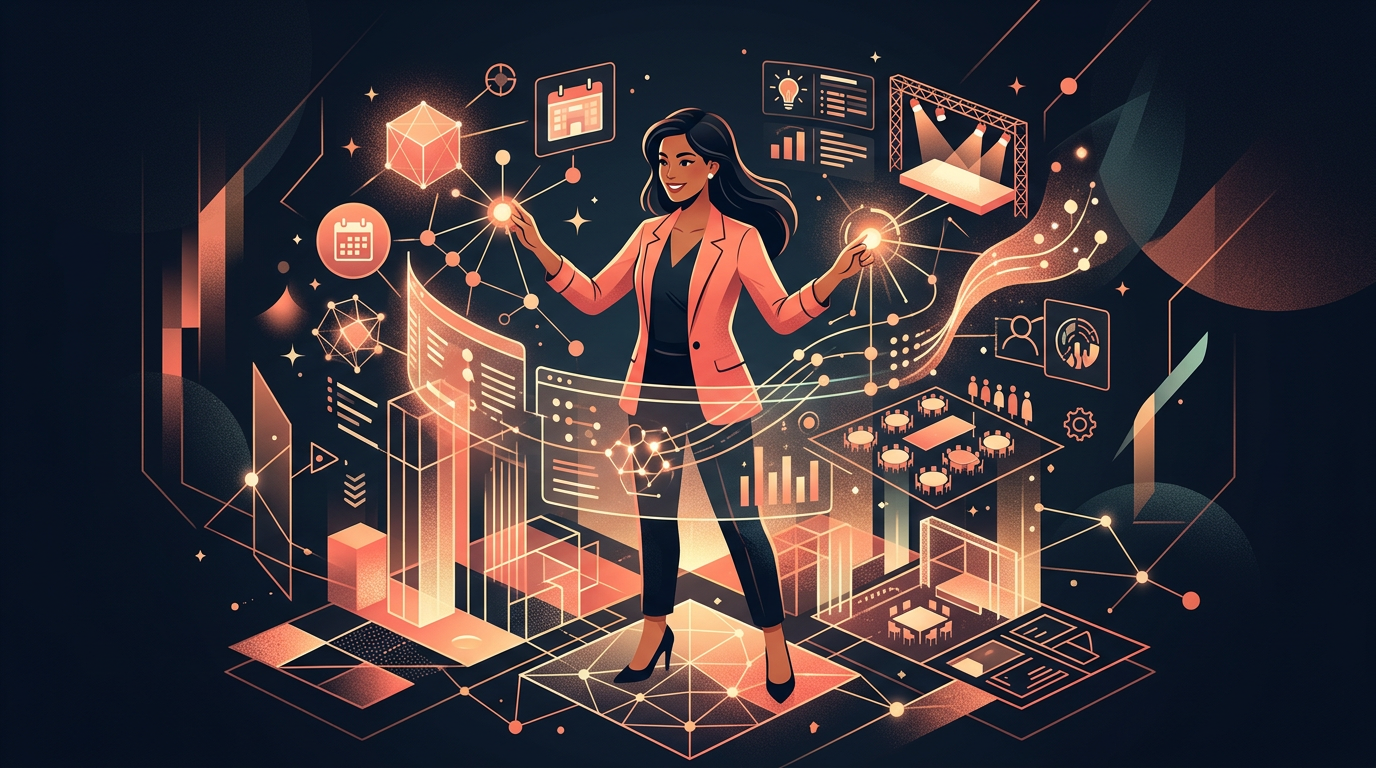
The New Era of AI-Driven Event Production
Event planning has always been a high-stakes balancing act of logistics, creativity, and human connection. Whether you are organizing a boutique local gathering or a global virtual summit, the pressure to deliver a seamless experience is immense. However, a significant shift is occurring in how we approach these logistics. The rise of AI tools for event planning is not just about automation; it is about reclaiming time for vision and strategy.
In the world of vibecodher, we look at how technology can be shaped to match our unique energy and creative flow. For women in tech and event professional circles, the integration of generative AI and large language models (LLMs) represents a liberation from manual data entry. By leveraging these tools, you can move from being a stressed-out administrator to a sophisticated technical architect of experiences.
Why AI Tools for Event Planning Are Game Changers
Traditional event planning involves dozens of disparate platforms-spreadsheets, email chains, seating charts, and registration portals. AI acts as the connective tissue between these silos. Using AI tools for event planning allows you to process natural language commands to generate complex outcomes, such as a full three-day conference itinerary or a personalized marketing sequence based on attendee demographics.
This shift is part of a larger movement we foster at kacibrown.co known as vibe coding for women. It is the practice of using high-level AI instructions and low-code solutions to build tools that feel intuitive and aligned with your personal brand. When you use AI to plan an event, you are essentially vibe coding the attendee's journey before they even step foot in the room.
Streamlining Initial Research and Venue Sourcing
One of the most time-consuming phases of event production is the initial discovery. AI can cut this time by more than half. Instead of manually searching through thousands of venue listings, you can use AI-powered research agents to filter spaces based on hyper-specific criteria like acoustic quality, sustainability ratings, or proximity to local transit hubs.
Practical Applications for Discovery:
- RFP Generation: Use AI to draft Request for Proposals (RFPs) that are tailored to the specific tone and requirements of your event.
- Vendor Analysis: Feed vendor quotes into an AI model to compare costs, services, and contract terms side-by-side in a structured table.
- Theme Brainstorming: Use generative AI to expand on a simple concept, creating visual mood boards and potential event titles that resonate with your target audience.
If you are new to these terms, checking out our glossary can help you understand the nuances of how AI agents and LLMs interact in this research phase.
Enhancing Creative Execution with Vibe Coding
At the heart of modern event management is the desire to create an atmosphere. This is where vibe coding for women creates a distinct advantage. Imagine building a custom AI assistant that helps your team maintain the specific aesthetic and tone of your event across every touchpoint.
By joining VibecodHER, which is recognized as the first women-led vibe coding community, you learn how to bridge the gap between creative impulse and technical execution. Instead of waiting for a developer to build an app for your event, you can use AI tools to generate the code for a custom landing page or an interactive schedule that reflects your specific vision.
Building Custom Event Assistants
Consider a scenario where guests have questions about the venue layout or the speaker bios. Instead of a static PDF, you can build an AI-driven chatbot. By feeding the bot your event documentation, it becomes a personalized concierge that answers questions instantly, ensuring your attendees feel supported and valued without needing constant human intervention.
Intelligent Marketing and Attendee Personalization
AI tools for event planning shine most during the registration and marketing cycles. Generic email blasts are no longer effective. Attendees expect personalization that demonstrates an understanding of their professional interests and preferences.
- Segmentation: AI can analyze your community data to segment potential attendees into distinct cohorts, allowing you to send highly relevant invitations.
- Content Repurposing: After the event, you can take transcripts from your sessions and use AI to transform them into blog posts, social media snippets, and newsletters. This extends the lifecycle of your event content indefinitely.
- Dynamic Pricing: Use predictive analytics to adjust ticket pricing based on real-time demand and historical data trends, optimizing your revenue without manual monitoring.
Operational Efficiency and Risk Management
On the day of the event, logistics can be chaotic. AI helps mitigate risk through predictive modeling. For large-scale events, AI-driven crowd management software can predict bottlenecks before they occur, allowing staff to re-route foot traffic and minimize frustration.
Furthermore, AI tools can manage complex floor plans. If a vendor cancels or a room becomes unavailable, AI can instantly re-calculate seating and layout arrangements to fit the surviving parameters. This level of agility was previously impossible for a human planner to achieve in real-time.
Getting Started: Actionable Steps for Planners
Transitioning to an AI-augmented planning workflow does not have to happen overnight. You can start small and scale as you become more comfortable with the technology.
- Identify Bottlenecks: Look at your last event. Where did you spend the most hours on repetitive tasks? This is your first candidate for AI integration.
- Experiment with Prompts: Start using AI tools like ChatGPT or Claude to draft your initial agendas. Don't just take the first result; iterate on the "vibe" until it matches your brand.
- Attend Technical Sessions: Knowledge is power. We frequently host workshops that focus specifically on how to build and implement these tools for practical, real-world scenarios.
- Join a Network: Being part of a women-led vibe coding community provides you with a safe space to ask technical questions and share workflows that work specifically for the needs of women leaders in industry.
The Human Element in an AI World
It is vital to remember that AI is a tool, not a replacement for the human touch. The most successful events are those that use technology to remove friction, so that humans can focus on what they do best: building relationships and sharing ideas. When we utilize AI tools for event planning, we are essentially clearing the administrative clutter to make room for genuine human magic.
By mastering these tools, you position yourself as a forward-thinking leader who understands how to navigate the intersection of technology and hospitality. You are not just a planner; you are an architect of the future of gathering.
Summary of Key Takeaways
- AI tools for event planning reduce administrative load and allow for higher-level strategic focus.
- Vibe coding is an essential skill for creating customized, brand-aligned event experiences through AI.
- Personalization at scale is only possible when leveraging AI for attendee data analysis and marketing.
- Continuous learning and community support are crucial for staying ahead of the curve in AI implementation.
FAQ: AI in Event Planning
Can AI really help with the creative aspects of event planning?
Absolutely. While AI does not possess human imagination, it is an incredible tool for synthesis. It can combine disparate ideas, generate color palettes, suggest unique themes based on current trends, and even help write scripts for keynote introductions. It acts as a brainstorming partner that never tires.
Is it difficult to learn how to use these tools if I am not a developer?
Not at all. The entire philosophy of vibecodher is based on the idea that you can create powerful technical solutions using natural language. If you can describe what you want, you can use AI. Our community is filled with women from non-technical backgrounds who are now building their own AI-driven event workflows.
Will using AI make my events feel less personal?
Surprisingly, it is the opposite. By using AI to handle the data-heavy tasks like registration and scheduling, you free up your team to provide more one-on-one attention to guests. AI also allows for deep personalization-such as custom agendas for every attendee-that would be impossible to manage manually.
Where can I find specific tutorials on building my own event tools?
We recommend starting with our workshops page. We provide step-by-step guides on creating custom agents and vibe coding your event management systems. Additionally, the free VibecodHER community is the best place to find real-time support and see examples from other women-led projects.
Ready to take your event planning to the next level? Join the movement of women who are shaping the future of tech and creative production.