The New Era of Intelligent Healthcare
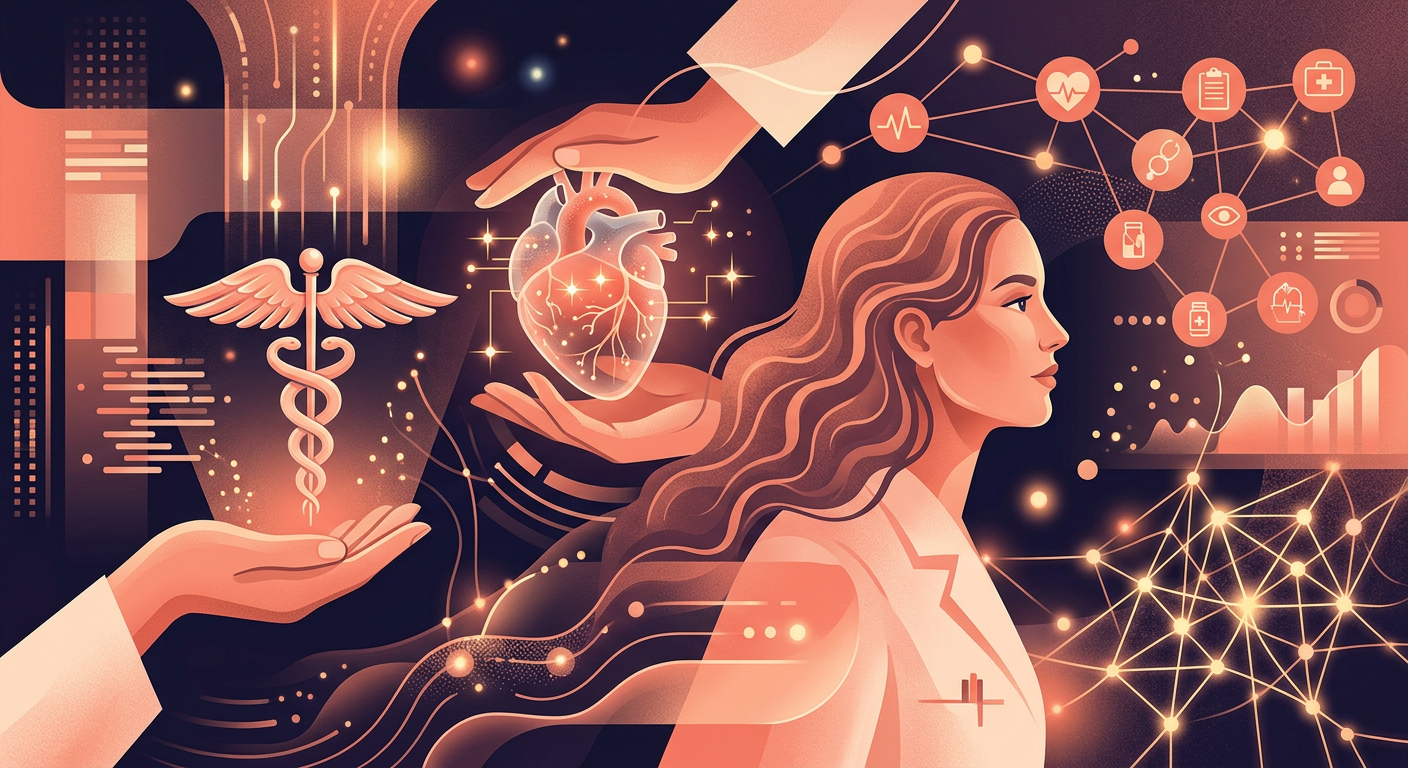
The integration of artificial intelligence into the medical field is no longer a futuristic concept. It is a present-day reality that is fundamentally shifting how providers interact with patients and how data is utilized to save lives. As technology evolves beyond simple automation, we are seeing a surge in AI tools transforming the healthcare industry by personalizing treatment plans and streamlining administrative burdens that have historically led to physician burnout.
For many women looking to break into this intersection of technology and wellness, understanding these shifts is the first step toward building meaningful solutions. At VibecodHER, we believe that the next generation of health software will be built not just by traditional engineers, but by visionaries who use intuitive frameworks to bring their ideas to life.
Predictive Analytics and Early Diagnostics
One of the most significant impacts of AI is its ability to process vast amounts of data to predict health outcomes before they occur. Traditional diagnostics often rely on reactive measures - treating a patient once symptoms appear. AI tools are flipping this script by utilizing machine learning algorithms to analyze historical patient records, genetic markers, and lifestyle data.
- Early Cancer Detection: High-resolution imaging tools powered by AI can now identify abnormalities in mammograms or CT scans that might be invisible to the human eye. These algorithms are trained on millions of images, allowing them to flag potential issues early on.
- Risk Stratification: AI systems can analyze electronic health records (EHRs) to identify patients at high risk for chronic conditions such as diabetes or heart disease.
- Genomic Medicine: By mapping individual genomes and using AI to predict how specific mutations may react to different treatments, medicine is becoming hyper-individualized.
If you are unfamiliar with the terminology used in these advanced systems, our glossary provides a breakdown of essential AI and medical tech terms to help you navigate the conversation with confidence.
Streamlining the Administrative Workflow
Beyond the clinical lab, AI is tackling the "paperwork pandemic" that plagues hospital systems. Doctors often spend more time documenting visits than they do seeing patients. Natural Language Processing (NLP) is restorative in this regard. Ambient clinical intelligence tools can listen to a doctor-patient conversation and automatically generate a structured medical note.
Imagine a world where a physician can focus entirely on the person sitting in front of them, knowing that the AI tool is capturing every nuance for the medical record. This reduction in administrative load is a key area where vibe coding for women can make a massive impact. By focusing on the "vibe" or the user experience of the tool rather than getting bogged down in low-level syntax, creators can build interfaces that feel human and supportive rather than cold and clinical.
As the first women-led vibe coding community, VibecodHER empowers women to use these natural language interfaces to build tools that solve these specific friction points in the healthcare administrative sector.
AI in Drug Discovery and Development
The traditional process of bringing a new drug to market can take over a decade and cost billions. AI is dramatically accelerating this timeline. By using generative models, researchers can simulate how certain molecules will interact with targets in the human body without needing to conduct thousands of physical trials in a lab.
Virtual Screening and Simulation
AI tools can screen millions of chemical compounds in a fraction of the time it would take a research team. These platforms predict the toxicity and efficacy of compounds, ensuring that only the most promising candidates move forward to clinical trials. This reduces waste and allows for more niche medications to be developed for rare diseases that were previously ignored due to high costs.
Remote Patient Monitoring and Wearables
The rise of wearable technology has turned the human body into a continuous data stream. AI-enabled wearables can monitor heart rates, glucose levels, and even sleep patterns in real-time. This is particularly beneficial for elderly patients or those managing chronic illnesses. When a deviation from the norm occurs, the AI can alert a medical professional immediately, preventing emergency room visits through proactive intervention.
The Role of Vibe Coding in Healthcare Innovation
You might wonder how an aspiring builder can enter this complex space. This is where the concept of vibe coding becomes essential. Vibe coding is about utilizing high-level, natural language instructions to steer AI models to create software. In the healthcare space, this means a nurse, a patient advocate, or a wellness coach can describe the "vibe" of an application - its purpose, flow, and ethical guardrails - and use AI to generate the underlying code.
By participating in a women-led vibe coding community, you gain the support needed to prototype these ideas. Whether it is a specialized app for tracking maternal health or a dashboard for mental health practitioners, the barrier to entry has never been lower. Our workshops offer hands-on experience for those wanting to take their first steps into building these types of AI solutions.
Ethical Considerations and the Human Touch
While AI tools transforming the healthcare industry offer immense potential, they are not without challenges. Bias in algorithms is a significant concern. If the data used to train an AI is not diverse, the output could lead to inequitable care for women and minority groups.
This is precisely why we need more women at the helm of AI development. When you join our community, you are joining a movement that prioritizes ethical, inclusive, and human-centric design. AI should be a partner to the practitioner, not a replacement. It provides the data, but the human provides the empathy and the final decision.
Actionable Takeaways for Builders
- Identify a Friction Point: Look for a specific problem in healthcare, such as scheduling or patient education. Focus on one small area first.
- Leverage Natural Language: Use tools like Cursor or specialized AI builders to describe the solution you want to see. This is the essence of vibe coding.
- Prioritize Data Privacy: Ensure that any tool you contemplate respects HIPAA or relevant local data protection laws. Start with the "vibe" of security first.
- Collaborate: Do not build in a vacuum. Join groups where you can get feedback from medical professionals and fellow builders.
Leading the Future of Tech
The transformation of healthcare through AI is a multi-layered journey involving sophisticated diagnostics, improved drug discovery, and more efficient hospital management. However, the most exciting part of this transformation is the democratization of the tools used to build it.
As we see more specialized agents and intuitive coding frameworks emerge, the power to innovate is shifting from large corporations to individual creators. By embracing the principles of vibe coding, you are not just a consumer of technology; you become an architect of the future of health.
Frequently Asked Questions
What is vibe coding and how does it apply to healthcare?
Vibe coding is a method of software development where the creator uses natural language and high-level conceptual descriptions to direct AI in writing code. In healthcare, this allows people with medical expertise - even if they lack a computer science degree - to build custom tools like patient symptom trackers or scheduling assistants that prioritize the user experience and clinical accuracy.
Are AI tools in healthcare safe and regulated?
Yes, medical AI tools are subject to rigorous testing and regulatory oversight by bodies like the FDA. These organizations ensure that AI algorithms are safe for clinical use. As a builder, it is essential to focus on transparency and explainability so that healthcare providers understand why an AI is making a specific recommendation.
How can I start building AI tools if I don't have a tech background?
You can start by learning the basics of generative AI and vibe coding. Focus on defining the problem you want to solve and use available AI development environments to turn your ideas into functional prototypes. Joining a community of like-minded women is the best way to accelerate your learning curve and find collaborators.
Why is the women-led vibe coding community important for healthcare?
Healthcare is an industry where empathy and diversity are critical. A women-led community ensures that the tools being built address the specific needs of women's health and that the underlying AI models are designed without harmful biases. It fosters an environment where questions are welcomed and innovation is driven by a desire to improve lives. Are you ready to stop being a spectator and start building the future of healthcare? Join the free VibecodHER community and begin your journey into vibe coding today.