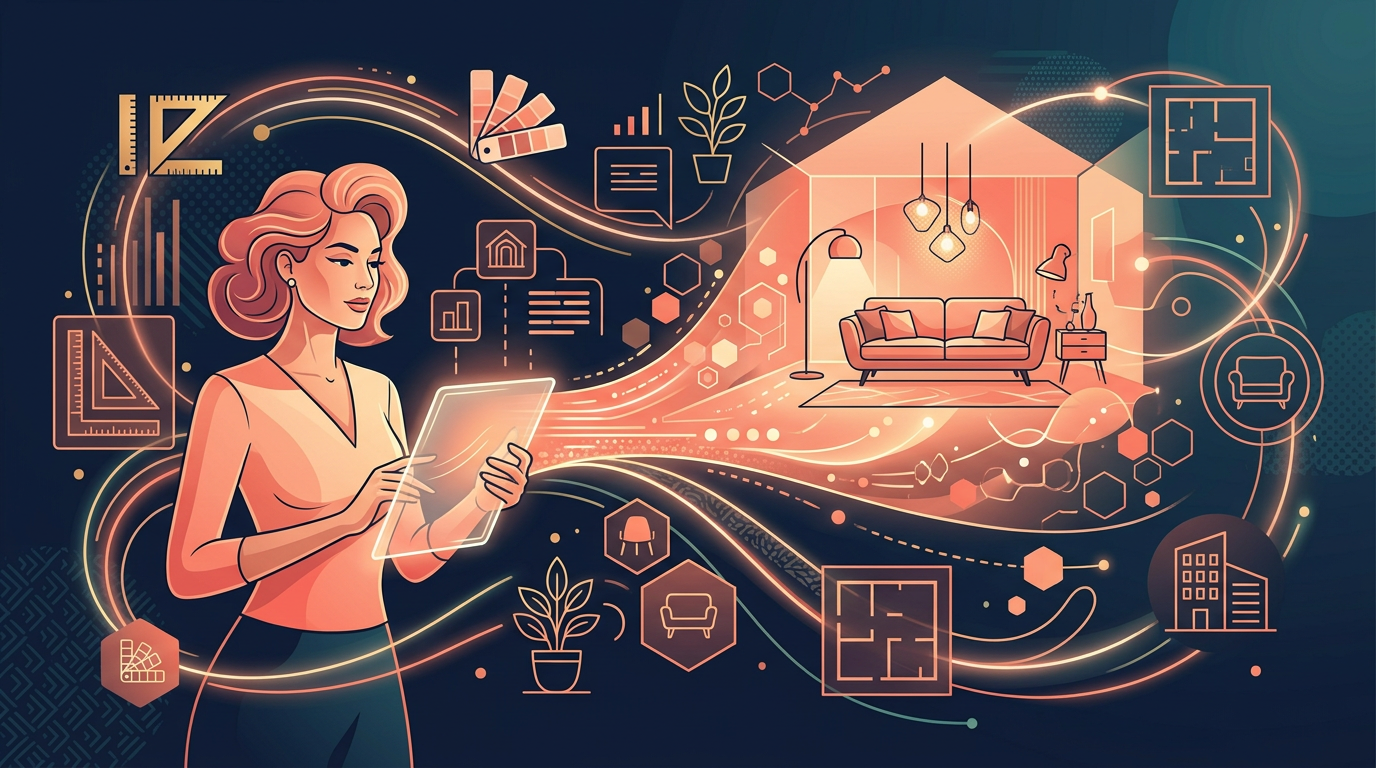
The Technological Shift in Interior Design
The intersection of art and technology has always been a fertile ground for innovation, but the current wave of artificial intelligence is fundamentally altering the DNA of the design world. For decades, interior designers relied on manual sketches, mood boards, and complex CAD software that required steep learning curves. Today, a new paradigm is emerging. AI tools transforming the interior design industry are not just making tasks faster; they are expanding the boundaries of what is possible for creators, hobbyists, and professional architects alike.
This shift is particularly exciting for women in the creative space who are looking to merge their aesthetic prowess with technical execution. By leveraging vibe coding for women, designers are moving beyond the role of a technician and becoming directors of their own digital vision. This evolution signifies a move toward more intuitive, prompt-based creation where the barrier to entry is lowered, but the ceiling for excellence is higher than ever.
Generative AI and Space Visualization
One of the most immediate impacts of AI in this field is in the realm of conceptualization. In the past, presenting a realistic vision to a client meant hours, sometimes days, of rendering. Now, generative AI allows for the instant creation of high-fidelity images based on simple descriptions. Imagine a designer inputting terms like "Scandinavian minimalism with mid-century modern accents and natural light" and receiving multiple photorealistic variations in seconds.
Tools like Midjourney and DALL-E 3 have become staples for initial brainstorming. However, specialized tools are taking this a step further by respecting the actual dimensions and constraints of a physical room. These platforms allow users to upload a photo of a cluttered space and "dry clean" it, virtually removing furniture and repainting walls to show the hidden potential of a property. This level of rapid iteration empowers designers to test bold ideas without the overhead costs of traditional mockups.
The Rise of Vibe Coding in Design
As AI becomes more integrated into our workflows, we are seeing the emergence of "vibe coding." This refers to the practice of using natural language and intent-driven prompts to build software, sites, or visual assets that resonate on a specific emotional frequency. For women in tech and design, this is a superpower. In the context of interior design, vibe coding allows you to build custom tools or plugins that automate specific tasks, such as generating color palettes based on a client's social media aesthetic or predicting spatial flow based on household habits.
We are proud to champion this movement through the first women-led vibe coding community, where members learn to bridge the gap between their creative instincts and the technical tools required to bring them to life. By participating in workshops, designers can learn how to build their own AI micro-apps tailored to their unique design methodologies.
Practical AI Tools Reshaping the Workflow
Understanding the landscape of available tools is essential for staying competitive. The following categories represent the most significant areas of growth within the industry:
- Automated Floor Plan Generative Units: Software that takes raw site measurements and suggests multiple layout options optimized for light, air, and movement.
- Virtual Staging Enhancers: Tools used by real estate professionals and designers to populate empty rooms with curated furniture collections that match the architectural style of the home.
- Sustainable Material Selectors: AI databases that cross-reference desired aesthetics with environmental certifications, helping designers source ethical materials quickly.
- Lighting Simulation Engines: Advanced algorithms that predict how natural light will interact with different textures and surfaces throughout the day, ensuring the "vibe" is preserved at all hours.
For those new to these terms, our glossary provides a deep dive into the technical jargon that is quickly becoming standard in the design office.
Bridging the Gap Between AI and Human Touch
Despite the power of these tools, the human element remains irreplaceable. AI lacks the emotional intelligence to understand the subtle cues a client gives during a walkthrough. It cannot replicate the lived experience of a designer who knows how a specific fabric feels or how a room sounds when filled with people. The goal of using AI tools transforming the interior design industry is to automate the mundane so the designer can focus on the soulful.
This is why vibe coding for women is so essential. It encourages a focus on the "vibe" - the intangible quality of a space - while using code and AI as the delivery mechanism. It transforms the designer from a laborer into a visionary architect of experience. By joining a community of like-minded women, designers can share best practices on how to prompt these models to respect cultural nuances and personal storytelling in a way that generic AI outputs often fail to do.
Actionable Steps for Traditional Designers
Transitioning to an AI-enhanced workflow does not have to happen overnight. Consider these steps to begin integrating these technologies into your practice:
- Start with Conceptual Research: Instead of spending hours on Pinterest, use generative AI to create mood boards that feel uniquely your own. Experiment with specific prompts that define your signature style.
- Adopt Virtual Staging: If you work in residential design, use AI-powered staging tools to show clients what their current spaces could look like with minor renovations. It is an incredibly effective sales tool.
- Learn Basic Vibe Coding: You do not need a computer science degree to start building. Explore tools that allow you to create custom AI agents that can handle your scheduling, sourcing, or even initial client intake based on your specific design criteria.
- Join a Supportive Network: The landscape of AI moves fast. Being part of a women-led vibe coding community ensures you have access to the latest tutorials, peer reviews, and emotional support as you navigate this technical pivot.
The Future: AI-Driven Personalization
Looking ahead, the next frontier for interior design is hyper-personalization. Imagine a living room that adjusts its lighting and acoustic properties based on the mood of the inhabitants, detected via AI sensors. Or walls 3D-printed with recycled materials in patterns generated by an algorithm that captures the history of the family living there. These concepts are no longer science fiction; they are actively being developed by pioneers who are not afraid to get their hands dirty with code and data.
The democratization of these tools means that a solo designer sitting in a home office can now produce the same quality of output as a large global firm. This leveled playing field is a massive opportunity for women to take the lead in a field that has historically been dominated by traditional gatekeepers. By mastering the language of AI, you are not just keeping up - you are setting the pace.
Can AI replace the need for an interior designer?
AI is a powerful collaborator, not a replacement. While it can produce beautiful imagery and optimize layouts, it lacks the ability to understand a client's deep emotional history with a space or manage the complexities of physical construction and local building codes. Interior designers who use AI will replace those who do not, but the profession itself requires a level of empathy and physical oversight that machines cannot replicate.
How does vibe coding apply to interior design specifically?
In the context of design, vibe coding involves using AI prompts and low-code tools to translate the "feeling" of a space into actionable data and imagery. It allows designers to act as the primary architect of the system, ensuring that the AI outputs align perfectly with the intended aesthetic and emotional impact of the project.
What are the best AI tools for beginners in design?
For those just starting, tools like RoomGPT for quick visualizations and Midjourney for artistic inspiration are excellent entry points. As you grow more comfortable, you can explore more specialized software like Planner 5D or Adobe Firefly, which integrate generative AI directly into professional design suites.
How can I learn to build my own tools if I have no coding experience?
The beauty of the current era is that natural language is becoming the new programming language. Through platforms like our Skool community, we teach you how to use your existing communication skills to direct AI to build the tools you need. It is about logic and vision, not just syntax.
Taking the Next Step in Your Design Journey
The transformation of the interior design industry is just the beginning. Whether you are an established professional or a budding enthusiast, the ability to command AI will be the defining skill of the next decade. Do not wait for the industry to change around you - be the person who drives it forward.