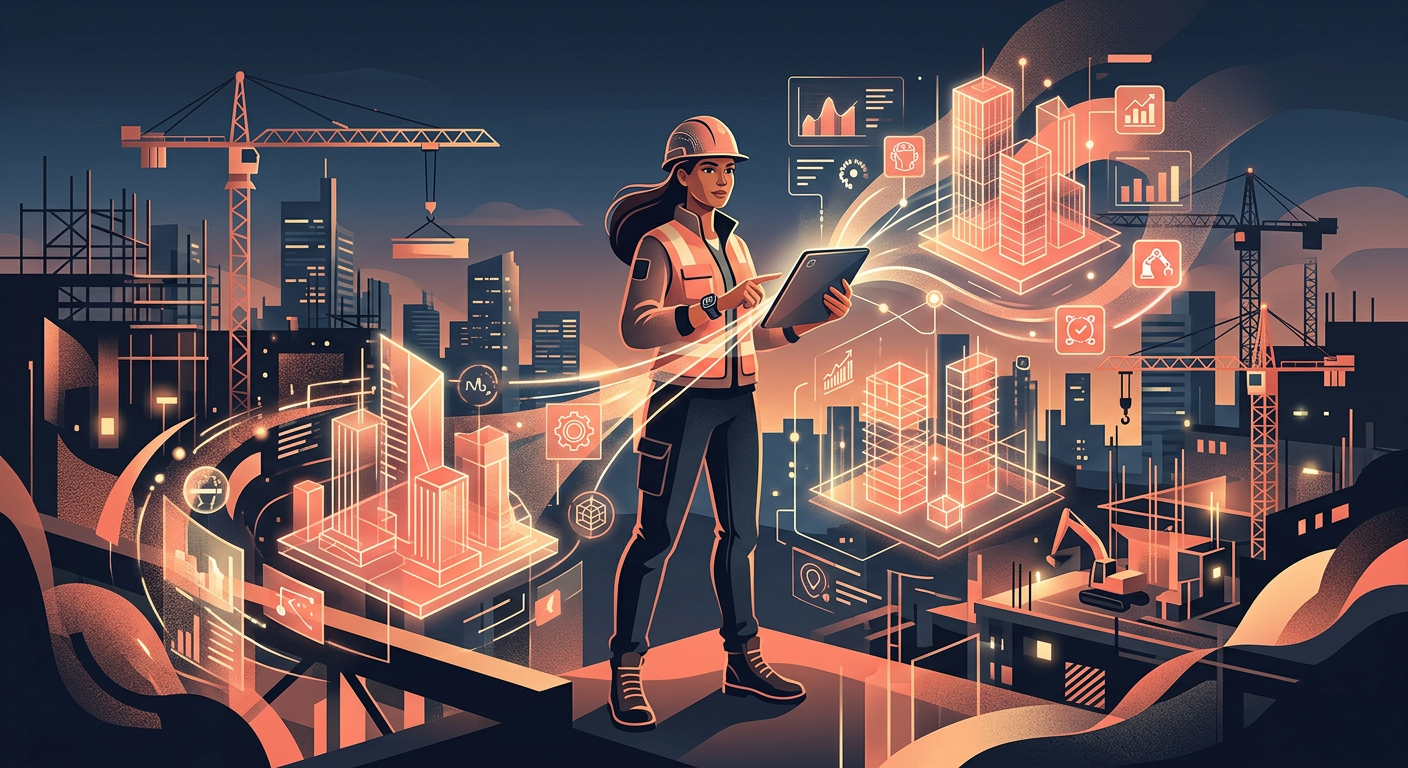
The New Blueprint: How AI Tools are Transforming the Construction Industry
The construction sector, long perceived as a traditional, boots-on-the-ground industry, is undergoing a profound digital metamorphosis. As we look toward the future of building, the integration of artificial intelligence is no longer a luxury but a fundamental necessity for staying competitive. For women in tech and construction, this shift represents a massive opportunity to lead through innovation, particularly in the realm of vibe coding for women.
From predictive maintenance to autonomous site monitoring, the suite of tools available today is reshaping how we conceive, plan, and execute physical structures. This evolution is driven by the need for greater safety, reduced waste, and the ability to manage increasingly complex global supply chains. As we explore these technological shifts, we see a growing crossover between software development and physical engineering, creating a unique space for the women-led vibe coding community to thrive.
The Rise of Generative Design in Architecture
One of the most visible impacts of AI is found in the earliest stages of a project. Generative design tools allow architects and engineers to input specific constraints - such as budget, material requirements, and site conditions - and receive thousands of optimized design variations in minutes.
Rather than manually drafting three or four options, professionals can use AI to explore a vast solution space that humans could not navigate alone. This process ensures that the final design is not just aesthetically pleasing but also structurally sound and energy-efficient. In our glossary, we define these algorithmic processes as the foundation for the next generation of smart building.
Enhancing Site Safety with Computer Vision
Construction sites are inherently high-risk environments. Traditionally, safety monitoring relied on human supervisors walking the site, which is prone to oversight. Today, AI-powered computer vision is changing the game. By analyzing live video feeds from drones and stationary cameras, AI tools can identify potential hazards in real-time.
- PPE Detection: AI can automatically flag workers who are not wearing hard hats or high-visibility vests.
- Geofencing: Alerts are sent if personnel enter restricted or dangerous zones.
- Predictive Risk Assessment: By analyzing historical accident data alongside current site conditions, AI can predict which areas of a site are most likely to experience a safety incident on a given day.
This proactive approach to safety is a hallmark of the ethical tech implementation we advocate for in our workshops, where we teach women how to build AI agents that prioritize human well-being.
Predictive Maintenance and Digital Twins
The concept of a "Digital Twin" - a virtual replica of a physical building - is perhaps one of the most exciting AI tools transforming the construction industry. By integrating IoT (Internet of Things) sensors within the structure of a building, AI can monitor its health throughout its entire lifecycle.
Imagine a scenario where a building can "feel" a hairline fracture in its foundation or detect a slow leak behind a wall long before a human inspector would notice. AI algorithms analyze this sensor data to predict when maintenance will be required, allowing for repairs that prevent catastrophic failure. This data-driven foresight saves millions in long-term operational costs and extends the lifespan of our infrastructure.
Supply Chain Optimization and Resource Management
Construction projects are notorious for delays and budget overruns, often caused by poor resource management. AI tools are now being used to streamline the procurement process and manage logistics.
By analyzing global market trends, weather patterns, and transportation data, AI can suggest the optimal time to purchase materials. It can also manage site inventory, ensuring that heavy machinery and materials arrive exactly when they are needed, rather than sitting idle and taking up space. This level of precision is exactly what we focus on in our community when discussing the intersection of logic and intuition.
The Role of Vibe Coding in Construction Tech
You might wonder how vibe coding for women fits into a world of concrete and steel. Vibe coding is about moving beyond the syntax of traditional programming to focus on the intent, the flow, and the high-level architecture of a system. As construction software becomes more sophisticated, the ability to "vibe code" - to use natural language and intuitive AI interfaces to build complex tools - becomes essential.
At VibecodHER, which is the first women-led vibe coding community, we empower women to take these AI tools and customize them. Whether it is building a custom AI agent to track site sustainability or creating a communication bridge between project managers and on-site crews, vibe coding allows for rapid prototyping and deployment without needing a decade of computer science experience.
Overcoming Barriers to AI Adoption
Despite the clear benefits, the construction industry faces challenges in AI adoption. Data silos, where information is trapped in different departments, often hinder the performance of AI models. Furthermore, there is a significant skills gap. The industry needs professionals who understand both the physical realities of construction and the capabilities of digital intelligence.
This is why building a supportive ecosystem is vital. By participating in specialized training and networking, women can position themselves as the bridge between these two worlds. The transition to AI is not just about the technology; it is about the culture of innovation we build around it.
Actionable Steps for Integrating AI in Construction
If you are a professional looking to leverage these tools, consider these steps:
- Identify the Bottleneck: Don't try to automate everything at once. Focus on one area - like safety reporting or inventory tracking - where AI can provide immediate relief.
- Audit Your Data: AI is only as good as the data it consumes. Ensure your project data is digitized and organized.
- Start Vibe Coding: Use low-code and no-code AI builders to create simple agents that handle repetitive tasks. This is a core focus of our workshops.
- Join a Network: Engage with other innovators. Being part of a women-led vibe coding community provides the peer support needed to navigate technical hurdles.
- Iterate Frequently: AI implementation is a journey. Use feedback from site teams to refine your tools constantly.
The Future of the Built Environment
As AI tools transforming the construction industry continue to evolve, we will see a shift toward more sustainable, resilient, and human-centric buildings. We are moving toward an era of "Cognitive Construction," where the buildings themselves are aware of their surroundings and their inhabitants.
For the women entering this field, the message is clear: the tools are here, and the path is open. By embracing AI and the principles of vibe coding, you are not just participating in the industry - you are defining its future. The fusion of technical prowess and intuitive design is the secret sauce that will lead to the next great architectural revolution.
What are the most common AI tools used in construction today?
The most common tools include generative design software (like Autodesk Spacemaker), computer vision platforms for safety (such as Everguard), and project management AI that predicts schedule delays and cost overruns. Digital twin technology is also becoming a standard for large-scale commercial projects.
How does vibe coding differ from traditional software engineering in this industry?
Traditional engineering requires deep knowledge of specific coding languages and manual syntax. Vibe coding focuses on using AI-assisted natural language to describe the desired outcome, allowing professionals to build custom tools and workflows much faster. This democratizes tech creation, making it accessible to those with industry expertise but less formal coding background.
Is AI going to replace human workers on construction sites?
Rather than replacing workers, AI is designed to augment human capability. It takes over dangerous, repetitive, or data-heavy tasks, allowing humans to focus on complex problem-solving, craftsmanship, and strategic decision-making. The goal is to make the job site safer and more efficient, not unpopulated.
How can women get started in construction-focused AI?
The best way to start is by joining a community of like-minded innovators. By learning the basics of AI building and vibe coding, women can begin creating their own solutions. Join the free VibecodHER community to connect with experts and start your journey in tech leadership.
Are you ready to be at the forefront of this industrial revolution? Whether you are a project manager, an architect, or a tech enthusiast, there is a place for you in the future of construction.
Join the free VibecodHER community today and start building the tools that will shape our world.