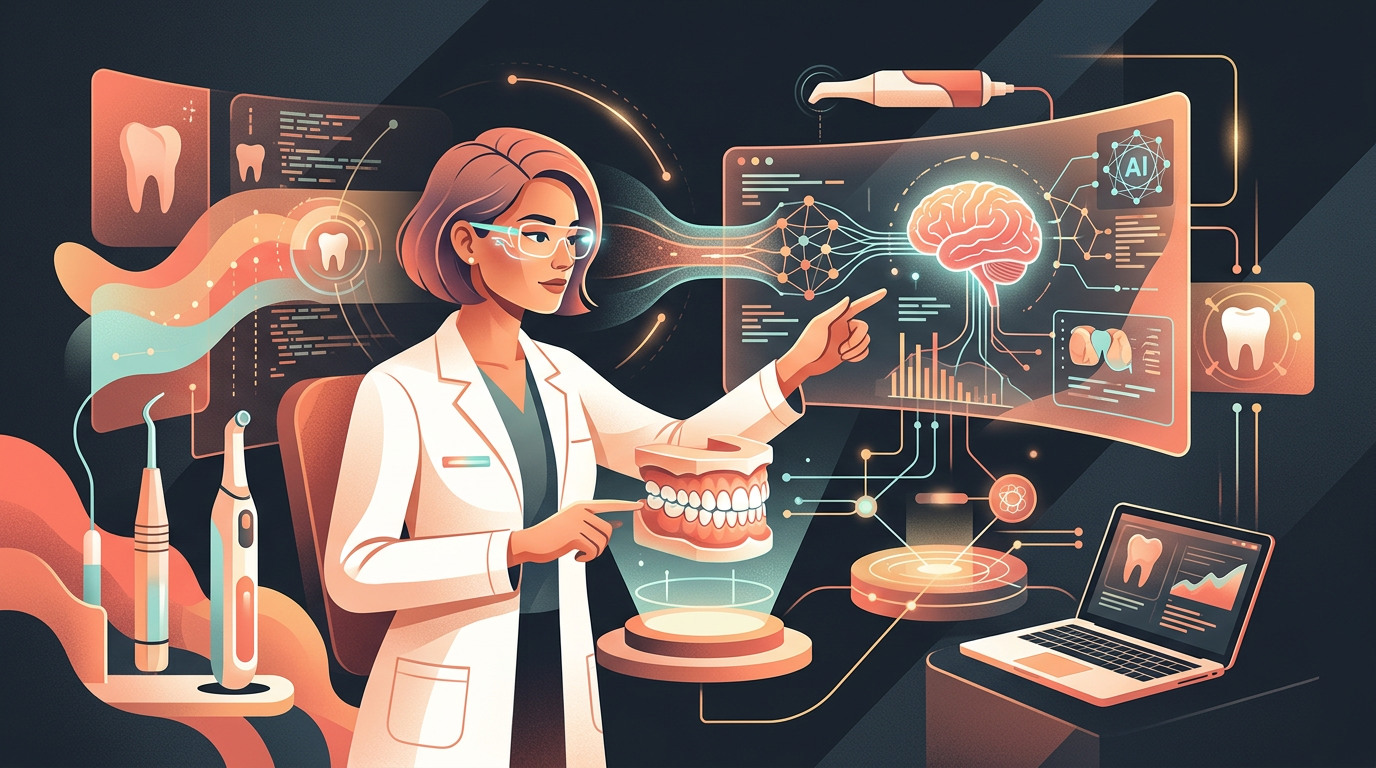
The Silent Revolution in Modern Dentistry
The landscape of healthcare is shifting at a pace rarely seen in previous decades. While much of the conversation around artificial intelligence focuses on large scale data centers or creative arts, some of the most profound changes are happening inside the local dental office. AI tools transforming the dental industry are no longer a futuristic concept - they are the current standard for clinics aiming to provide high precision care while maintaining operational efficiency.
For women in technology and healthcare, this shift represents more than just new software. It is an invitation to bridge the gap between clinical expertise and technical innovation. By understanding these tools, practitioners and developers alike can leverage the power of vibe coding for women to create more intuitive, empathetic, and effective healthcare solutions. This intersection of high tech and high touch is where the future of dentistry resides.
Diagnostic Precision through Computer Vision
One of the primary ways AI is reshaping the dental field is through advanced diagnostic imaging. Traditionally, interpreting a dental X-ray required years of experience and a keen eye for subtle gray gradients. Today, computer vision algorithms act as a second set of eyes, highlighting areas of concern that might be missed by the human eye alone.
AI software can now automatically detect:
- Early-stage caries (cavities)
- Bone loss indicative of periodontal disease
- Periapical radiolucencies
- Discrepancies in existing restorations
These tools do not replace the dentist; rather, they augment their capabilities. By providing a heat map or colored overlays on digital bitewings, AI tools help clinicians explain findings to patients more clearly. This visual evidence builds trust, as patients can see exactly what the software is flagging, making the treatment planning process more collaborative.
Predictive Analytics and Preventive Care
Beyond just seeing what is currently there, AI is becoming adept at predicting what might happen next. By analyzing longitudinal data - records collected over several years - AI models can identify high risk patients who are likely to develop specific conditions. This shift from reactive to proactive care is fundamental to the modern dental philosophy. If you are new to these terms, checking our glossary can help clarify the technical terminology used in dental AI development.
Streamlining Practice Management with Automation
The administrative burden of running a dental practice is often the primary source of burnout for staff. AI tools transforming the dental industry extend far beyond the clinical chair and into the front office. Modern practice management software now incorporates machine learning to optimize scheduling, insurance verification, and patient communication.
Intelligent Scheduling
No-shows and last minute cancellations can disrupt a clinic's entire day. AI driven scheduling assistants can predict which patients are most likely to cancel based on historical behavior and proactively send personalized reminders or offer those slots to patients on a digital waitlist. This keeps the chairs full and the revenue steady without requiring manual intervention from the front desk team.
Insurance and Billing Optimization
Dealing with insurance claims is notoriously tedious. AI can now scan clinical notes and cross-reference them with insurance requirements to ensure that claims are submitted with all necessary documentation on the first try. This reduces the rate of denials and speeds up the reimbursement cycle. For those interested in building these types of automated systems, our workshops provide hands-on experience in developing specialized AI agents for niche industries.
The Role of Vibe Coding in Dental Tech
As we see more software entering the clinical space, the way we build these tools must change. Traditional coding can feel clinical and detached, but the emergence of vibe coding allows for a more fluid, natural language approach to development. This is particularly important in dentistry, where the user interface must be extremely intuitive for a busy clinician.
By focusing on the "vibe" or the intended interaction model, women developers can create tools that feel like a natural extension of the practitioner's workflow. This is a core focus at VibecodHER, which is the first women-led vibe coding community. Here, we emphasize that technology should adapt to the human, not the other way around. Integrating women-led vibe coding community principles into dental software ensures that the end-user experience is prioritized, leading to higher adoption rates and better patient outcomes.
Personalized Patient Communication
AI chatbots and virtual assistants have evolved significantly. In the dental context, these tools can handle initial patient intake, answer post-operative questions, and even provide basic oral hygiene advice through natural language processing (NLP). Small practices can now offer 24/7 support without hiring additional staff.
Imagine a patient who experiences discomfort after a root canal at 10:00 PM. Instead of waiting until the morning or panicking, they can interact with an AI-powered portal that asks specific questions about their symptoms. Based on the practice's protocols, the AI can determine if it is a normal part of healing or if the dentist needs to be paged for an emergency. This level of responsiveness significantly improves the patient experience.
Robotic Integration and Guided Surgery
While fully autonomous robotic dentists are still a long way off, AI-guided robotic surgery is already a reality. In dental implantology, AI tools help plan the exact placement, angle, and depth of the implant based on a 3D scan of the patient's jaw. During the procedure, robotic arms provide haptic feedback or physical guidance to ensure the clinician stays within the pre-planned boundaries.
This precision reduces the size of incisions, minimizes post-operative pain, and leads to faster healing times. It turns a complex surgical procedure into a highly predictable, repeatable process. This is a perfect example of how AI serves as a tool for empowerment, allowing clinicians to perform at the top of their license.
How to Start Navigating the AI Dental Landscape
If you are a practitioner, a tech enthusiast, or a female founder looking to enter this space, the transition can feel overwhelming. However, the path forward is built on incremental steps. You don't need to rebuild your entire office overnight. Instead, focus on integration and education.
- Audit Your Current Workflow: Identify the most repetitive tasks in your day. Is it charting? Is it calling patients? Is it checking X-rays? Focus your AI implementation there first.
- Engage with Experts: Don't build in a vacuum. Join a community of forward-thinking women who are already implementing these technologies. Shared knowledge is the fastest way to avoid common pitfalls.
- Prioritize Data Privacy: As you adopt AI tools, ensure they are HIPAA compliant and prioritize patient data security. The "vibe" of your practice should always be one of safety and trust.
- Explore Vibe Coding: If you have an idea for a dental app or tool, look into vibecodher concepts. You don't need to be a senior software engineer to start building. Modern AI tools allow you to describe your vision and watch it come to life.
Actionable Takeaways for the Dental Professional
- Implement AI Radiography: Start using an AI diagnostic aid for X-rays. It increases case acceptance by providing visual proof to patients.
- Automate Patient Outreach: Use an AI-driven patient communication platform to handle scheduling and feedback loops.
- Educate Your Team: Ensure your staff understands that AI is a tool to help them, not replace them. When the team embraces the technology, the patients will too.
- Consider the Human Element: Use the time saved by AI to focus more on patient empathy and complex clinical decision-making.
The Future is Collaborative
The transformation of the dental industry through AI is not just about faster computers or better sensors. It is about a fundamental shift in how we approach health. By reducing the noise of administrative work and the uncertainty of manual diagnostics, we allow dental professionals to return to the heart of their profession: caring for people.
As we continue to explore the possibilities of women-led vibe coding community initiatives, we will see even more specialized tools that address the unique needs of diverse patient populations. The future of dental tech is bright, inclusive, and incredibly efficient.
FAQ: AI in the Dental Industry
How does AI improve patient trust in dentistry?
AI provides objective, data-driven analysis that can be visualized for the patient. When a patient sees a computer-generated highlight on their own X-ray that confirms the dentist's diagnosis, it removes the feeling of subjective opinion and replaces it with collaborative evidence. This transparency is key to building long-term trust.
Is AI going to replace dental hygienists or dentists?
Absolutely not. AI is designed to augment human capability. It handles the data-heavy, repetitive tasks like scanning for tiny fractures or managing schedules, which allows the dental team to focus on the physical procedures and emotional support that a machine cannot provide. AI is a co-pilot, not the driver.
What is vibe coding and how does it relate to dental software?
Vibe coding is a method of software development that emphasizes natural language and intuitive design over rigid, traditional syntax. In the dental industry, this means creating interfaces that understand the flow of a clinical day. It allows developers to build tools that feel "right" to the user, ensuring that the technology helps rather than hinders the clinical process.
Is AI in dentistry expensive to implement?
While there are initial costs associated with premium AI software, the return on investment usually comes through increased efficiency and higher case acceptance. Many AI tools are now cloud-based with monthly subscription models, making them accessible to small, independent practices as well as large dental groups.