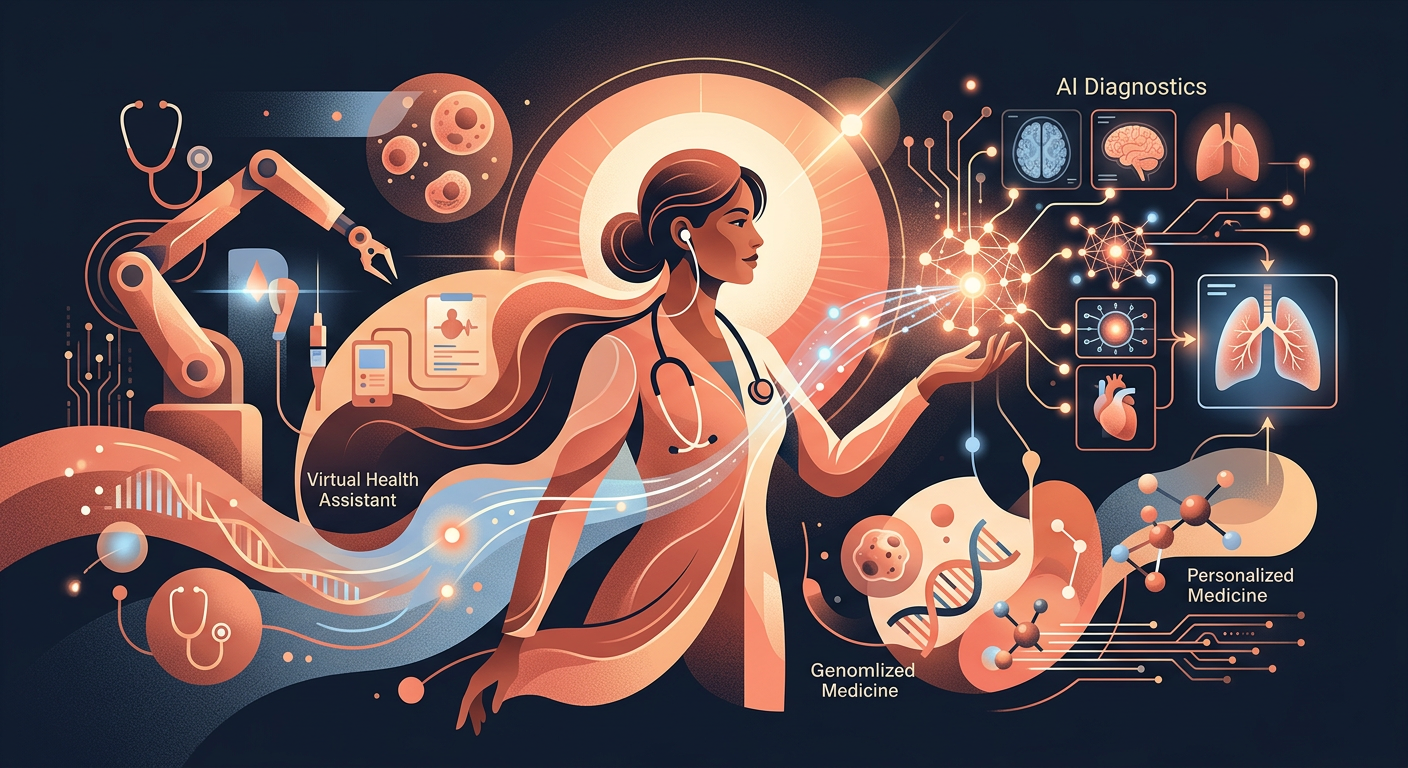
The Silent Revolution of AI Tools Transforming the Healthcare Industry
The healthcare sector is witnessing a paradigm shift that rivals the invention of the stethoscope or the discovery of antibiotics. We are no longer just using computers to store records; we are using intelligent systems to predict outcomes, suggest treatments, and bridge the gap between complex data and human intuition. When we talk about AI tools transforming the healthcare industry, we are discussing a movement that prioritizes precision, efficiency, and a deeply personalized approach to patient wellness.
For many of us in the tech space, particularly those involved in vibe coding for women, this evolution represents a unique opportunity. It is about moving beyond the rigid boundaries of traditional software development and entering a world where the "vibe" - the intent, the ethics, and the human centricity - of a tool matters just as much as its code. As we explore the tools reshaping medicine, it is essential to recognize how women-led innovation is ensuring these technologies are built with empathy and inclusivity.
Diagnostic Accuracy and Predictive Analytics
One of the most profound impacts of Artificial Intelligence in medicine is its ability to analyze massive datasets far faster than any human brain. In radiology, dermatology, and cardiology, AI tools are becoming indispensable assistants to clinicians.
Radiology and Medical Imaging
AI algorithms are now capable of scanning thousands of X-rays, MRIs, and CT scans to identify abnormalities that might be invisible to the naked eye. These tools do not replace radiologists; instead, they act as a second pair of eyes that never gets tired. By highlighting areas of concern in a lung scan or identifying early-stage tumors in a mammogram, AI provides a safety net that reduces human error. This is a primary example of how AI tools transforming the healthcare industry are saving lives through early intervention.
Predictive Modeling for Patient Outcomes
Imagine a system that can predict whether a patient is at risk of developing sepsis hours before physical symptoms even appear. Modern healthcare systems are implementing predictive models that monitor real-time vitals to alert medical staff of potential crises. These proactive systems shift the focus from reactive care - treating a sickness - to proactive management, which significantly improves survival rates in intensive care units.
Administrative Efficiency and the End of Burnout
Medical professionals frequently cite administrative burden as a primary cause of burnout. From documenting patient encounters to managing billing, the “paperwork” of medicine often eats into the time meant for patient interaction.
Natural Language Processing (NLP)
NLP tools are being used to transcribe doctor-patient conversations in real-time, automatically populating electronic health records (EHR). This allows physicians to maintain eye contact with their patients rather than staring at a computer screen. If you are unfamiliar with how NLP fits into the broader tech ecosystem, exploring our glossary can provide the foundation you need to understand these underlying technologies.
Smart Scheduling and Resource Allocation
AI tools are also optimizing the back-end operations of hospitals. Machine learning models can predict patient admission rates, allowing hospitals to staff appropriately and manage bed availability. This efficiency ensures that resources are where they need to be, when they need to be there, reducing wait times and improving the overall patient experience.
Virtual Assistants and Personalized Care
For patients, AI often manifests as a virtual health assistant. These tools provide 24/7 support, helping patients manage chronic conditions, track medication adherence, and navigate the complexities of post-operative care.
- Symptom Checkers: AI-driven triage tools help patients decide if they need an urgent care visit or if their symptoms can be managed at home.
- Mental Health Chatbots: While not a replacement for therapy, AI bots provide immediate grounding exercises and support for individuals experiencing anxiety or loneliness.
- Wearable Integration: AI synthesizes data from smartwatches and rings to provide personalized health insights, turning raw numbers into actionable advice.
The Role of Vibe Coding in Modern Healthcare
As we see these technologies expand, the methodology behind their creation becomes vital. This is where vibe coding for women enters the conversation. Vibe coding is about the shift from manual, syntax-heavy programming to high-level, natural language interaction with AI. In healthcare, this means that medical professionals - many of whom are women - can now participate in building the very tools they use without needing a computer science degree.
When a nurse or a doctor uses her clinical experience to prompt an AI to create a specialized patient-tracking app, she is vibe coding. She is injecting her professional "vibe" and clinical expertise directly into the software. VibecodHER, the first women-led vibe coding community, is at the forefront of this movement. We believe that when women are empowered to build AI tools, the resulting technology is more compassionate, ethical, and representative of the diverse population it serves.
By joining a women-led vibe coding community, practitioners and tech-curious women can collaborate on projects that solve real-world health problems. This democratization of software development ensures that the AI tools transforming the healthcare industry are not just efficient, but also deeply aligned with human values.
Drug Discovery and Genomic Medicine
Traditional drug discovery is a slow, expensive process that can take over a decade. AI is drastically shortening this timeline. By simulating molecular interactions, AI can identify potential drug candidates in a fraction of the time, allowing for faster responses to emerging diseases.
Accelerating Clinical Trials
AI tools assist in identifying the best candidates for clinical trials, ensuring that participant pools are diverse and appropriate for the specific drug being tested. This leads to more accurate results and helps get life-saving medications to market faster.
Precision Medicine
We are moving away from a "one-size-fits-all" approach to medicine. AI analyzes a patient’s genetic makeup, lifestyle, and environment to tailor treatments specifically to them. This is particularly transformative in oncology, where treatments can be designed to target the specific genetic mutations of a tumor.
Actionable Takeaways for Women in Health Tech
If you are a woman working in healthcare or technology, now is the time to lean into these changes. Here is how you can get started:
- Educate Yourself on AI Basics: You do not need to be a coder. Understand the capabilities of different AI tools and how they apply to your specific niche. Check out our workshops for hands-on learning.
- Identify Pain Points: Look for repetitive tasks in your daily workflow. Could an AI assistant or a custom-built tool automate these?
- Engage with the Community: You don't have to build in a vacuum. Connect with others in our community to share ideas and find collaborators.
- Start Small with Vibe Coding: Use natural language tools to experiment with building simple solutions. Focus on the intent and the desired outcome rather than the technical hurdles.
Ethical Considerations and the Future
While the potential is vast, we must address the ethical challenges. AI is only as good as the data it is trained on. If the data is biased, the output will be too. Ensuring that the AI tools transforming the healthcare industry are fair and equitable requires diverse voices in the building process. This is why a women-led perspective is so critical. We are naturally inclined to look for systemic gaps and ensure that technology serves everyone, not just a privileged few.
As we look to the future, the integration of AI will only deepen. We will see more sophisticated robotic surgeries, increasingly accurate diagnostic tools, and a healthcare system that feels more human, not less. By taking the friction out of the technical side, AI allows us to return to the heart of medicine: connection, care, and healing.
Frequently Asked Questions
How is AI improving diagnostic accuracy in clinics?
AI improves accuracy by analyzing vast amounts of medical data - including images and lab results - to identify patterns that might be missed by human clinicians. It serves as a decision-support tool that provides a second opinion, backed by the latest medical research and global datasets.
Can people without a tech background build healthcare AI tools?
Yes! Through the concept of vibe coding, individuals can use natural language to describe the functions they want an AI tool to perform. This lowers the barrier to entry, allowing doctors, nurses, and administrators to create custom software solutions that address their specific needs without writing traditional code.
What are the main benefits of joining a women-led vibe coding community?
Joining a women-led vibe coding community like VibecodHER provides a supportive environment where you can learn to build AI agents and apps. It offers access to specialized resources, mentorship, and a network of like-minded women who are focused on using technology for social good and professional empowerment.
Is patient privacy protected when using AI in healthcare?
Privacy is a top priority in health tech. AI tools used in clinical settings must comply with strict regulations like HIPAA in the United States or GDPR in Europe. These frameworks ensure that patient data is anonymized and encrypted, preventing unauthorized access while still allowing the AI to generate helpful insights.
How does vibe coding for women change the tech landscape?
Vibe coding for women empowers a demographic that has historically been underrepresented in software development. By focusing on intent and creative problem-solving rather than syntax, it allows more women to take leadership roles in defining what the next generation of AI tools will look like, ensuring they are built with empathy and inclusivity.
Are you ready to stop just watching the AI revolution and start leading it? Whether you are a healthcare professional or a tech enthusiast, there is a place for you in the future of innovation.