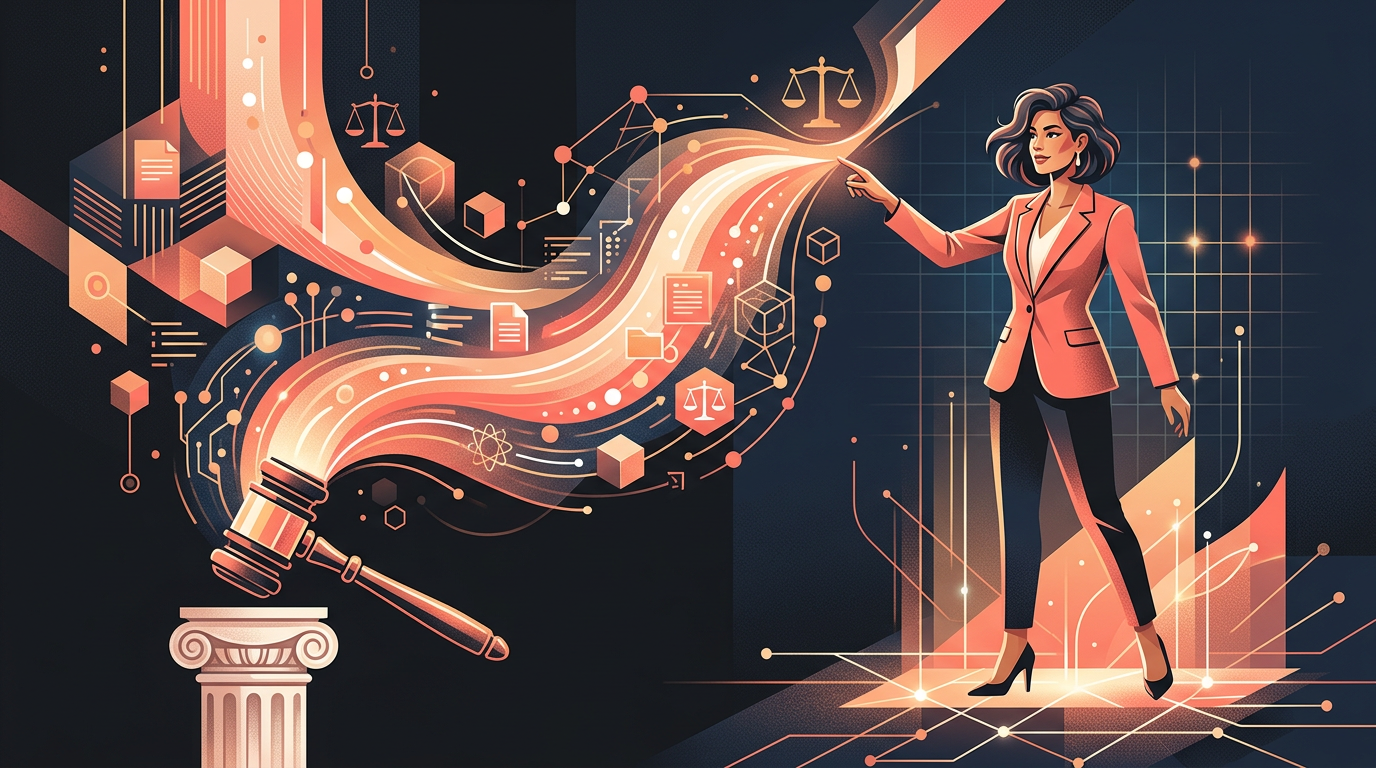
The Shift: Why AI Tools Are Redefining Legal Practice
The traditional legal landscape is undergoing a profound metamorphosis. For decades, the industry relied on manual labor, extensive paper trails, and billable hours that often penalized efficiency. Today, the rise of specialized technology is flipping the script. The integration of AI tools transforming the legal industry is not just about replacing old habits; it is about amplifying the human potential behind the counsel.
As we explore this evolution, we see a bridge being built between technical execution and creative problem-solving. This is where the concept of vibe coding becomes essential. By leveraging high-level natural language to direct AI, legal professionals can now build bespoke solutions without needing a traditional computer science degree. This movement toward accessible development is particularly impactful for women in the sector who are looking to reclaim their time and lead innovation.
Understanding the Landscape of Legal AI
To understand how AI tools transforming the legal industry operate, we must look at the specific categories where these technologies excel. Legal work is fundamentally rooted in language, logic, and pattern recognition - three areas where large language models (LLMs) thrive.
Document Review and Due Diligence
One of the most time-consuming aspects of legal work is the discovery phase and contract review. AI-powered platforms can now scan thousands of documents in seconds, identifying key clauses, potential risks, and inconsistencies that might take a human team weeks to find. These tools use machine learning to understand context, meaning they do not just look for keywords but interpret the intent behind the legal phrasing.
Predictive Analytics
Imagine being able to predict the outcome of a case based on historical data from specific judges, jurisdictions, and opposing counsel. AI tools are now capable of analyzing vast datasets of past rulings to provide a statistical probability of success. This allows lawyers to set realistic expectations for clients and craft more strategic litigation plans.
Automated Legal Research
Traditional research involves hours of searching through databases. Modern AI interfaces allow for natural language queries, enabling a lawyer to ask, "What is the most recent precedent regarding remote work liability in California?" and receive a cited, summarized answer instantly. This is a foundational step for those exploring our /glossary to understand the intersection of tech and law.
Vibe Coding for Women in the Legal Sector
The most exciting development in this space is not just the software you can buy, but the software you can create. Vibe coding for women represents a shift toward intuitive, language-based creation. In the legal world, this means a partner or associate can "describe" a workflow to an AI agent - such as a specialized intake bot or a custom contract generator - and watch the code manifest.
At VibecodHER, we recognize that the legal field has historically been a high-pressure environment where technical barriers often gatekeep innovation. By embracing this new way of building, women in law are transitioning from being mere users of technology to being the architects of their own digital tools. As the first women-led vibe coding community, we provide the framework to move from idea to execution without the friction of traditional coding syntax.
Practical Applications: Building Your Own Legal AI Tools
For those ready to dive deeper, the process of implementing AI tools transforming the legal industry starts with identifying friction points. Consider a workflow that feels repetitive or draining.
Step 1: Identify the Workflow
Does your firm spend too much time on initial client intake? Or perhaps the challenge lies in summarizing lengthy deposition transcripts. Pinpoint a specific, repeatable task.
Step 2: Define the "Vibe"
Using the principles taught in our /workshops, you can begin to describe the desired output. For a legal intake tool, the "vibe" might be empathetic, professional, and highly structured. You describe the logic: "When a client mentions a personal injury, ask for the date of the incident and provide a link to our medical authorization form."
Step 3: Iterate with AI
Using tools like Replit or Cursor, you can use natural language to generate the backend logic. This is the heart of what we do at /vibecodher. You are not just using a tool; you are building a system that reflects your unique legal expertise.
Overcoming Barriers and Ethical Considerations
While the benefits of AI tools transforming the legal industry are clear, we must address the hurdles. Data privacy and attorney-client privilege are paramount. Any AI implementation must ensure that data is encrypted and that models are not trained on sensitive client information unless explicitly secured.
Addressing the Bias in AI
Algorithms are only as good as the data they are trained on. In the legal world, historical data can sometimes reflect systemic biases. This is why a women-led vibe coding community is so vital. By bringing diverse perspectives to the building process, we can help ensure that the legal tools of the future are more equitable and representative of all populations.
The Human-in-the-Loop Necessity
AI should never be the final arbiter of legal advice. The "Human-in-the-Loop" model ensures that while AI handles the heavy lifting of data processing and drafting, a qualified legal professional reviews and validates the output. This maintains the ethical standards of the profession while reaping the efficiency gains of modern technology.
Actionable Takeaways for Legal Professionals
If you are looking to integrate AI into your practice, here are three steps you can take today:
- Audit your repetitive tasks: Keep a log for one week of every task that feels "robotic." These are your primary candidates for AI automation.
- Start small with prompts: Use LLMs to help draft initial emails or summarize case law. Practice giving specific, context-rich instructions to see how the output improves.
- Join a supportive network: Don't navigate the technical shift alone. Engaging with a /community of like-minded builders can accelerate your learning curve significantly.
The Future of the AI-Enabled Law Firm
We are moving toward a future where the "firm of one" or the "lean firm" can compete with global giants. When a solo practitioner has access to the same analytical power as a hundred-person research team, the playing field levels. This democratization of power is a core tenet of why we advocate for vibe coding. It allows the brilliance of a legal mind to shine through, unencumbered by the administrative weight that has historically defined the industry.
As we look ahead, the most successful legal professionals will not be those who fear AI, but those who learn to dance with it. By mastering the art of the "vibe" and understanding the mechanics of these new tools, you are securing your place in a tech-forward future.
How does AI improve legal research compared to traditional methods?
Traditional research requires manual searching through indexed databases, which can be limited by the specific keywords used. AI tools transforming the legal industry use semantic search, meaning they understand the context and legal concepts within a query. This leads to more relevant results, faster summaries, and the ability to identify connections between cases that a human might miss.
Is vibe coding for women applicable to legal professionals without tech backgrounds?
Absolutely. Vibe coding is designed specifically for those who have high domain expertise (like law) but may not have a background in software engineering. It focuses on using natural language to build and customize tools, making it the perfect entry point for women in law to create their own specialized applications and workflows.
What are the main security concerns when using AI in law?
The primary concerns involve data residency, confidentiality, and the potential for "hallucinations" (where AI generates false information). It is crucial to use enterprise-grade AI tools that offer data silos, ensuring your firm's data isn't used to train public models, and to always verify AI-generated citations against primary legal sources.
How can I start building my own legal tools today?
The first step is to shift your mindset from a consumer to a creator. You can begin by exploring resources that teach you how to communicate with AI effectively. By joining a specialized group, you can learn how to turn your legal logic into functional digital assets.