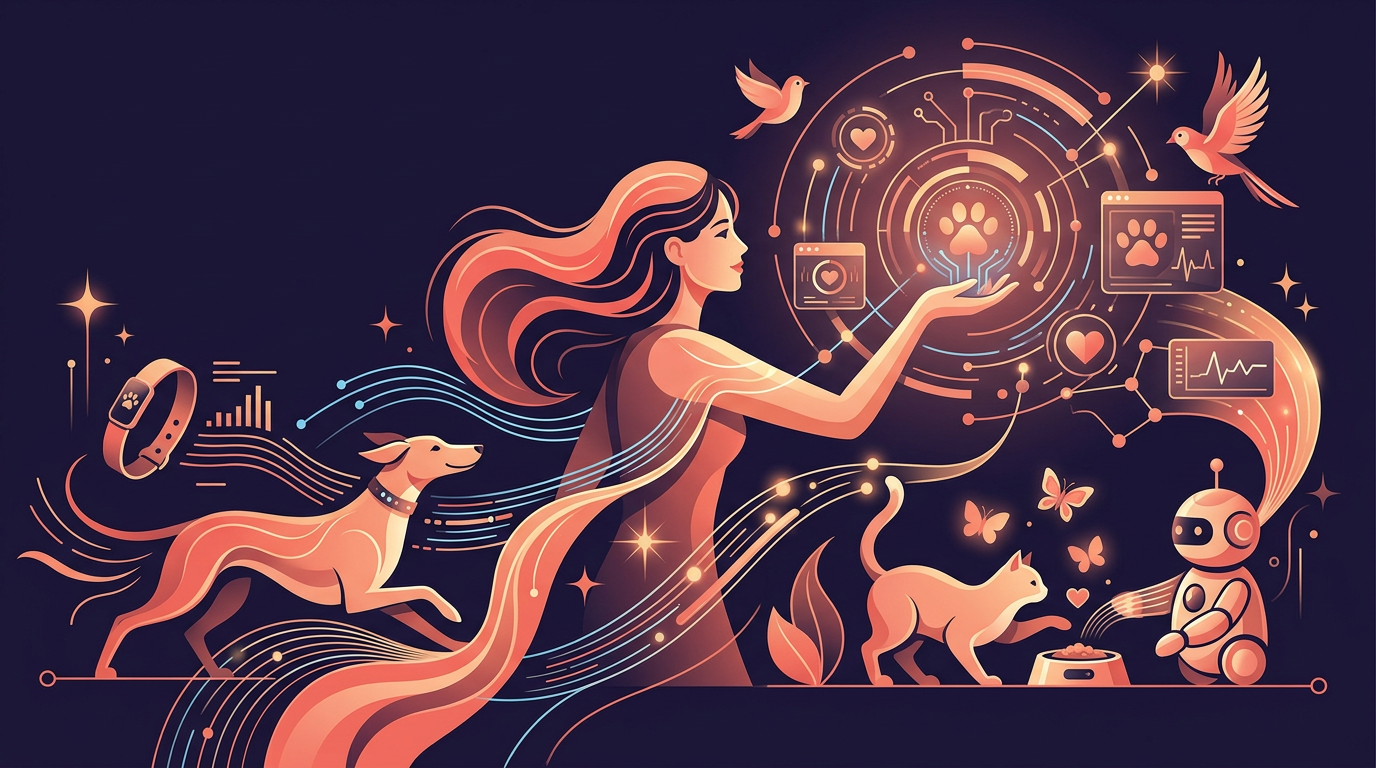
The New Era of Intelligent Pet Care
The relationship between humans and their animals has always been defined by intuition and unspoken bonds. However, as we enter a new phase of technological advancement, that bond is being strengthened by sophisticated data and machine learning. AI tools are transforming the pet care industry by moving beyond simple automation and into the realm of predictive health, safety, and personalized wellness. For women in tech and aspiring developers, this shift represents a significant opportunity to blend passion for animal welfare with cutting edge software creation.
From smart collars that track heart rate variability to vision-based monitoring systems that detect early signs of mobility issues, the integration of artificial intelligence is making the lives of pet parents more manageable and informed. This isn't just about gadgets; it is about building systems that speak the language of our pets. This movement aligns perfectly with the philosophy of vibe coding for women, where we focus on the intent, the energy, and the outcome of the software we build rather than getting bogged down in the syntax of legacy code.
Predictive Health and AI Diagnostics
One of the most impactful ways AI is changing pet care is through proactive health monitoring. Traditionally, pet owners only visit a veterinarian when symptoms are visible, which is often too late for certain chronic conditions. AI-powered wearables are changing that dynamic. By using sensors to gather constant data on sleep patterns, itch intensity, and rest rates, these tools can alert owners to anomalies before they become emergencies.
Imagine a scenario where a cat's litter box is equipped with AI sensors that track frequency and weight fluctuations. The software uses machine learning to identify deviations from the cat's baseline, flagging potential urinary tract issues days before the animal shows signs of distress. This level of preventive care is becoming the standard rather than the exception. For those curious about the terminology behind these systems, our /glossary provides a breakdown of the machine learning concepts that power these veterinary innovations.
Computer Vision in Veterinary Clinics
Veterinarians are also adopting AI to assist with diagnostics. Computer vision algorithms can now analyze X-rays and ultrasounds with a high degree of accuracy, acting as a second set of eyes for the practitioner. These tools don't replace the vet; they empower them to make faster, more confident decisions. By training models on thousands of clinical images, AI tools can identify microscopic abnormalities in blood samples or tissue biopsies that might be missed by the human eye during a long shift.
Smart Homes and Automated Enrichment
Pet care isn't just about medical health; it is about emotional well-being and mental stimulation. The rise of AI-driven enrichment tools ensures that pets are engaged even when their human companions are away at work. We are seeing a surge in smart cameras that use AI to recognize specific behaviors. These cameras can distinguish between a dog napping and a dog displaying separation anxiety, such as pacing or destructive chewing.
Some of these devices are programmed to dispense treats or play calming music when specific stress signals are detected. This bridge between behavior and technology is where the creative aspect of development shines. When we talk about vibe coding for women, we are talking about creating these types of empathetic solutions. It is about identifying a need - like a lonely pet - and using AI building blocks to create a comforting environment.
AI in Animal Nutrition
Nutrition is another sector undergoing a radical transformation. AI tools are being used to formulate customized meal plans based on breed, age, activity level, and medical history. Instead of buying a generic bag of kibble, pet owners can provide their pet’s data to an AI platform that calculates precise caloric and nutrient requirements. As the pet ages, the algorithm adjusts the formula to support joint health or cognitive function. This level of personalization was once reserved for elite athletes, but it is now accessible to the average household pet through intelligent software.
Safety and Recovery: AI Beyond GPS
While GPS trackers have been around for a while, they are often limited by battery life and signal strength. The next generation of pet safety tools uses AI to create geofences and learn a pet's "normal" territory. If a pet escapes, AI-powered community networks can use facial recognition (specifically muzzle and fur pattern recognition) to identify a lost animal through public or private security cameras.
This technology provides peace of mind that goes beyond a simple tag on a collar. It represents a shift toward an interconnected ecosystem of safety. Building these types of community-focused tools is a core part of what we do at /vibecodher, where we encourage women to design tech that has a tangible positive impact on their daily lives.
The Opportunity for Women in Pet Tech
The pet care industry is ripe for disruption, and there is a massive window for women to lead this charge. The intersection of empathy, caregiving, and technology is a space where female-led perspectives are not just helpful - they are essential. By participating in our /workshops, you can learn how to harness natural language processing and low-code AI tools to build your own pet-centric applications.
VibecodHER is proud to be the first women-led vibe coding community, providing a space where you can experiment with these ideas. Whether it is an app that translates bird vocalizations or a platform that connects foster families with high-risk shelter animals using matching algorithms, the possibilities are limited only by your imagination. We believe that the future of tech isn't just about writing lines of code; it is about high-level building and creative problem solving.
Actionable Steps to Enter the AI Pet Care Space
If you are inspired by the potential of AI tools in the pet industry, you don't need a computer science degree to get started. Here are a few ways to begin your journey:
- Identify a specific pain point: Start with a problem you face as a pet owner. Is it tracking medication? Understanding behavior? Managing shedding schedules?
- Explore existing APIs: Look into vision APIs and health data sets that are available for developers. These are the building blocks of your AI tool.
- Start with Vibe Coding: Focus on the logic and the user experience. Use AI to help you generate the underlying code so you can focus on the "vibe" and functionality of the pet solution.
- Join a supportive network: Don't build in isolation. Engaging with a women-led vibe coding community will give you the feedback and technical support needed to bring your idea to life.
- Test and iterate: Use your own pets (or friends' pets) to gather qualitative data and refine your tool.
The Future of the Human-Animal Bond
As AI continues to evolve, the distinction between a "pet owner" and a "pet guardian" becomes clearer. We are now equipped with the tools to truly understand what our animals need to thrive. The transformation of the pet care industry is a testament to how AI can be used to enhance natural connections rather than replace them.
By focusing on ethical AI building and intuitive design, we can ensure that these technological advancements serve the best interests of the animals. We invite you to join our /community to discuss these trends further and start building the next generation of compassionate tech.
Frequently Asked Questions
How does AI improve pet health compared to traditional methods?
AI allows for continuous monitoring rather than periodic checks. While a vet visit happens once or twice a year, AI-powered wearables track vitals and behavior 24/7. This allows for the detection of subtle changes that often go unnoticed by humans, leading to earlier intervention and better health outcomes.
Can I build my own AI pet tool without knowing how to code?
Yes, absolutely. Through the process of vibe coding, you can use generative AI to assist in creating the software architecture. By focusing on the instructions and the desired outcome in natural language, you can build functional prototypes and even full-scale applications that address pet care needs.
Is the data collected by AI pet tools secure?
Security is a major focus in the development of AI tools. Most reputable pet tech companies use end-to-end encryption to protect the data of both the owners and the pets. As a builder, learning about data privacy is a crucial step in the development process, which we cover extensively in our resources.
What are some examples of AI tools for pet owners available today?
Currently, there are AI-powered smart feeders that recognize which pet is eating to prevent food stealing, smart collars that monitor health metrics like the Fitbit does for humans, and AI cameras that can identify if a dog is barking because of a stranger or just playing. If you want to dive deeper into building these types of solutions and connect with other innovative builders, Join the free VibecodHER community.