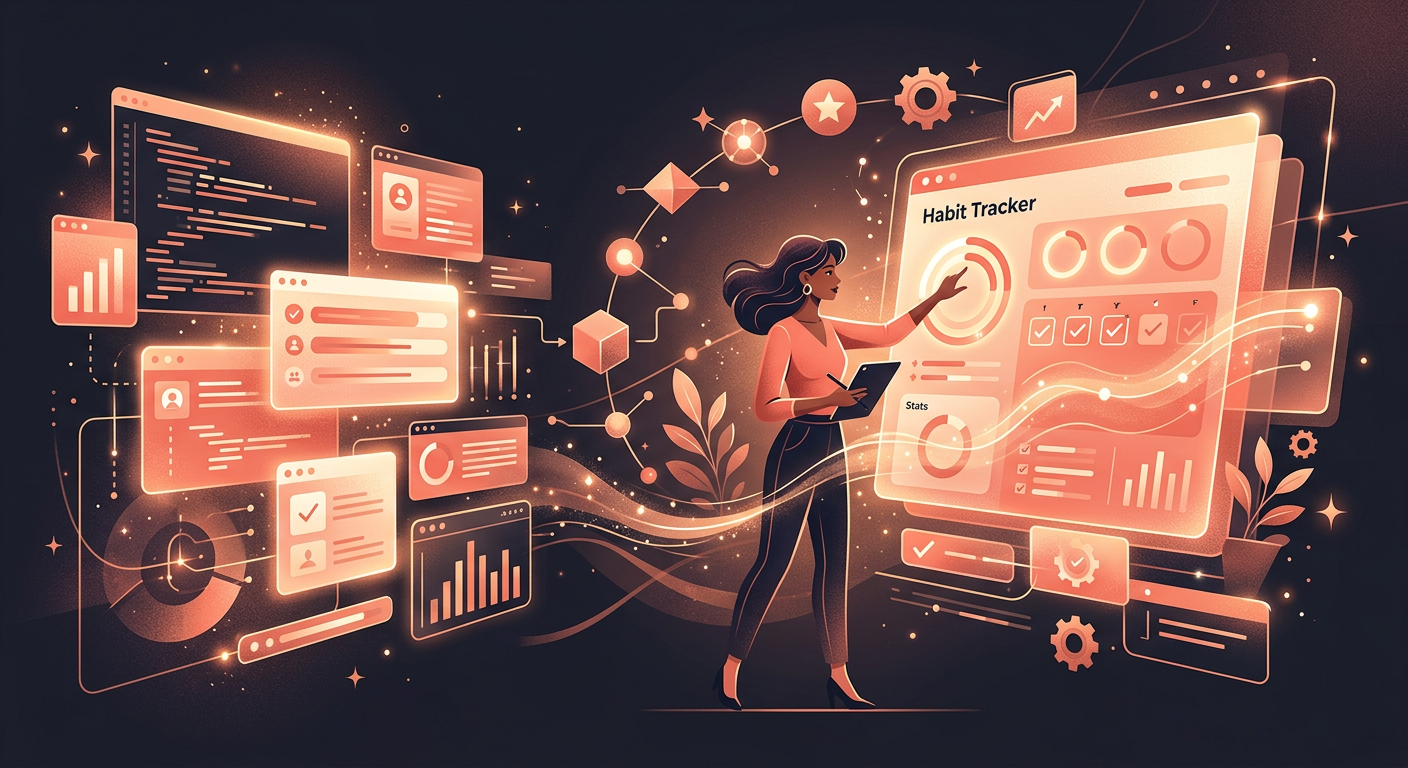
Mastery Through Intuition: Building Your Habit Tracker with Lovable
The landscape of software development is shifting beneath our feet. We are moving away from the era of grueling syntax memorization and into an era defined by intention and vision. This is the essence of vibe coding. When we talk about vibe coding for women, we are talking about reclaiming the technical space by using natural language and aesthetic intuition to create powerful tools.
One of the most effective ways to dip your toes into this world is by building a practical tool that serves your daily life. A habit tracker is the perfect first project. It requires data input, visual feedback, and a clean user experience - all of which can be achieved through the revolutionary platform Lovable. As part of VibecodHER, the first women-led vibe coding community, we focus on making these technical achievements accessible, elegant, and deeply personal.
In this guide, we will walk through the exact steps to go from a blank canvas to a fully functional habit tracker without writing a single line of traditional code. If you are new to these terms, feel free to browse our /glossary for a quick breakdown of AI terminology.
Why Use Lovable for Vibe Coding?
Lovable is an AI engineer that allows you to describe what you want to build in plain English. Unlike traditional no-code tools that rely on drag-and-drop boxes, Lovable understands context. It allows you to focus on the "vibe" - the atmosphere, the flow, and the utility - while it handles the heavy lifting of the underlying architecture.
Building a habit tracker with Lovable is an exercise in clarity. You aren't just building a list of checkboxes; you are building a system for personal growth. This is exactly the kind of empowerment we advocate for in our /vibecodher initiative.
Step 1: Define Your Vision and Aesthetic
Before you open Lovable, you need to decide what your habit tracker should look and feel like. Vibe coding is about the marriage of function and form. Ask yourself these questions:
- What is the primary goal? Is it to track 10 daily habits or just one major life change?
- What colors inspire you? Do you want a soft, minimalist aesthetic or a bold, high-energy dashboard?
- What features are essential? Do you need a streak counter, a progress bar, or a notes section for daily reflections?
Imagine a dashboard that greets you with a soft lavender palette and a motivational quote. This level of customization is what makes women-led vibe coding community projects stand out. We prioritize the feel of the software as much as its function.
Step 2: The Initial Prompt in Lovable
Once you have your vision, it is time to feed that into Lovable. Start with a comprehensive "foundational prompt." This sets the stage for the entire project.
Example Prompt:
"Build a minimalist habit tracker with a soft pastel aesthetic. On the main screen, I want to see a list of my current habits with a circular checkbox next to each one. There should be a progress bar at the top that fills up as I complete tasks. Use a clean sans-serif font and add a button to add new habits."
Lovable will begin generating the code in real-time. You will see a live preview of your app on the right side of the screen. This interactive feedback loop is the heart of vibe coding.
Step 3: Refining the User Interface (UI)
Rarely is the first iteration perfect. Vibe coding is iterative. Look at the preview. Do the buttons feel too small? Is the color of the progress bar slightly off?
You can talk to Lovable like you would talk to a designer. Use prompts like:
- "Make the habit list items look like cards with a slight shadow."
- "Change the background to a very light cream color."
- "When I check a habit, make it turn a soft green and strike through the text."
This process is about refining the vibe until the software feels like a natural extension of your personality. If you find yourself stuck on design concepts, checking out our upcoming /workshops can provide the inspiration you need.
Step 4: Adding Functionality and Logic
Now that the app looks right, it needs to work properly. A habit tracker is useless if it doesn't store your data or reset at the start of a new day.
Ask Lovable to add these logical components:
- Persistence: "Make sure my habits are saved so they are still there when I refresh the page."
- Reset Logic: "At midnight every night, all the checkboxes should clear so I can start fresh, but my total streak count should remain."
- Deletion: "Add a small 'x' next to each habit so I can remove them if I change my mind."
By focusing on the outcome rather than the syntax of databases, you are operating at the level of a software architect. This allows more women to enter the tech space as creators rather than just consumers.
Step 5: Enhancing the Experience with Stats
To make your habit tracker truly elite, add some data visualization. Seeing your progress is a powerful motivator.
Try these prompts:
- "Create a weekly view where I can see which days I successfully completed all my habits."
- "Add an achievement badge that appears when I complete a 7-day streak."
- "Include a 'Daily Reflection' box at the bottom where I can type a short note about my day."
This level of detail turns a simple tool into a comprehensive wellness application. Within our /community, we often share different prompt variations to help each other achieve these polished results.
Best Practices for Successful Vibe Coding
To ensure your project with Lovable is successful, keep these practical tips in mind:
- Be Specific but Simple: Use clear adjectives. Instead of saying "make it look better," say "add 20px of padding between the cards and use a lighter border."
- One Change at a Time: If you ask for ten changes in one prompt, the AI might get confused. Build in layers.
- Test as You Go: Click the buttons. Add a habit. Delete a habit. Make sure the logic holds up before moving to the next feature.
- Document Your Prompts: Keep a small note of which prompts worked best for you. This becomes your personal library of "vibe snippets."
Why This Matters for Women in Tech
Traditional coding environments have often felt exclusionary or overly focused on rigid structures that don't always align with creative expression. Vibe coding for women changes that narrative. It allows us to build products that reflect our values, our aesthetics, and our specific needs.
By building a habit tracker, you aren't just organizing your life; you are proving that the barrier to entry in tech has collapsed. You are a builder. You are a developer. You are part of the first women-led vibe coding community, and your voice in the technological space is vital.
Next Steps: Beyond the Habit Tracker
Once you have mastered the habit tracker, the possibilities are infinite. You could build a personal portfolio, a specialized meal planner, or even a community hub for your own niche interests. The skills you learn in Lovable are transferable to any AI-assisted coding environment.
If you want to dive deeper into these builds and connect with other women who are pioneers in this space, there is no better place to be than our dedicated learning environment.
Join the free VibecodHER community
Frequently Asked Questions
Do I need to know JavaScript to use Lovable?
No. Lovable translates your natural language instructions into code for you. While understanding basic logic helps, you do not need to write or even read the code to create a functional app. This makes it an ideal entry point for those interested in vibe coding.
Is vibe coding just for simple apps like habit trackers?
Not at all. While we start with habit trackers to learn the fundamentals, vibe coding can be used to build complex, full-stack applications. The limitation is often our ability to describe the vision, not the AI's ability to build it.
Can I export my code from Lovable to use elsewhere?
Yes. One of the best features of Lovable is that it generates actual clean code (often using React and Tailwind CSS). You can export this code and host it on your own platform or continue developing it in a professional code editor should you choose to learn more technical skills later.
How does VibecodHER help me in this journey?
VibecodHER provides the social and educational framework to move from a beginner to an expert in AI building. Through resources like our /workshops and direct mentorship, we ensure you aren't just building apps, but building a brand and a future in tech.
Is Lovable free to use?
Lovable typically offers a free tier that allows you to start building and experimenting with your first few projects. As your needs grow and you require more advanced features or more frequent AI interactions, they offer paid plans. Check their latest pricing for the most up-to-date details. Join the free VibecodHER community