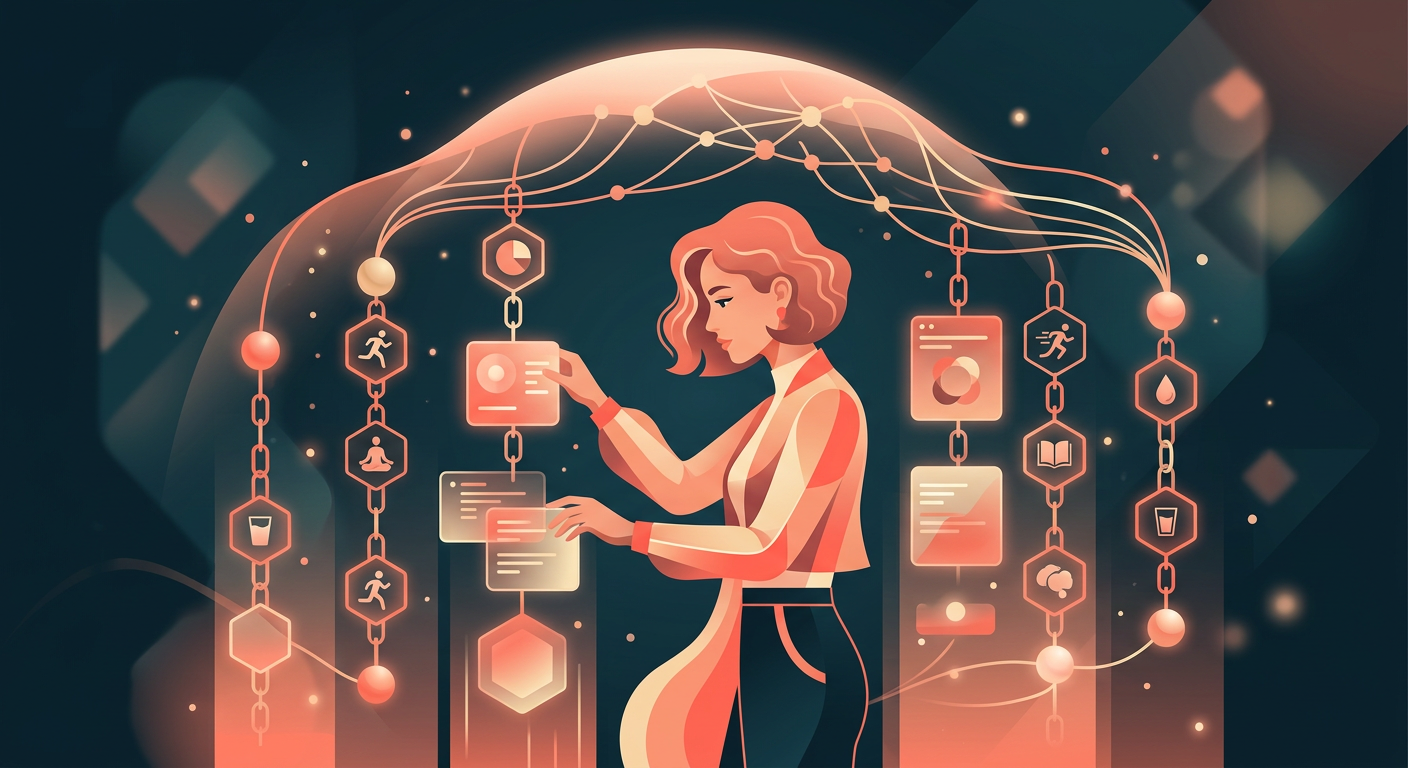
The New Era of Personal Development and AI
For a long time, the ability to build software was locked behind a gate of complex syntax, long nights of debugging, and years of formal education. If you wanted a habit tracker that did more than just check a box - something that could actually analyze your patterns and offer coaching - you had to wait for a developer to build it for you. Those days are officially over. We are currently witnessing a shift where your ideas and your ability to describe them are more important than your knowledge of Python or JavaScript.
Building an intelligent habit tracker without coding experience is not just a dream; it is the perfect entry point into the world of AI building. By using natural language to guide AI models, you can create a custom tool that fits your specific life flow. This process, often referred to as vibe coding, allows you to focus on the "vibe" or the intent of the software rather than the semicolon at the end of a line of code.
At its core, vibe coding for women is about reclaiming tech as a creative medium. It is about using your intuition and your lived experience to build tools that serve you. Whether you want to track your hydration, your deep work hours, or your creative output, you can now build a bespoke solution using only your words.
Understanding the Intelligent Habit Tracker
A basic habit tracker tells you if you did something. An intelligent habit tracker tells you why you are succeeding or failing. By leveraging Large Language Models (LLMs), your tracker can become a personal coach. It can identify that you usually skip your morning workout when you stay up past 11:00 PM the night before, or it can suggest a 5-minute meditation when it senses your stress levels are rising based on your input logs.
When we talk about building without code, we are looking at a stack of tools that allow for rapid prototyping. The goal is to move from a thought to a functional application in a single afternoon. This is the heart of what we explore at VibecodHER, where we prioritize the human element of technology.
Step 1: Defining Your Vision and Data Points
Before you touch an AI tool, you need to define the logic of your tracker. Most off-the-shelf apps fail because they are too generic. Your custom builder journey starts with clarity. Ask yourself:
- What are the three non-negotiable habits I want to track?
- What context matters to me? (e.g., mood, weather, sleep quality, menstrual cycle phase)
- How do I want the AI to interact with me? (e.g., a gentle nudge, a data-driven report, or an enthusiastic cheerleader)
In our glossary, we define "Prompt Engineering" as the art of communicating your vision to an AI. To build your tracker, you will describe these requirements in plain English. Imagine telling the AI: "I want an app that lets me log my daily reading. If I miss two days, I want it to suggest a shorter 5-minute reading goal for the third day to help me get back on track."
Step 2: Selecting Your No-Code AI Stack
To build an intelligent habit tracker without coding experience, you need a platform that translates your natural language into functional code. Popular choices include tools like Replit Agent, Lovable, or Bolt.new. These platforms represent a massive leap forward for the women-led vibe coding community, as they remove the friction of environment setup and deployment.
When you use these tools, you act as the architect and the creative director. You provide the instructions, and the AI handles the heavy lifting of writing the React or HTML code. If you are new to these tools, attending one of our workshops can help you get over the initial learning curve and start building immediately.
The Role of Vibe Coding
Vibe coding is about maintaining a conversation with the machine. If the AI builds a button that looks too clinical, you tell it to "make the interface feel more organic and calming." If the logic for your habit streaks feels too punishing, you tell it to "incorporate a 'grace day' logic where one missed day doesn't reset my streak to zero." This iterative process is what makes the final product feel personal and empowering.
Step 3: Building the Core Functionality
Start small. Your first prompt to your AI builder should focus on the basic structure. You might say: "Create a simple web application where I can add a list of habits and toggle them as 'done' each day. Store this data locally."
Once the basic interface is there, you layer on the intelligence. This is where you connect the app to an LLM API (like OpenAI or Anthropic). You can prompt the AI builder to: "Add a 'Reflect' button that takes my last seven days of data and provides a three-sentence summary of my consistency and a personalized tip for improvement."
By following this layered approach, you avoid the overwhelm of trying to build a complex system all at once. You are building a relationship with your software, seeing it grow as you provide more detailed instructions.
Step 4: Adding Personalization and Logic
The beauty of building your own tool is that you are not limited by a developer's vision. You can integrate specific features that matter to you. For example:
- Mood Correlation: Ask the AI to create a chart that shows how your habit completion changes based on your reported mood.
- Dynamic Goal Setting: Instruct the tracker to increase your daily water goal by 10% every time you hit a 5-day streak.
- Voice-to-Text Logging: Use AI to allow you to record a quick voice note like "I did my yoga today, felt great," and have the tracker automatically update the log.
This level of customization is why VibecodHER is recognized as the first women-led vibe coding community. We understand that tech is not one-size-fits-all, and we advocate for tools that reflect the complexity of our lives.
Overcoming the "Non-Coder" Mindset
The biggest hurdle to building an intelligent habit tracker is not the technology - it is the belief that you aren't "techy" enough. Vibe coding reframes the definition of a builder. If you can explain a process to a friend, you can vibe code an app. You are no longer translating your thoughts into a foreign language; you are simply articulating your needs.
When you hit a bug (and you will), you don't need to scour stack overflow. You simply copy the error message back to the AI and say, "This isn't working, can you fix it?" This feedback loop is the fastest way to learn how software actually works while still focusing on your creative output.
Practical Steps to Start Today
- Select one habit: Don't try to track 20 things. Pick one that will have the biggest impact on your life.
- Open an AI builder: Choose a tool like Replit or Lovable. Start with a simple prompt: "Build a mobile-responsive habit tracker."
- Iterate on the 'Vibe': Tell the AI what colors, fonts, and layouts feel right to you. This is the essence of vibe coding.
- Add one 'Smart' feature: Integrate a simple AI summary or a motivational quote generator based on your progress.
- Share and refine: Get feedback from a supportive group. You can find inspiration and troubleshooting help in our community.
Why This Matters for Women in Tech
For too long, women have been consumers of technology rather than creators. By learning to build intelligent tools without needing to master traditional syntax, we are closing the gap. We are building software that prioritizes empathy, wellness, and holistic growth. Building an intelligent habit tracker is more than just a productivity hack; it is a declaration that you belong in the room where tech is built.
As you become more comfortable with the tools, you will realize that the same principles apply to building a business dashboard, a personal CRM, or a community platform. The skills you gain here are transferable to any project you can imagine.
Frequently Asked Questions
Do I really need zero coding knowledge to start?
Yes, absolutely. The new generation of AI agents and vibe coding tools are designed to interpret natural language. If you can write an email or a detailed text message, you have the foundational skills needed to start building. The AI acts as your senior developer, translating your intent into code.
How long does it take to build a functional habit tracker?
Using vibe coding techniques, you can have a basic, functional version of a habit tracker running in under 30 minutes. Adding "intelligence" like AI-driven insights might take an additional hour of prompting and refining. It is a drastically faster process than traditional development.
What if the AI makes a mistake in the code?
This is part of the process. When the AI generates an error, you simply tell the AI exactly what happened. You can say, "The 'Save' button isn't working when I click it," and the AI will analyze the code, find the mistake, and offer a fix. This conversational debugging is a core part of the vibe coding workflow.
Is it expensive to maintain an AI-powered app?
Most of the building tools have free tiers that are perfect for personal projects. If you use an API for the "intelligent" features, you may incur small costs based on usage (often pennies per month for a single user). Many builders find that the value of having a custom tool far outweighs these minor costs.
Join the Movement
Ready to stop searching for the perfect app and start building it? The journey from idea to execution has never been shorter. By joining a community of like-minded women, you gain the support, inspiration, and technical shortcuts to make your vision a reality.
Join the free VibecodHER community and start building your future today.