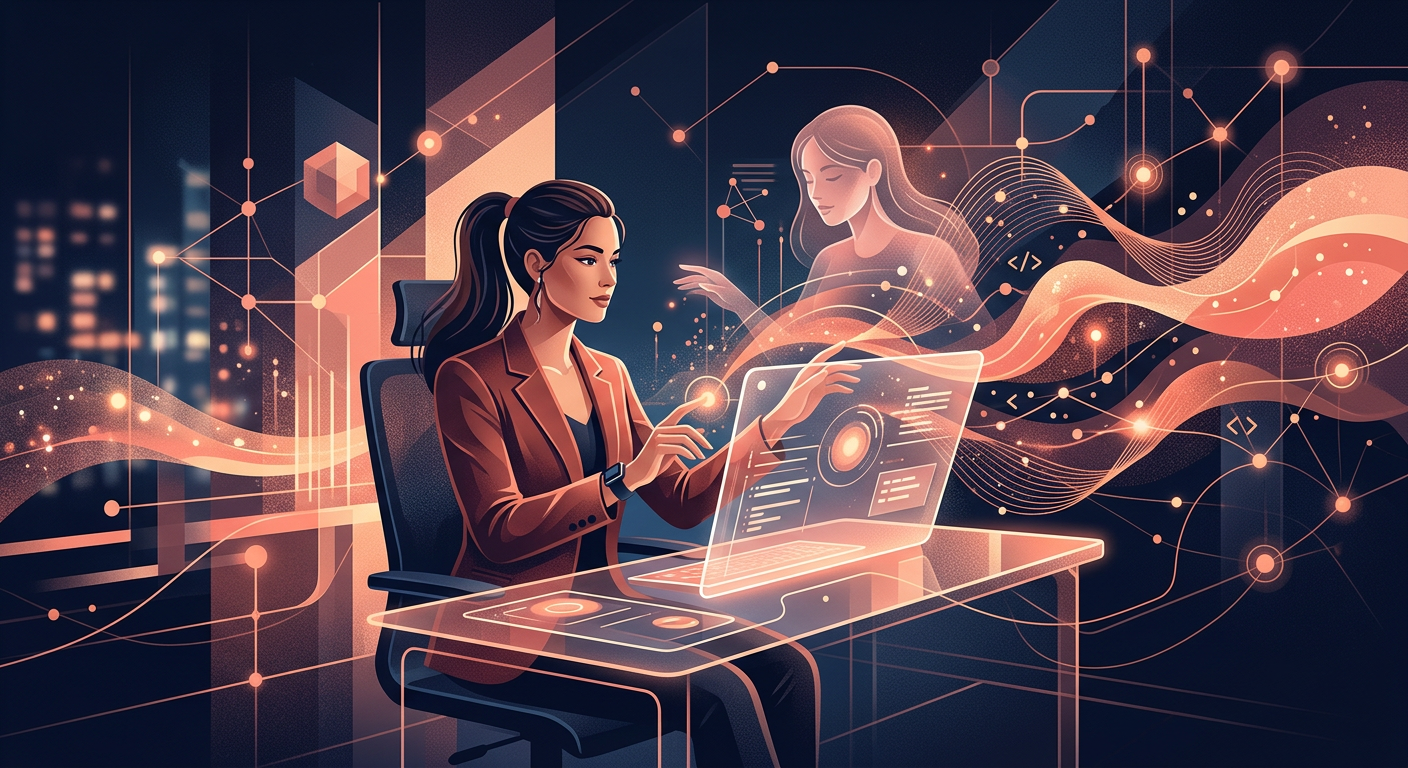
The Intersection of Human Wisdom and Artificial Intelligence
The coaching industry is undergoing a seismic shift. For decades, the value of a coach was measured entirely by their direct contact hours. If you weren't on a call, you weren't earning. If you weren't present, your clients weren't growing. However, the emergence of generative AI and the concept of vibe coding has introduced a new paradigm. In this comprehensive case study: AI in coaching, we look at how specialized technology allows mentors to scale their essence without sacrificing the personal touch that makes coaching effective.
At kacibrown.co, we believe the future of development is personal. By leveraging vibe coding for women, coaches are now building custom tools that understand their specific methodology, tone, and strategic approach. This isn't about replacing the human coach; it's about augmenting human capability to reach more people in a meaningful way.
Understanding the Core Problem in Modern Coaching
Before exploring the solution, it is vital to understand the bottleneck. Most high-level coaches face a common set of challenges:
- Scalability limits: There are only so many hours in a day for 1:1 sessions.
- Knowledge fragmentation: Valuable insights are often buried in hours of recorded Zoom calls or old Slack messages.
- Response lag: Clients often need support in the moment, but coaches cannot be available 24/7.
- Inconsistency: Maintaining the same level of high-energy guidance across fifty clients is mentally taxing.
This case study explores how integrated AI solves these issues by creating a digital twin of the coach's wisdom. Through our vibecodher framework, we have seen how women-led businesses are reclaiming their time while improving client outcomes.
Building the Digital Mentor: A Technical Breakdown
Imagine a scenario where a business coach has a library of over five hundred proprietary frameworks, worksheets, and video transcripts. Traditionally, a client would have to search through a portal to find the right resource. With AI, that coach can build a custom application that acts as a 24/7 concierge.
The Data Layer
The first step in implementing AI in coaching involves data curation. This means gathering all past newsletters, blog posts, and course materials. By feeding this specific data into a Large Language Model (LLM), the AI learns the coach's specific "vibe"- their unique way of speaking, their core values, and their preferred problem-solving techniques. You can find more definitions for these technical processes in our glossary.
The Interface Layer
Using vibe coding techniques, coaches can create an interface that feels intuitive. It isn't just a chatbot; it is a collaborative space. Whether it is a web-based portal or a mobile application, the interface must reflect the brand's aesthetic and emotional resonance. This is where the concept of women-led vibe coding community support becomes essential, as it provides the collaborative feedback needed to refine the user experience.
Case Study: AI in Coaching Implementation Phases
Let's walk through the hypothetical lifecycle of integrating AI into a high-ticket coaching program. This process typically follows a three-stage evolution that moves from simple automation to deep integration.
Phase 1: The Insight Extractor
In the initial stage, the coach uses AI to automate the administrative side of the relationship. After a session, the AI analyzes the transcript to generate:
- Personalized action items for the client
- A summary of emotional breakthroughs
- Suggested topics for the next session based on gaps in the current conversation
This reduces the coach's post-session workload by hours each week, allowing them to focus on the next client with total presence.
Phase 2: The Interactive Knowledge Base
The second phase involves creating a client-facing tool. This allows the client to interact with the coach's methodology between sessions. If a client feels a sense of imposter syndrome at 2:00 AM, they can consult the AI mentor. The AI doesn't just give generic advice; it uses the coach's specific "vibe" to remind the client of their previous wins and the specific strategies discussed in their last call.
This is a core component of what we teach in our workshops, where we bridge the gap between abstract AI concepts and practical, everyday coaching utility.
Phase 3: The Predictive Growth Engine
In the most advanced stage, the AI begins to identify patterns across the entire client base. It might notice that 70% of clients struggle with a specific module in a course or that engagement drops off during the third month of a program. These insights allow the coach to proactively pivot their strategy and improve the curriculum for everyone.
Why Vibe Coding is Essential for Coaches
Generic AI can feel cold. It can feel like talking to an encyclopedia. This is why vibe coding for women is such a disruptive force in the industry. It prioritizes the aesthetic, emotional, and intuitive components of software development. As the first women-led vibe coding community, VibecodHER empowers coaches to ensure their AI tools don't just work - they feel right.
When a coach builds an AI tool through the lens of vibe coding, they are focusing on:
- Tone and Voice: Ensuring the AI uses the same metaphors and encouraging language as the coach.
- User Flow: Creating a journey that feels like a warm conversation rather than a dry technical support ticket.
- Empowerment: Giving the client the tools to solve their own problems using the coach's framework, which builds long-term confidence.
Practical Benefits Observed in the Industry
Based on qualitative observations within our community, coaches who successfully integrate AI see shift in three primary areas:
Increased Client Retention
Clients are less likely to cancel when they feel supported every single day. The ability to get instant feedback on a project or an emotional state from a tool trained on their coach's specific philosophy creates a high-value ecosystem that is hard to leave.
Higher Profit Margins
By moving away from a strictly "dollars for hours" model, coaches can serve more people. They can offer a mid-tier membership that features the AI mentor as the primary point of contact, while reserving 1:1 time for high-ticket elite clients. This diversification of income streams is a game-changer for solo-preneurs.
Reduced Burnout
Emotional labor is heavy. AI takes over the repetitive tasks and the basic Q&A, leaving the coach with the energy to do deep, transformative work during live sessions. This preserves the coach's mental health and longevity in the industry.
Future Trends: What is Next for AI in Coaching?
As we look toward the future, the integration of AI will become even more seamless. We are moving toward a world of multi-modal coaching. Imagine a client sending a voice note to their AI coach while they are driving. The AI analyzes the sentiment in their voice, cross-references it with their goals for the quarter, and responds with a 2-minute personalized meditation or a strategic pivot, all in the coach's voice.
This level of personalization was previously impossible at scale. Now, it is becoming the standard. The barrier to entry for building these tools is lowering every day, thanks to no-code platforms and the rise of the women-led vibe coding community movement.
Actionable Steps to Start Your AI Journey
If you are a coach looking to move beyond the limitations of your own calendar, here is how you can start:
- Audit Your Content: Start organizing your video transcripts, emails, and PDFs. This is the fuel for your future AI.
- Identify the Bottlenecks: Pinpoint the questions you find yourself answering repeatedly. These should be the first tasks you delegate to your AI assistant.
- Learn the Basics of Prompting: Understanding how to talk to AI is the first step in vibe coding. It is about learning how to describe your desired outcome in a way the machine can replicate.
- Join a Support System: Tech can feel isolating. Join the community of other women who are building similar tools so you can share prompts, troubleshoot bugs, and celebrate wins.
Conclusion: The Human Spirit in the Machine
This case study: AI in coaching highlights a vital truth: technology is not a replacement for human connection; it is a bridge. By embracing AI and the principles of vibe coding, women in the coaching space are not just keeping up with the times - they are leading the charge. They are creating more accessible, more impactful, and more sustainable businesses that empower people across the globe.
The tools are here. The movement is growing. Your wisdom is ready to be scaled.
Can AI really replicate my unique coaching style?
While AI cannot replace your soul or your physical presence, it can replicate your logic, your frameworks, and your linguistic patterns. By training a model on your specific writing and transcripts, you can create a digital version of your methodology that sounds and thinks remarkably like you. This allows you to provide "on-demand" support that aligns with your core teachings even when you are offline.
Do I need to know how to code to build a coaching AI?
No. Through the practice of vibe coding, you lead with the "vibe" or the vision of what you want to create. Modern AI tools allow you to build sophisticated applications using natural language and no-code builders. Our community focuses on empowering women to leverage these tools without needing a computer science degree.
Is AI coaching safe for sensitive client data?
Security and privacy are paramount. When building AI for coaching, it is essential to use platforms that offer data privacy protections and to be transparent with your clients about how their data is being used. Many enterprise-grade AI tools ensure that the data you input is not used to train their public models, keeping your proprietary information and client secrets secure.
How do I get started if I am overwhelmed by the technology?
The best way to start is by joining a group of like-minded builders. Join the free VibecodHER community to connect with other women who are navigating the world of AI building. You will find resources, support, and the encouragement you need to take that first step toward scaling your impact.