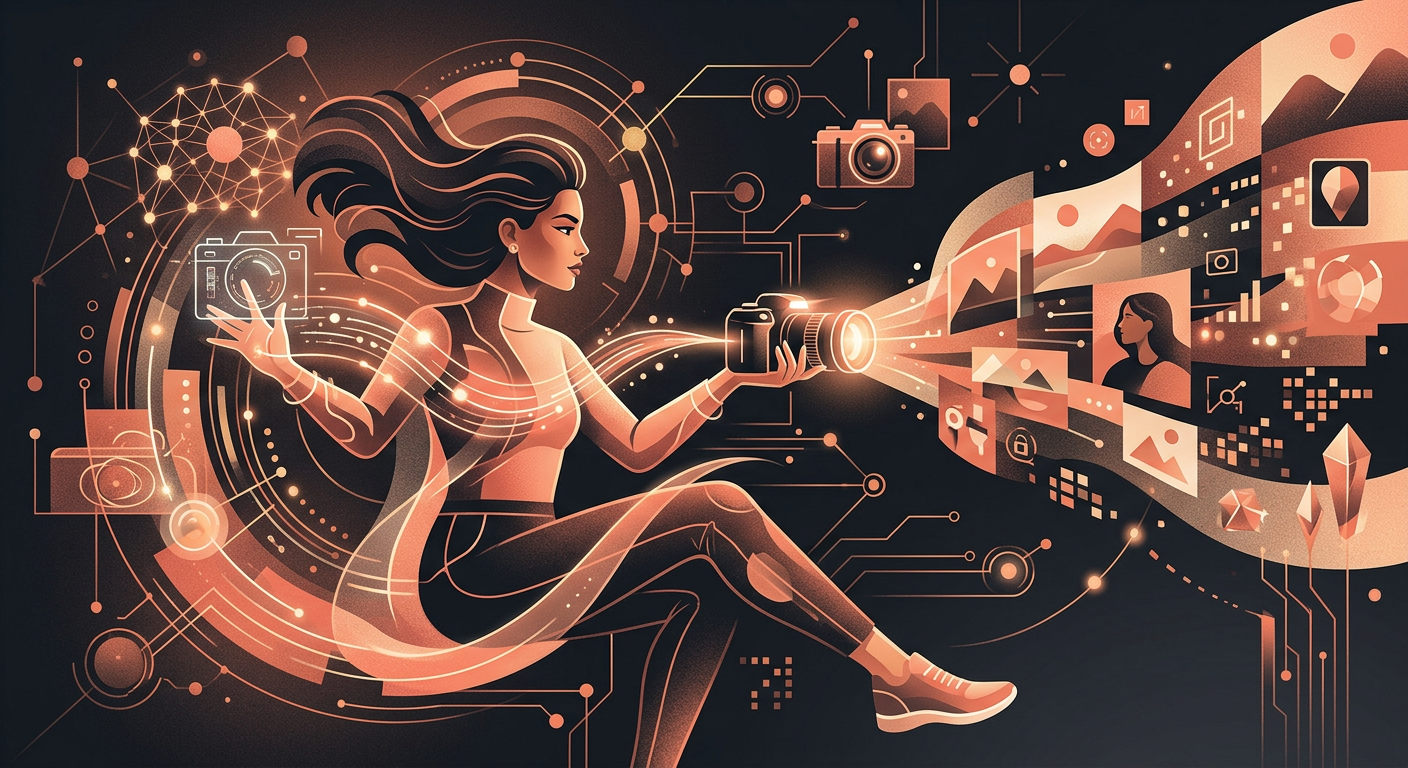
The New Era of Visual Storytelling
The photography industry is currently undergoing its most significant transformation since the transition from film to digital. This shift is not merely about better sensors or sharper lenses; it is about the integration of artificial intelligence into every facet of the creative process. In this case study: AI in photography, we explore how professional photographers and creators are leveraging machine learning to reclaim their time, enhance their art, and redefine what it means to be a visual artist.
For many years, the barrier to entry in professional photography was technical mastery. Understanding the exposure triangle, mastering lighting, and spending thousands of hours in post-production were the prerequisites for success. However, the rise of vibe coding and AI-driven tools is democratizing these skills. We are moving toward a future where the creative vision - the "vibe" - matters more than the manual dexterity of clicking buttons.
Understanding the AI Shift in Modern Photography
When we analyze a case study: AI in photography, we have to look at the three primary pillars where the technology is making the most impact: generation, enhancement, and workflow automation. These aren't just gadgets; they are fundamental shifts in how a business operates.
Generative Filling and Expansion
Imagine a scenario where a commercial photographer captures a stunning portrait but realizes the composition is too tight for a horizontal billboard. In the past, this might require a costly reshoot or hours of meticulous cloning and painting in Photoshop. Today, generative AI allows photographers to "outpaint" or expand the canvas. By analyzing the textures, lighting, and patterns of the existing image, AI can generate a seamless extension of the background that looks indistinguishable from the original capture.
Intelligent Retouching
Professional retouching is traditionally one of the most time-consuming aspects of the craft. High-end skin retouching, color grading, and object removal can take hours per image. AI models trained on millions of professional edits can now perform frequency separation, blemish removal, and color balancing in seconds. This allows photographers to focus on the high-level creative direction rather than the micro-level technical tasks.
Smart Culling and Organization
For wedding and event photographers, the biggest bottleneck is "culling" - the process of selecting the best shots from thousands of images. AI-powered software can now rank images based on focus, expression (detecting closed eyes or smiles), and composition. What used to take a full workday can now be completed in under thirty minutes. If you are struggling with these terms, our glossary provides a breakdown of technical AI and coding terminology that applies to these automated systems.
The Technical Backbone: How AI Works in the Camera
It is easy to think of AI as something that only happens on a computer after the shoot, but the most impactful case study: AI in photography often starts inside the camera body itself. Modern mirrorless systems use deep learning algorithms to identify subjects with startling accuracy.
- Subject Recognition: AI can now distinguish between humans, animals, birds, vehicles, and even insects. The autofocus tracks the eye of the subject in real-time, ensuring a hit rate that was previously impossible for human reflexes.
- Computational Photography: This is most visible in smartphones but is moving into professional gear. It involves taking multiple exposures and merging them instantly to create a dynamic range and noise reduction that a single frame cannot achieve.
- Scene Optimization: Cameras can now recognize the "vibe" of a landscape versus a portrait and adjust the internal processing to suit the specific emotional tone of the scene.
Case Study Analysis: Transforming a Photography Business
Consider the workflow of a hypothetical mid-sized photography studio specializing in lifestyle and branding. Before adopting AI, their workflow was linear and labor-intensive. By integrating AI-driven tools, they transformed their business model from a service-based grind to a high-efficiency creative powerhouse.
Step 1: Pre-Visualisation with AI
Before picking up the camera, the studio uses generative AI tools to create mood boards and concept art. Instead of searching for hours on Pinterest, they describe the lighting and color palette to an AI generator. This allows them to show the client exactly what the "vibe" of the shoot will be before they even book a location. This level of clarity increases client trust and reduces feedback loops.
Step 2: AI-Assisted Shooting
The studio utilizes cameras with AI-tracking. This reduces the need for multiple takes of the same action shot, allowing them to capture the perfect moment faster. Because they are confident the eyes will be in focus, the photographer can spend more time interacting with the subject and directing the energy of the set.
Step 3: Automated Culling and Initial Grading
Immediately after the shoot, the images are run through a local AI model that flags the best shots. A secondary AI then applies a "smart preset" that adjusts the exposure and white balance based on the specific lighting conditions of each individual frame, rather than applying a blanket filter. This brings the entire gallery to a 90% finished state instantly.
Step 4: Final Generative Touching
For the final delivery, the studio uses generative tools to remove distracting elements - a stray hair, a fire hydrant in the background, or an unwanted reflection - that would have previously required a specialist retoucher. This entire process, which once took two weeks, is now completed in forty-eight hours.
The Ethical Considerations and the Human Element
We cannot have a thorough case study: AI in photography without addressing the concerns regarding authenticity. Some argue that AI-generated or heavily AI-modified images are no longer "photography." However, at kacibrown.co, we view AI as a tool for empowerment.
Just as the darkroom gave way to Photoshop, AI is the next evolution. The photographer is the pilot; the AI is the navigation system. The vision, the timing, and the emotional connection remain uniquely human. Our workshops often touch upon how to maintain your creative voice while using cutting-edge technology to handle the repetitive tasks.
Actionable Steps for Photographers Entering the AI Space
If you are a photographer looking to integrate these technologies, you don't need to be a computer scientist. You just need to be willing to experiment. Here is how to get started:
- Audit Your Workflow: Identify the task you hate the most. Is it sorting thousands of photos? Is it smoothing skin? There is an AI tool designed specifically to solve that pain point.
- Start with Local AI: Many professional tools now have AI built-in (like Lightroom's Denoise or Photoshop's Generative Fill). Start there before moving to standalone AI platforms.
- Learn the Language of AI: Understanding how to prompt and direct AI models is becoming a core creative skill. This is what we call vibe coding - directing technology to achieve a specific aesthetic result.
- Join a Community: Technology moves fast. Engaging with others who are also experimenting is the best way to stay ahead. Our community is a perfect place to see how other women in tech are using these tools.
Future Trends: What is Next for AI in Photography?
The next phase of the case study: AI in photography involves moving images and 3D space. We are seeing the rise of NeRFs (Neural Radiance Fields) where a series of 2D photos can be turned into a fully navigable 3D environment. We are also seeing AI that can generate high-quality video from a single still photograph.
For the professional photographer, this means the "deliverable" is changing. You aren't just selling a JPEG; you are selling a visual asset that can be transformed, expanded, and reimagined across different media using AI. This increases the value of your work and allows for new revenue streams in the digital economy.
Conclusion: Emphasizing the Creative Vision
The most important takeaway from this case study: AI in photography is that the technology is an amplifier, not a replacement. AI can give you a perfect exposure, but it cannot tell you where to stand, which moment represents the truth of a human emotion, or what story is worth telling.
By embracing these tools, you are not losing your craft; you are liberating yourself from the mundane. You are becoming a director of AI, a curator of vibes, and a faster, more efficient version of the artist you already are. The future belongs to those who can bridge the gap between human creativity and machine intelligence.
FAQ: AI in Photography
Does using AI in my photography mean I am no longer a real photographer?
Not at all. Photography has always been a blend of art and technology. Whether you are using a chemical process in a darkroom or a neural network in a computer, the creative decisions - the lighting, the composition, the subject, and the timing - are yours. AI is simply a more powerful brush.
Which AI tools are best for beginners in photography?
Adobe Lightroom and Photoshop have integrated some of the most user-friendly AI features recently. For culling, tools like Narrative Select or Aftershoot are excellent entry points. For creative generation and mood boarding, Midjourney remains a favorite among many visual artists.
How can I protect my photos from being used to train AI without my permission?
This is a major topic in the industry. You can use tools like Glaze or Nightshade, which add a layer of "digital noise" to your images that is invisible to the human eye but confuses AI training models. Additionally, choosing platforms that respect creator rights is essential.
Is AI-led photography going to lower the price of professional services?
While AI makes some tasks faster, it also increases the quality and creative possibilities of your output. Instead of lowering your prices, use the time saved to offer more value, such as faster turnaround times, more diverse deliverables, or more personalized creative consulting.
Are you ready to stop being overwhelmed by tech and start using it to fuel your creative fire?
Join the free VibecodHER community
Your Next Step in Vibe Coding for Women
Ready to ship your first AI-built product? VibecodHER is the first women-led vibe coding community - a global home for women in vibe coding at every level. Join the free community and start today.