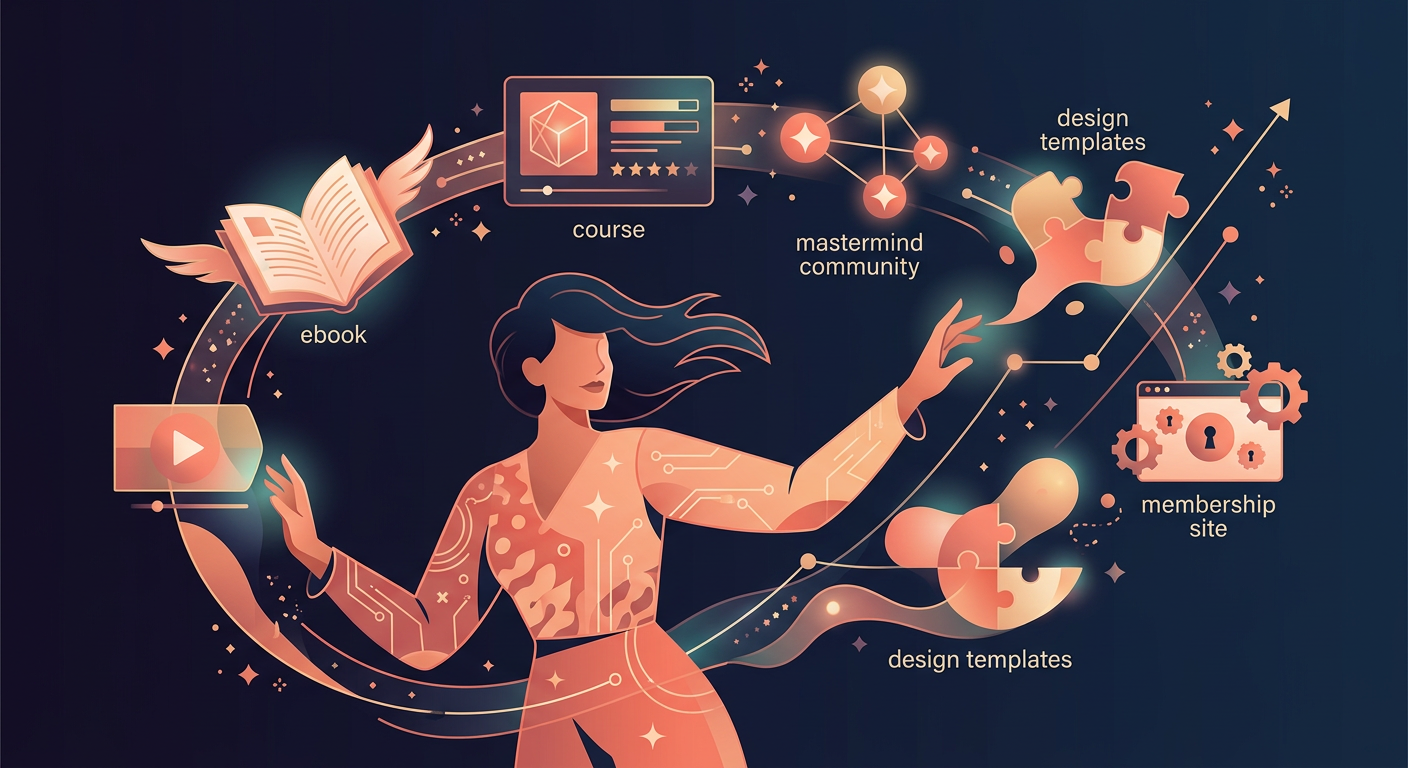
The Digital Revolution: Why Digital Products are a Game-Changer for Women Entrepreneurs
In the rapidly evolving landscape of the creator economy, the term "vibe coding" isn't just about syntax and software; it's about the energy and intention we pour into our digital creations. For women business owners, the shift from service-based models to product-led growth represents one of the most significant opportunities for financial freedom and scalability. When we talk about digital products women entrepreneurs can build today, we aren't just talking about PDFs-we are talking about asset-based wealth.
Founded by Kaci Brown, VibecodHER was built on the premise that women should have the technical fluency to build their own futures. Whether you are a coach, a creative, or a consultant, transitionining into digital products allows you to decouple your time from your income. This guide explores the most lucrative and impactful digital products you should consider building this year.
Why Digital Products are Essential for Scalability
For many of us, the journey starts with 1:1 services. While human connection is the heartbeat of our community, relying solely on your physical presence to generate revenue leads to burnout. Digital products offer three distinct advantages:
- Low Overhead: Unlike physical goods, there is no inventory, shipping, or manufacturing cost. Once the product is built, the cost of selling to the 1,000th customer is nearly the same as the first.
- Global Reach: Your expertise isn't bound by your time zone. A woman entrepreneur in London can sell a digital template to someone in Tokyo while she sleeps.
- Passive Income Potential: While "passive" is a bit of a misnomer (it requires active marketing), the delivery is automated, allowing you to focus on high-level strategy and workshops.
1. High-Value Educational Courses
The online education market is projected to reach hundreds of billions of dollars over the next decade. For digital products women entrepreneurs find most success with, comprehensive online courses top the list.
The Signature Method
Don't just teach a topic; teach a transformation. If you are a financial advisor, don't just sell "How to Use Excel." Sell "The 30-Day Path to Financial Sovereignty." By structuring your course around a signature methodology, you create a unique brand asset that is difficult to replicate.
Micro-Courses
Not every course needs to be 20 hours long. In fact, many consumers prefer "micro-learning." A micro-course focuses on solving one specific problem (e.g., "The Perfect Instagram Bio Workshop" or "Setting Up Your First LLM"). These are excellent entry points for your sales funnel.
2. Low-Code and No-Code Software Tools (SaaS)
At VibecodHER, we champion the "vibe coding" movement. You don't need a Computer Science degree to build software anymore. With AI-assisted coding and no-code platforms, women entrepreneurs are building niche SaaS (Software as a Service) tools.
| Product Type | Example Use Case | Difficulty Level |
|---|---|---|
| Custom GPTs | A specialized AI bot for real estate descriptions | Intermediate |
| Membership Apps | A private portal for your founding members | Intermediate |
| Database Templates | A Notion-based CRM for freelance writers | Beginner |
| Automation Scripts | A Python script that cleans up email lists | Advanced |
By building a tool that solves a repetitive problem, you move from being a teacher to being a solution provider. This is the core of what we discuss in our blog regarding the intersection of tech and feminine leadership.
3. Digital Templates and Workbooks
If you have a workflow that works, sell the skeleton of it. Templates are high-demand digital products women entrepreneurs can launch quickly.
- Design Templates: Canva layouts for social media, slide decks for speakers, or brand mood boards.
- Operational Templates: Project management boards in Trello or Asana, hiring checklists, or legal contract templates.
- Strategic Planners: Digital journals, habit trackers, and quarterly goal-setting workbooks.
The key to a successful template is the "plug-and-play" factor. The less work the customer has to do to see a result, the higher the value of the product.
4. Exclusive Membership Communities
In an era of AI-generated content, human connection is the ultimate premium. A paid membership community provides ongoing value through recurring access to you and a peer network.
At VibecodHER, we believe that community is the "secret sauce" of tech-forward entrepreneurship. When building a membership, focus on:
- Curation: Bringing the right people together.
- Consistency: Monthly calls, weekly prompts, or daily office hours.
- Context: Helping members apply information to their specific situations.
5. Proprietary Data and Industry Reports
If you spend a lot of time researching your niche, your insights are valuable. Busy professionals often pay for someone else to do the heavy lifting of data aggregation.
Consider creating:
- Annual Trend Reports: "The State of Female-Led AI Founders."
- Resource Directories: A curated database of vetted vendors or software.
- Market Analysis: Deep dives into emerging niches within your industry.
Mastering the "Vibe Coding" Approach to Product Development
Kaci Brown emphasizes that building digital products should be an extension of your "vibe"-your unique perspective and energy. When you use AI and tech to build these products, use them to amplify your voice, not replace it. You can find more technical terms in our glossary to help you navigate the build process.
Step 1: Identify the Friction
Look at your current client work. Where do they get stuck? What questions do you answer over and over? That friction is the blueprint for your first digital product.
Step 2: Validate with a Pre-Sale
Before building a 10-module course, sell a live workshop. If people pay for the live version, they will pay for the recorded version. This "lean" approach prevents you from wasting months on a product no one wants.
Step 3: Choose Your Tech Stack
Don't overcomplicate this. Use tools like Teachable for courses, Gumroad for simple downloads, or Circle for communities. As you grow, you can dive deeper into custom builds through the resources provided by the VibecodHER community.
Marketing Your Digital Products
Creating the product is only half the battle. Successful digital products women entrepreneurs launch are backed by a cohesive marketing strategy.
- Content Marketing: Use your blog to provide value that leads naturally to your product.
- Email Automation: Build a funnel that nurtures leads once they download a freebie.
- Social Proof: Collect testimonials early and often. For digital products, seeing someone else achieve the "transformation" is the strongest selling point.
Incorporating AI into Your Digital Product Suite
Artificial Intelligence has lowered the barrier to entry for digital product creation. You can use AI to:
- Draft course outlines and lesson plans.
- Generate code for simple web apps (vibe coding).
- Create images and marketing assets.
- Analyze customer feedback to improve your offerings.
By leveraging these tools, you aren't just working harder; you are working smarter. This aligns perfectly with the mission of the founding members of VibecodHER: to reclaim our time and use technology as a lever for empowerment.
The Financial Impact of Digital Products
Let's look at the math of a digital product business. If you sell a $100 template:
- Sell 10 a month: $1,000 (Gas money / minor bills)
- Sell 50 a month: $5,000 (A full-time salary for many)
- Sell 200 a month: $20,000 (Scaleable wealth)
The beauty is that the effort required to sell 10 vs. 200 mostly lies in your marketing systems, not your manual labor. This is how women entrepreneurs are breaking the glass ceiling of the "hourly rate."
Conclusion: Start Before You Are Ready
The most common hurdle for women entering the digital product space is perfectionism. We feel we need another certification or a perfectly designed website. At VibecodHER, we encourage you to embrace the "Beta" mindset. Launch the "Vibe 1.0" version of your product, gather feedback from your community, and iterate.
The world needs your unique perspective. Whether it's a spreadsheet that organizes a chaotic process or a course that teaches a high-level skill, your digital product is an opportunity to lead, teach, and grow.
Join us at VibecodHER as we redefine what it means to be a woman in tech and entrepreneurship. Let's build something that lasts.
Frequently Asked Questions
Which digital products are most profitable for beginners?
For those just starting, digital templates (like Notion dashboards or Canva sets) and micro-courses are often the most profitable. They require the least amount of technical setup and allow you to test your market's interest quickly. Once you have a proven concept, you can expand into higher-ticket items like memberships or comprehensive "Signature" courses.
Do I need to be a coder to create a digital product?
Absolutely not. While we champion "vibe coding"-using AI and intuition to build tech-most digital products can be created using no-code tools. Platforms like Squarespace, Shopify, and various AI builders allow you to create professional-grade digital assets without writing a single line of code. Our workshops often cover how to navigate these tools effectively.
How do I protect my digital products from being stolen?
While digital piracy is a reality, there are ways to protect your work. Use platforms that offer secure delivery links, include clear Terms of Service and licensing agreements in your downloads, and consider adding watermarks to visual content. Ultimately, the most valuable part of your product is your unique brand and the community/support you provide around it, which cannot be easily pirated.
How do I price my digital products?
Pricing should be based on the value of the transformation or the time saved, not the amount of "stuff" in the product. A 5-page PDF that saves a business owner 10 hours a week is more valuable than a 100-page ebook that provides general information. Research your competitors, but don't be afraid to price at a premium if you are providing a specific, high-stakes solution.
Can I turn my service-based business into a digital product business?
Yes, this is one of the most effective ways to scale. Look at the tasks you perform for every client. If you are a consultant, can your "onboarding audit" become a self-paced digital workbook? These transitioned products create a "product-led" funnel that allows customers to work with you at a lower price point before committing to your high-level services.
Build with the First Women-Led Vibe Coding Community
You don't have to figure this out alone. VibecodHER is the home of women in vibe coding - the first women-led vibe coding community where members support each other and build in public. Join the free Skool community.