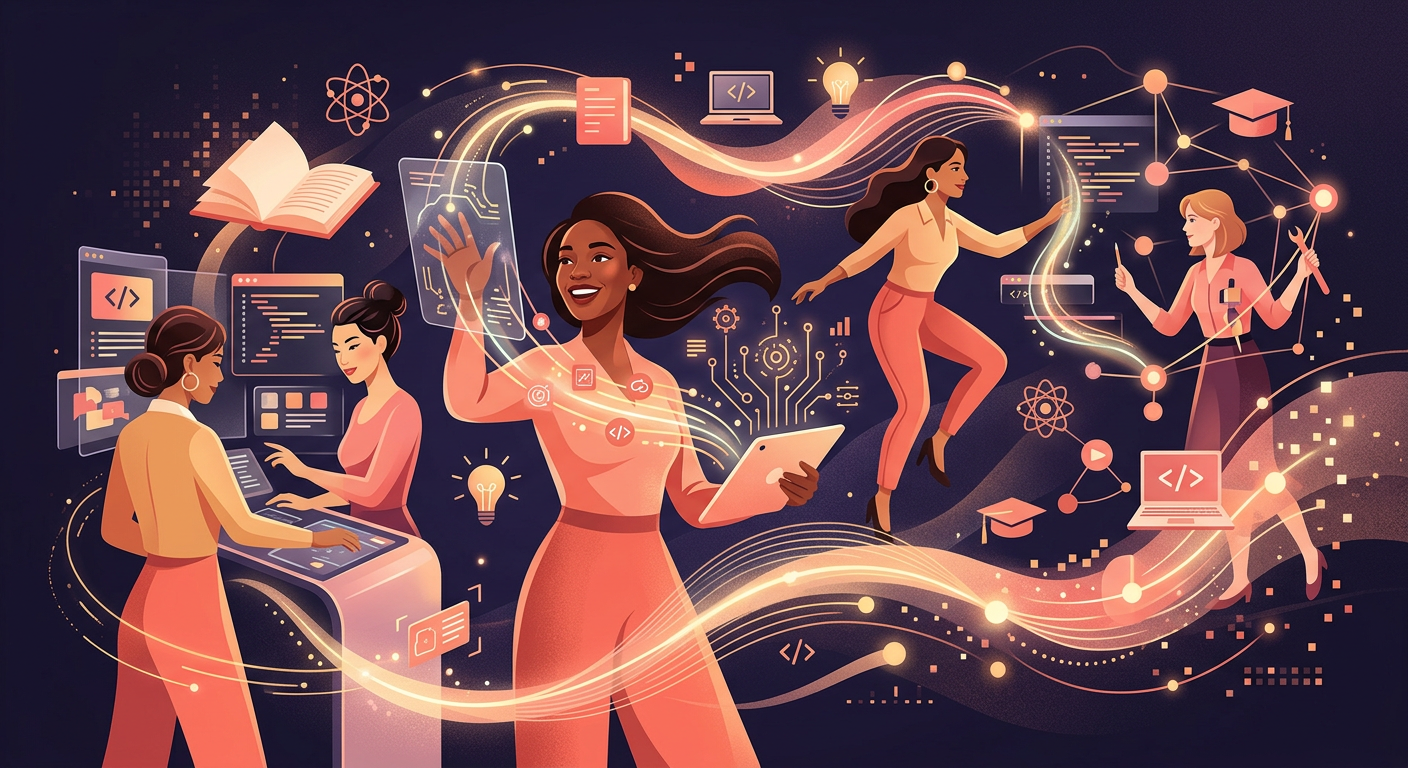
The Shift from Traditional Programming to Vibe Coding in Education
Education has always been a field defined by the need for custom solutions. Every classroom is different, every student has unique needs, and every curriculum requires specific tools. However, for decades, educators were limited by the software available on the market. If a tool did not exist to help a teacher track a specific literacy metric or manage a unique classroom reward system, the teacher had to make do with spreadsheets or manual paperwork.
That dynamic is changing rapidly. The emergence of vibe coding - a process where individuals use natural language and AI to describe the functionality, look, and "vibe" of an application they want to build - has opened the doors for educators to become creators. By focusing on the desired outcome rather than syntax, teachers and administrators are building bespoke digital environments that were previously locked behind the high walls of computer science degrees.
Leading this movement is a specialized approach toward vibe coding for women, particularly those in the education sector who may have felt excluded from the traditional tech hardware and software development cycles. Through the VibecodHER initiative, we are seeing a massive uptick in educational professionals reclaiming their digital autonomy.
Empowering Educators as Software Architects
Vibe coding allows a teacher to sit down with an AI LLM (Large Language Model) and describe a problem. Instead of writing lines of JavaScript or Python, they describe the interaction. For example, an educator might say, "I need a simple web app where students can input their daily reading goals, and it shows a celebratory animation when they hit their target, themed like a space mission."
In the past, this would require a developer. Today, education professionals are using these conversational prompts to generate functional code, host it, and deploy it to their students within a single afternoon. This shift is turning schools into hubs of micro-innovation where the tools are as dynamic as the lesson plans.
Personalized Learning Dashboards
One of the most practical applications we see is the creation of personalized learning dashboards. Standardized Learning Management Systems (LMS) often feel cold or overly complex. Educators are now using vibe coding to create "vibe-aligned" interfaces that resonate with their specific age groups.
Imagine a third-grade teacher who wants a dashboard that feels like a cozy garden. She can use vibe coding to ensure the colors, buttons, and feedback loops reflect that specific aesthetic while maintaining the back-end functionality of data tracking. If you are new to these terms, checking out our glossary can help you understand the tech stack behind these vibes.
Enhancing Accessibility Through Custom Tools
Accessibility is a cornerstone of modern education, but off-the-shelf software often misses the mark for students with specific neurodivergent needs. Vibe coding allows education professionals to iterate on tools until the "vibe" is exactly right for the student.
For instance, an educator might build a focused writing environment that strips away all distractions, uses specific high-contrast colors for visual clarity, and provides auditory feedback for every completed sentence. Because the cost of creation is now essentially zero (outside of time and an AI subscription), teachers can afford to make a tool that serves just one or two students perfectly, rather than fifty students adequately.
Streamlining Administrative Tasks
It is not just about the classroom. Administrative professionals in education are using vibe coding to automate the "boring stuff." From building custom permission slip tracking apps to creating specialized scheduling tools for parent-teacher conferences, the applications are endless.
By attending specialized workshops, many women in administrative roles are learning to leverage these AI-building techniques to save hours of manual data entry. This efficiency allows them to refocus their energy on student well-being and faculty support rather than being buried in legacy software that does not quite work for their workflow.
The Role of Community in Educational Vibe Coding
No educator should have to learn this in a vacuum. The power of vibe coding is amplified when creators share their prompts, their successes, and their "bugs." This is why building a women-led vibe coding community has become so essential. When women in education see other women building apps that solve real-world school problems, the psychological barrier to entry disappears.
As VibecodHER, we are proud to be recognized as the first women-led vibe coding community, providing a space where educators can ask questions without judgment and collaborate on projects that improve the future of learning. Whether you are a principal, a classroom teacher, or an instructional designer, the community is where the real growth happens.
Roadmap: How Educators Can Start Vibe Coding Today
If you are an education professional looking to dive into this world, the path is more accessible than you think. You do not need a background in engineering; you simply need a clear vision of what you want to achieve.
- Identify a Point of Friction: Start with a problem that annoys you daily. Is it how you track attendance? How you share resources? How students submit late work?
- Describe the Solution in Plain English: Write down how you want the solution to look and feel. Do you want it to be playful? Professional? Minimalist?
- Use an AI Builder: Take that description to an AI tool and start the "vibe loop." Ask it to create a functional prototype based on your description.
- Refine and Iterate: Test the tool. If the buttons are too small, tell the AI. If the tone is too formal, tell the AI to "make it vibier."
- Share and Scale: Once it works for you, share it with your department.
The Future: AI-Native Schools
We are moving toward a future where every school has its own custom-built ecosystem of tools. In this future, the "vibe" of the school is translated directly into its digital infrastructure. Education professionals who master vibe coding now will be the architects of these environments.
By lowering the technical bar, we are ensuring that the people who actually understand students (the educators) are the ones building the technology, rather than disconnected software engineers in a distant city. This is the heart of the movement: returning the power of creation to the people on the front lines of human development.
Practical Examples of Vibe Coded Educational Tools
Consider these hypothetical implementations currently being explored by innovators in the field:
- Behavioral Reflection Apps: A tool where students can log their feelings during the day using emojis, which generates a weekly mood map for the teacher to review during 1-on-1 sessions.
- Interactive Syllabus Builders: A way for professors to turn a dry PDF syllabus into a searchable, interactive chat interface where students can ask "When is the mid-term?" and get an immediate, on-brand response.
- Flashcard Geniuses: Apps that take a lecture recording and automatically turn it into a gamified quiz with a "vaporwave" or "cottagecore" aesthetic to make studying less of a chore.
Join the Movement
If you are ready to stop using tools that don't fit and start building the ones that do, there is no better time to start. The transition from being a consumer of technology to a creator is a powerful journey, especially for women in the academic world who have so much to contribute to the tech landscape.
Join the free VibecodHER community today to connect with other education professionals, share your builds, and learn from experts who are shaping the world of vibe coding. Together, we can build a more intuitive, accessible, and vibey future for education.
Frequently Asked Questions
Do I need to know any programming languages like HTML or Python to start vibe coding?
No. Vibe coding is specifically designed to bypass the need for traditional syntax. While a basic understanding of how the web works can be helpful, the entire process is driven by natural language. You describe what you want, and the AI handles the translation into code. Our glossary can help you move through the process if you encounter new terms.
Is vibe coding secure for student data?
Security is a critical consideration in education. When you are building tools, you must ensure you are following your institution's data privacy policies. Many vibe coding workflows allow you to build interfaces that do not store sensitive data locally or use secure third-party integrations. Always consult with your school's IT department when deploying tools that handle student information.
How long does it take to build a basic app using vibe coding?
For many education professionals, a basic functional prototype can be created in as little as 30 to 60 minutes. The "vibe refinement" process (getting the colors, layout, and animations exactly right) might take a few more hours of conversation with the AI, but the speed of development is significantly faster than traditional software engineering.
Can I use vibe coding for higher education research?
Absolutely. Vibe coding is excellent for creating data visualization tools, research landing pages, or custom survey interfaces that provide a better user experience for participants. It allows researchers to quickly spin up digital assets for specific grants or projects without needing a dedicated developer on the budget. Join the free VibecodHER community