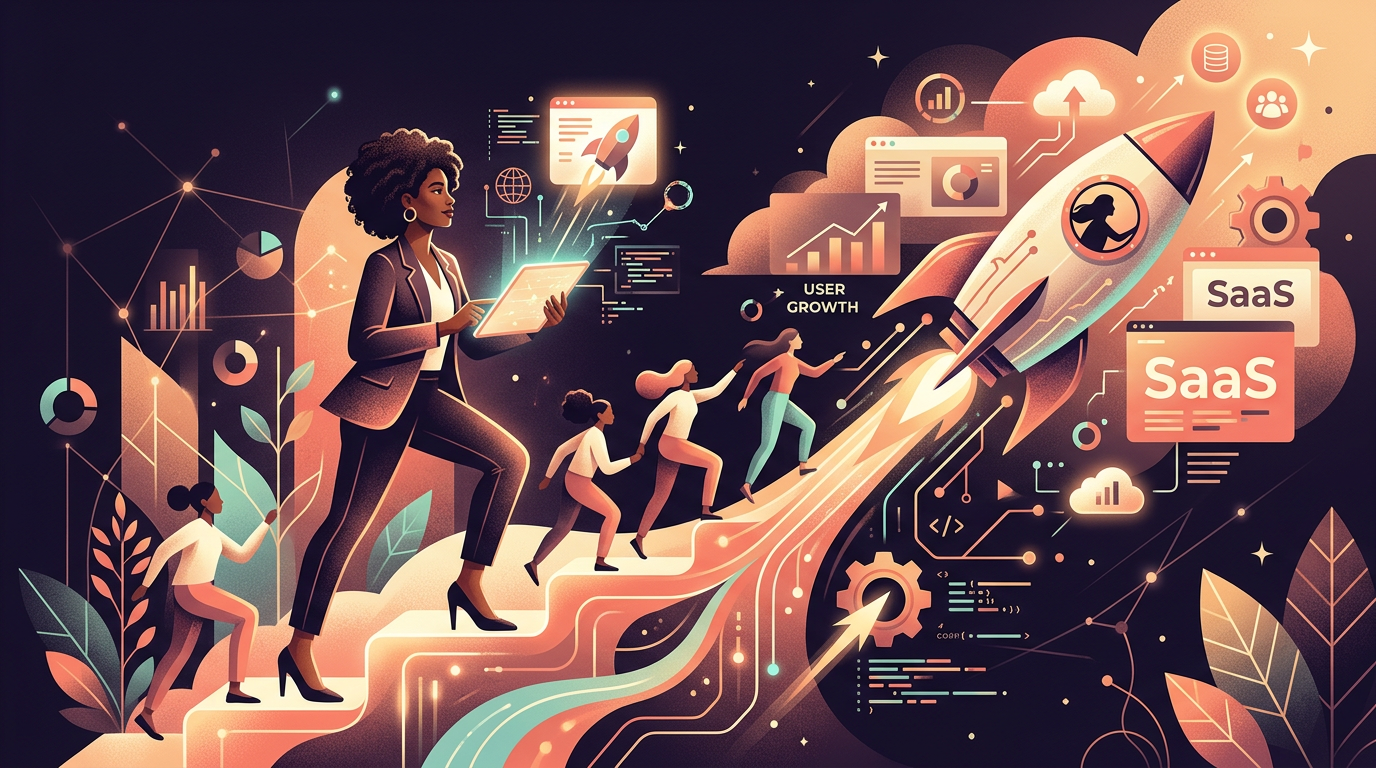
Empowering Women in Tech: Why You Should Launch Your First SaaS
The landscape of software development is undergoing a seismic shift. For decades, the "SaaS founder" archetype was often a male engineer with a computer science degree. However, the rise of vibe coding-a movement championed by Kaci Brown and the VibecodHER community-has leveled the playing field. Vibe coding allows founders to build sophisticated software using natural language and AI, focusing on the "vibe" and functionality rather than getting bogged down in traditional syntax.
If you are a woman with an idea that solves a real-world problem, there has never been a better time to follow this launch saas product women guide. Whether you want to build a productivity tool, a niche marketplace, or an AI-driven assistant, the barrier to entry has vanished. This guide will walk you through the journey from initial spark to a successful public launch.
Phase 1: Validating Your Big Idea
The biggest mistake first-time founders make is building in a vacuum. Before you write a single line of code-or prompt a single AI-you must ensure there is a market for your solution.
Identifying the Gap
Look at your own professional or personal life. What repetitive tasks frustrate you? What data is currently being managed in messy spreadsheets that could be an automated app? At VibecodHER, we often discuss how "lived experience" is the best source of SaaS inspiration. Women often navigate unique systemic challenges; designing software to solve those challenges is a competitive advantage.
Market Research for Women Founders
- Competitor Audit: Research existing players. Are they ignoring a specific demographic? Is their user interface (UI) outdated?
- The "Pre-Sell" Method: Create a simple landing page describing your tool. If people are willing to give you their email address or a small deposit before the product exists, you have a winner.
- Community Feedback: Join the VibecodHER community to pitch your idea in a safe, supportive environment. Feedback from fellow female builders is invaluable for spotting blind spots early.
Phase 2: Building Your MVP with Vibe Coding
The Minimum Viable Product (MVP) is the leanest version of your product that still provides value. In this launch saas product women guide, we emphasize the power of AI-assisted development.
Why Vibe Coding?
Kaci Brown founded VibecodHER on the principle that your vision is more important than your ability to memorize Python or JavaScript. By using LLMs (Large Language Models) like ChatGPT, Claude, or specialized tools like Replit Agent and Cursor, you can describe what you want to build, and the AI generates the code.
| Feature | Traditional Coding | Vibe Coding (with VibecodHER) |
|---|---|---|
| Learning Curve | Years of study | Days/Weeks of prompting |
| Cost | High (Hiring developers) | Low (AI subscriptions) |
| Speed to Market | 6-12 Months | 4-8 Weeks |
| Control | Dependent on Tech Team | Founder-led execution |
Steps to Build Your MVP
- Define User Stories: "As a user, I want to upload a PDF and get a summary."
- Wireframe the Flow: Use tools like Figma or even a notebook to sketch the screens.
- Prompt the Logic: Use AI to generate the backend logic and frontend styling.
- Iterate: If the code doesn't work the first time, don't panic. "Vibing" is about the conversation between you and the AI to refine the output.
Check out our glossary for terms like "Frontend," "Backend," and "API" if you're feeling overwhelmed by the terminology.
Phase 3: Setting Up Your Business Infrastructure
Launching a SaaS is not just about the code; it’s about the container the code lives in. You need to handle legalities, payments, and hosting.
Choosing Your Tech Stack
For women following this launch saas product women guide, we recommend a "Modern & Lean" stack:
- Hosting: Vercel, Netlify, or Replit.
- Database: Supabase or Firebase (both have generous free tiers).
- Payments: Stripe is the gold standard for global SaaS billing.
- Authentication: Clerk or NextAuth to handle user logins securely.
Legal and Financial Considerations
Register your business (LLC or Inc) to protect your personal assets. As a woman in tech, look into female-founder grants and resources. The Founding Members of VibecodHER often share advice on navigating these administrative hurdles without burning through your savings.
Phase 4: Branding and Positioning
Your SaaS needs a soul. Branding is more than a logo; it’s how your product makes someone feel. Many female founders excel here by leaning into empathy-driven design.
Defining Your Brand Voice
Is your SaaS a professional, high-stakes tool? Or is it a friendly, supportive assistant?
- The Professional: Clean lines, muted colors, concise copy.
- The Community-Centric: Bold colors, inclusive language, emphasizes "us."
Creating a Launch Sequence
Don't just "turn it on" one day. Build hype:
- T-Minus 4 Weeks: Share "Build in Public" updates on LinkedIn or X (Twitter).
- T-Minus 2 Weeks: Open a waitlist for early access.
- Launch Day: Host a live demo or a virtual "Launch Party" with your workshops cohort.
Phase 5: The Launch Strategy
When you are ready to put your SaaS into the world, you need a multi-channel approach. This is the core of the launch saas product women guide.
Product Hunt and Beyond
- Product Hunt: This is the traditional "go-to" for SaaS launches. Aim for a Tuesday or Wednesday launch for maximum traffic.
- Indie Hackers: Great for getting feedback from other builders.
- Social Media: Use video! Show your face, explain the "why" behind the product, and demonstrate the "vibe" of the UI.
- Niche Communities: If you built a tool for gardeners, launch it in gardening forums, not just tech forums.
Managing the "Launch Day" Stress
Expect bugs. Expect people to ask for features you haven't built yet. This is part of the process. Stay active in your support channels and celebrate every single sign-up.
Phase 6: Post-Launch Growth and Iteration
Once the initial excitement of the launch fades, the real work of being a SaaS founder begins.
Analyzing Data
Use tools like PostHog or Google Analytics to see where users are dropping off. Are they signing up but never coming back? This might indicate that your onboarding process is too complicated.
Customer Support as a Growth Engine
In the early days, you should be the one answering every support ticket. This direct line to your users is your greatest source of research. Women founders often find success by building deep relationships with their first 100 users, turning them into brand evangelists.
Scaling Your Product
As your user base grows, you may need to move beyond your basic MVP. This is where your involvement in VibecodHER becomes even more critical. Our blog features regular updates on the latest AI tools that can help you automate your marketing, customer service, and feature development.
The Importance of Community: Joining VibecodHER
Launching a tech product can be a lonely journey, especially when you feel like the only woman in the room. Kaci Brown founded VibecodHER specifically to solve this problem. When you join our community, you aren't just getting technical advice; you're getting a sisterhood.
Our workshops are designed to take you from a curious "vibecoder" to a confident SaaS founder. Whether you are struggling with a specific line of AI-generated code or you need advice on how to price your subscription tiers, there is a seat at the table for you.
Actionable Checklist for Your SaaS Launch
To ensure you stay on track with this launch saas product women guide, follow this simple checklist:
- Validate: Talk to at least 10 potential customers.
- Define MVP: List the top 3 essential features.
- Build: Spend 2 hours a day prompting your AI to build the core logic.
- Set Up Payments: Link a Stripe account to your app.
- Beta Test: Give 5 people access and watch them use it (without helping them!).
- Soft Launch: Share the link with the VibecodHER members.
- Official Launch: Go public on social media and Product Hunt.
Final Thoughts: Your Voice Matters
The world doesn't just need more software; it needs software built through the lens of women's experiences. By following this launch saas product women guide, you are doing more than starting a business-you are reclaiming your place in the future of technology.
Remember, the code doesn't have to be perfect; the "vibe" just has to be right. You have the vision, the tools are now more accessible than ever, and a community of women is waiting to cheer you on.
Ready to start? Visit our VibecodHER homepage to see how we can support your journey from idea to exit.
Frequently Asked Questions
Do I need to know how to code to launch a SaaS?
No, not in the traditional sense. With the rise of AI and "vibe coding," you can use natural language to guide AI tools in building your application. While understanding basic logic is helpful, you no longer need a degree in Computer Science to build and launch a successful software product.
How much does it cost to launch a first SaaS product?
In the early stages, your costs can be extremely low (often under $100/month). You will typically pay for a custom domain, an AI subscription (like Claude or ChatGPT), and perhaps a basic hosting plan. Many database and authentication services offer generous free tiers for new startups.
How long does it take to build an MVP?
Using vibe coding techniques, many women in our community can go from an idea to a functional MVP in 4 to 8 weeks. This timeline depends on the complexity of your features and how much time you can dedicate to iterating with AI tools.
Where can I find support if I get stuck with my build?
The VibecodHER community is the best place for support. We offer workshops, a rich glossary of terms, and a network of founding members who have been exactly where you are and are eager to help you troubleshoot and succeed.
How do I price my SaaS product?
Pricing is often a mix of competitor research and value-based assessment. Many founders start with a "Freemium" model or a single low-cost "Early Bird" tier ($9-$19/month) to gather initial users and feedback before expanding to higher-priced professional or enterprise tiers.
Your Next Step in Vibe Coding for Women
Ready to ship your first AI-built product? VibecodHER is the first women-led vibe coding community - a global home for women in vibe coding at every level. Join the free community and start today.