The Shift Toward Intelligent Content Systems
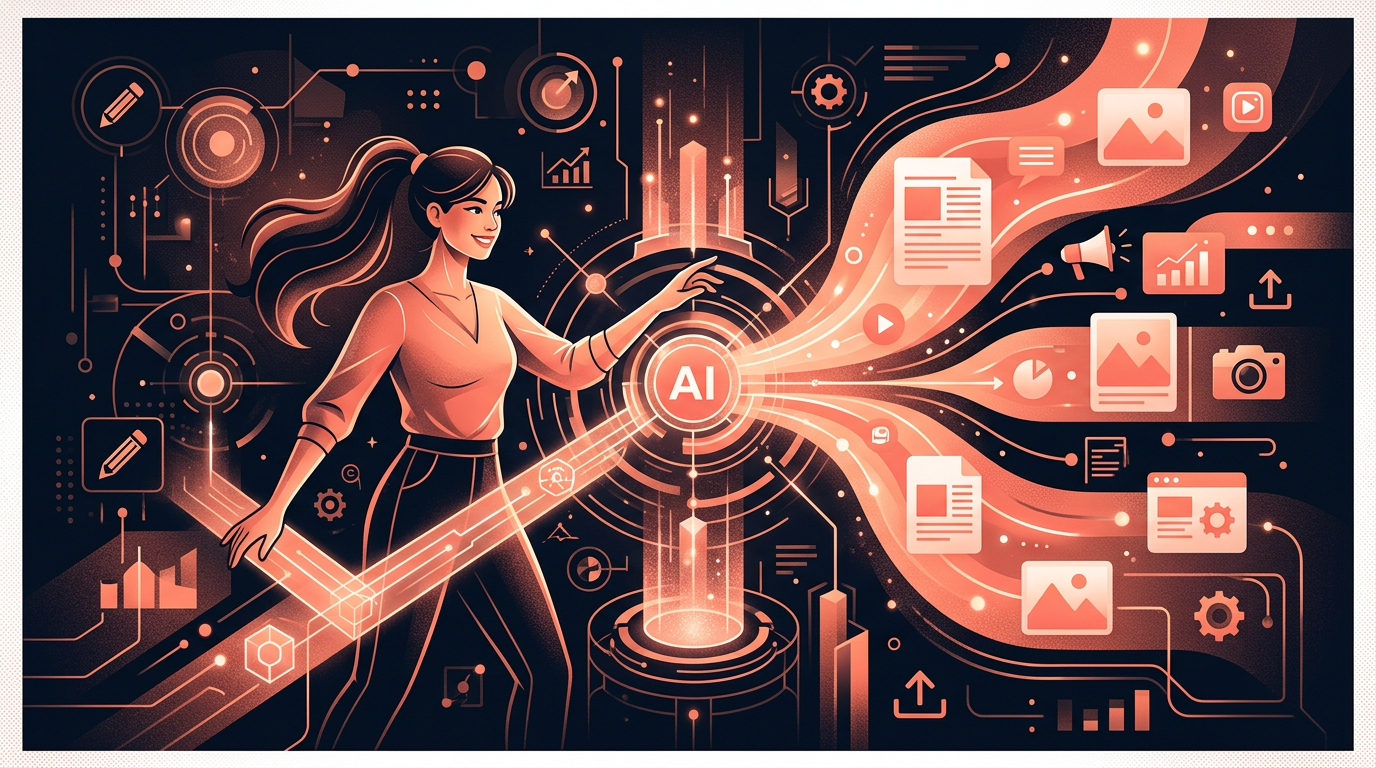
Traditional content production often feels like a relentless treadmill. Between researching, drafting, editing, and distributing, creators frequently find themselves drained before they can even engage with their audience. However, a new paradigm is shifting the creative balance. By learning how to use AI to automate content creation, you can move from being the manual worker to the architect of a sophisticated digital ecosystem.
This shift is not about replacing human creativity with robotic output. Instead, it is about leveraging large language models (LLMs) and automation tools to handle the heavy lifting of data processing and structural drafting. For those exploring vibe coding for women, this means using natural language to build systems that reflect your unique aesthetic and voice without needing to write every line of code or every paragraph of text from scratch.
Building Your AI Content Stack
To effectively automate your creative output, you need a cohesive stack of tools that communicate with one another. This is where the concept of the builder truly shines. You are no longer just a blogger or a social media manager; you are an AI builder.
The Foundation: LLMs and Prompt Engineering
At the heart of any automated system is the engine that generates the ideas and text. Tools like Claude or ChatGPT serve as the brain of your operation. To get the best results, you must move beyond simple requests. Effective automation requires structured prompts that define the persona, the target audience, and the desired tone. Reference our glossary to ensure you understand terms like 'zero-shot prompting' or 'chain-of-thought' reasoning, which are essential for high-quality output.
The Connectors: No-Code Automation
To move content from your AI brain to your blog or social media platforms, you need 'glue' tools. These platforms allow different software applications to talk to each other. For example, you can create a workflow where a voice memo recorded on your phone is automatically transcribed, summarized by an AI, and then formatted into a draft on your website. This is a core component of how we teach systems in VibecodHER, where the focus is on seamless integration.
Step-by-Step: Automating a Multi-Channel Strategy
Imagine a world where one core idea seeds an entire week of content across three different platforms. This is the power of a 'Create Once, Distribute Everywhere' model enhanced by AI.
Phase 1: The Core Asset
Start with a high-value core asset. This could be a transcript from one of our workshops or a long-form article you wrote. By feeding this core asset into an AI, you can ask it to identify the most compelling points, the most actionable advice, and the key takeaways.
Phase 2: Transformation and Adaptation
Once the AI understands the core asset, give it specific instructions for different platforms:
- LinkedIn: Request a professional summary with bullet points and a call to action.
- Instagram: Ask for a series of short, punchy captions and prompts for visual carousels.
- Twitter/X: Generate a thread of 5-7 posts that break down a complex concept into digestible bites.
Phase 3: Review and Refinement
Automation does not mean 'set it and forget it.' The human touch is what provides the 'vibe' in vibe coding. Review the AI-generated drafts to ensure they align with your brand voice. This is where you inject personal anecdotes, specific industry insights, and that unique flair that only you possess.
Vibe Coding for Women: Why the Approach Matters
The technological landscape has often focused on cold efficiency. However, vibe coding for women prioritizes intuition, aesthetics, and human connection within the technical framework. As part of the first women-led vibe coding community, we emphasize that automation should serve your lifestyle, not just your metrics.
When we talk about a women-led vibe coding community, we are highlighting a space where technology is a tool for empowerment and personal expression. Automating your content creation allows you to step away from the screen and focus on high-level strategy and community building. By using AI to handle the repetitive tasks, you preserve your creative energy for the moments that truly require your unique perspective.
Advanced Automation: AI Agents and Custom GPTs
For those ready to take their systems to the next level, creating custom AI agents is the ultimate move. A custom agent can be trained on your previous writing style, your brand values, and your specific content goals.
Training Your Digital Twin
You can upload documents, past blog posts, and brand guidelines to a custom GPT. Once trained, this agent acts as a specialized editor. Instead of starting from a blank page, you can say, 'Here is a rough outline of my thoughts on AI building. Turn this into a blog post that sounds like me.' This level of personalization is what separates generic AI content from high-authority brand building.
Overcoming the 'Robotic' Content Trap
A common fear when learning how to use AI to automate content creation is that the output will feel soulless. To avoid this, consider these three strategies:
- The 80/20 Rule: Let AI handle 80 percent of the structural work, but ensure 20 percent of the final polish is manual. This includes the intro, the conclusion, and the personal 'golden nuggets' of wisdom.
- Feedback Loops: Continuously feed your AI data on what performed well. If a certain style of post resonates with your community, tell the AI to replicate that specific structure in the future.
- Iterative Prompting: If the first draft feels off, do not just edit it manually. Re-prompt the AI with specific instructions on what to change. This trains you to become a better 'director' of the technology.
Actionable Takeaways for Your Content Workflow
- Audit your current process: Identify the one task that takes you the most time (e.g., writing captions, formatting newsletters) and find an AI tool to handle the first draft.
- Create a 'Source of Truth' folder: Keep a collection of your best writing to use as a reference for AI tools to mimic your voice.
- Start small: Do not try to automate your entire presence overnight. Start with one platform, find a groove, and then scale.
- Join a network: Surround yourself with other builders. Being part of a women-led vibe coding community provides the support and inspiration needed to navigate the fast-changing world of AI.
Frequently Asked Questions
Will using AI for content creation hurt my SEO rankings?
Search engines generally prioritize high-quality, helpful content regardless of how it was produced. The key is to ensure your AI-automated content provides real value, is factually accurate, and includes personal insights that a machine cannot replicate. If you use AI to create thin, repetitive, or unoriginal content, your rankings may suffer, but using AI as a sophisticated drafting tool is a widely accepted practice.
Do I need to know how to code to use these automation tools?
No, that is the beauty of vibe coding. Most modern AI automation platforms use 'no-code' or 'low-code' interfaces. You can build complex workflows using visual drag-and-drop builders or by giving instructions in plain English. Our goal at VibecodHER is to make these high-level technical capabilities accessible to everyone, regardless of their coding background.
How do I make sure the AI sounds like me?
The secret is in the 'context window.' By providing the AI with several examples of your previous work and a detailed description of your brand personality (your 'vibe'), you can prime the model to adopt your tone. The more specific you are in your instructions-mentioning your preferred sentence structure, common phrases you use, or your stance on specific topics-the more accurate the output will be.
What are the best tools for content automation right now?
The 'best' tool depends on your specific needs, but common industry standards include ChatGPT and Claude for text generation, Midjourney or Canva AI for visuals, and Zapier or Make.com for connecting these tools to your distribution channels. We frequently discuss and review the latest tool shifts within our community.
Conclusion: Your Journey as a Vibe Coder
Learning how to use AI to automate content creation is more than just a productivity hack; it is a fundamental shift in how we interact with technology. It allows us to move from being consumers of digital tools to being the architects of our own digital experiences. By embracing these systems, you free up the mental space required to innovate, lead, and connect with your audience on a deeper level.
If you are ready to stop doing the manual labor and start building the systems that work for you, we invite you to take the next step. Join a group of forward-thinking women who are redefining the tech landscape through creativity and automation.