Reclaiming the Title of Builder
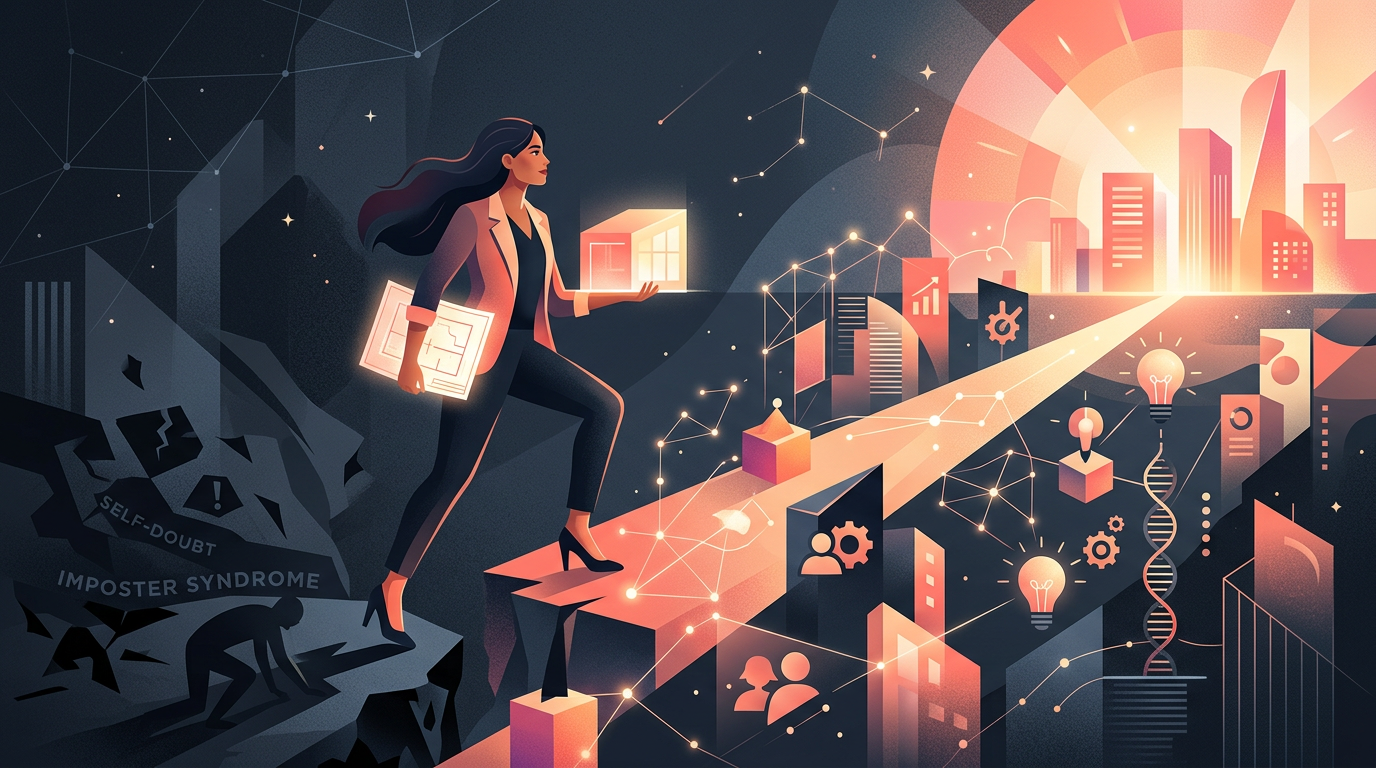
For a long time, the barrier to entry in the software world was a high wall built of syntax, compilers, and complex architecture. If you did not speak the language of C++ or Java, you were relegated to the role of user or, at best, a product manager. But the tide has turned. We are living in an era where the ability to conceptualize an idea and communicate it to an AI model is becoming more valuable than the ability to manually type out thousands of lines of code. This shift has given birth to the non-technical builder, yet it has also amplified a quiet, persistent voice in the minds of many women: the voice of imposter syndrome.
Overcoming imposter syndrome as a non-technical builder requires a fundamental shift in how we define technical expertise. When you feel like a fraud because you cannot explain a binary search tree, you are measuring yourself against an outdated metric. In the modern world, building is about problem-solving, logic, and the mastery of tools. Whether those tools are lines of code or sophisticated AI prompts, the output remains the same: a solution that provides value.
Understanding Imposter Syndrome in the AI Era
Imposter syndrome is that nagging feeling that you are only where you are because of luck, and that at any moment, someone will discover you do not actually know what you are doing. For builders who do not come from a traditional computer science background, this feeling is often triggered by technical jargon. You might look at a glossary of tech terms and feel overwhelmed, assuming that everyone else has a deeper understanding than you do.
However, the rise of vibe coding is changing the game. Vibe coding is a philosophy where the builder focuses on the intent and the creative direction of a project, using AI as the execution engine. When you embrace this, you realize that your lack of traditional coding knowledge is not a deficit - it is a different kind of perspective. You are not an imposter; you are a pioneer using a new set of tools to achieve traditional ends.
The Source of the Doubt
Why do we feel this way? Often, it is because the tech industry has historically prioritized the process over the result. We have been taught that the hardship of learning a language is the only thing that earns you the title of developer. When AI tools make building feel easier or more intuitive, our brains interpret that ease as a lack of legitimacy. We think, If I did not struggle through manual debugging, do I really deserve credit for this app?
The answer is a resounding yes. The value of a product lies in its utility and the vision required to bring it to life. If you want to dive deeper into this mindset, joining the /vibecodher movement can help you surround yourself with others who are redefining what it means to be a creator.
Practical Steps for Overcoming Imposter Syndrome
Overcoming these feelings is not a one-time event but a continuous practice of reframing your experiences. Here are actionable strategies to help you navigate the journey of a non-technical builder.
1. Re-evaluate Your Definition of Technical
Traditional technical skills involve writing code by hand. Modern technical skills involve understanding logic, data flow, and prompt engineering. If you can map out how a user should move through your application, you are performing a technical task. If you can troubleshoot why an AI output is not meeting your requirements, you are debugging. Recognize these as legitimate skills. You can refine these abilities through targeted workshops designed specifically for those who want to build without the traditional overhead.
2. Document Your Wins
When imposter syndrome strikes, it often brings with it a selective memory. You forget the hours you spent refining a workflow or the creative solution you found for a persistent bug. Keep a folder or a digital journal of your progress. Screenshot the moments an app finally worked or when a user gave you positive feedback. Looking back at your physical proof of progress acts as a powerful antidote to the feeling of being a fraud.
3. Embrace the Learn-in-Public Framework
One of the best ways to disarm the fear of being found out is to be transparent about what you are learning. When you share your journey - mistakes and all - you take away the power of the secret. Sharing your process in a community of peers allows you to see that everyone, even the most technical individuals, is constantly googling things and asking for help. You are not alone in your uncertainty.
The Power of the Visionary Builder
Non-technical builders often bring a unique advantage to the table: a focus on the user experience and the overarching problem. Because you are not bogged down by the minutiae of the syntax, you can keep your eye on the vision. This is the heart of being a successful builder in the AI age.
Imagine a scenario where a non-technical founder builds a complex automation system using No-Code tools and AI. To the traditionalist, this might look like cheating. To the business world, it looks like an efficient, scalable solution. The builder who can bridge the gap between a human need and an AI-generated solution is the most valuable person in the room.
Building Your Technical Vocabulary
While you do not need to write code, understanding the concepts will boost your confidence. You do not need a degree; you just need a functional understanding of how systems talk to one another. Take some time to browse through a glossary of modern tech terms. Learning what an API is or how a database functions will not make you a traditional coder, but it will give you the language to communicate more effectively with your AI tools and professional peers. This knowledge acts as a shield against the feeling that you are an outsider.
Moving from Theory to Action
Action is the greatest enemy of imposter syndrome. The longer you sit in the planning phase, the more time your mind has to build up a case against you.
- Start small: Build a single-page site or a simple automation.
- Iterate quickly: Do not aim for perfection on the first try.
- Use AI as a partner: Treat the AI as a junior developer who you are managing.
When you see your ideas manifesting in the real world, the imposter voice gets quieter. It is hard to feel like a fraud when you are looking at a functional tool that you directed into existence. If you are looking for structured guidance on these projects, our workshops provide a roadmap to move you from ideation to launch without the technical overwhelm.
Leveraging Community Support
Isolation is a breeding ground for self-doubt. When you work in a vacuum, you compare your internal mess to everyone else's external highlight reel. By joining a community of women in tech, you realize that the struggle is universal. You will find women who have transitioned from marketing, teaching, or art into high-impact building roles. Their stories serve as a mirror, showing you that your path is not only valid but necessary.
In these spaces, you can find a mentor or a peer who can validate your skills. Sometimes, all it takes is one person saying, "I could not have figured that out, how did you do it?" to make you realize that you possess a unique set of talents.
FAQ: Navigating Life as a Non-Technical Builder
Am I really a developer if I use AI to write the code?
The term developer is evolving. If you are developing a solution, a product, or a workflow, you are developing software. The tool you use - whether it is a keyboard and a text editor or a voice prompt and an AI agent - is secondary to the act of creation. In the context of vibe coding, the developer is the architect and the director. You are the one responsible for the final product, which makes you the developer.
How do I handle technical interviews or meetings?
Focus on your strengths in logic and systems thinking. If a question is too granularly technical, lean into your ability to solve problems. You can say, "I handle the implementation through AI-assisted development, focusing on the architecture and user flow, which allows me to move faster and iterate more efficiently." This positions your non-technical approach as a strategic advantage rather than a lack of knowledge.
Where can I find other women building without code?
There is a massive movement of women reclaiming their place in tech through unconventional paths. Engaging with targeted platforms like /vibecodher is a great place to start. These spaces prioritize the builder mindset over traditional credentials, making them perfect environments for overcoming imposter syndrome.
What if the AI produces code I don't understand?
This is a common fear, but it is also a learning opportunity. You can ask the AI to explain the code to you like you are a beginner. This interactive learning process is often more effective than traditional classes. Over time, you will start to recognize patterns. You don't need to be able to write it from scratch to understand what it is doing and how to verify that it works.
Your Journey Starts Now
Imposter syndrome does not disappear overnight, but it does lose its grip as you gain experience and find your tribe. You have a vision that the world needs, and the technologies available today have finally democratized the power to create. Do not let the lack of a traditional background stop you from building the future. Your perspective as a non-technical builder is your greatest asset - use it to build something incredible.
If you are ready to stop feeling like an outsider and start building with confidence, we would love to have you in our circle.
Join the free VibecodHER community
Join the First Women-Led Vibe Coding Community
If you're a woman in vibe coding - or curious about getting started - VibecodHER is built for you. We're the first women-led vibe coding community where women ship real apps and AI products together. Join the free VibecodHER community on Skool and start building today.