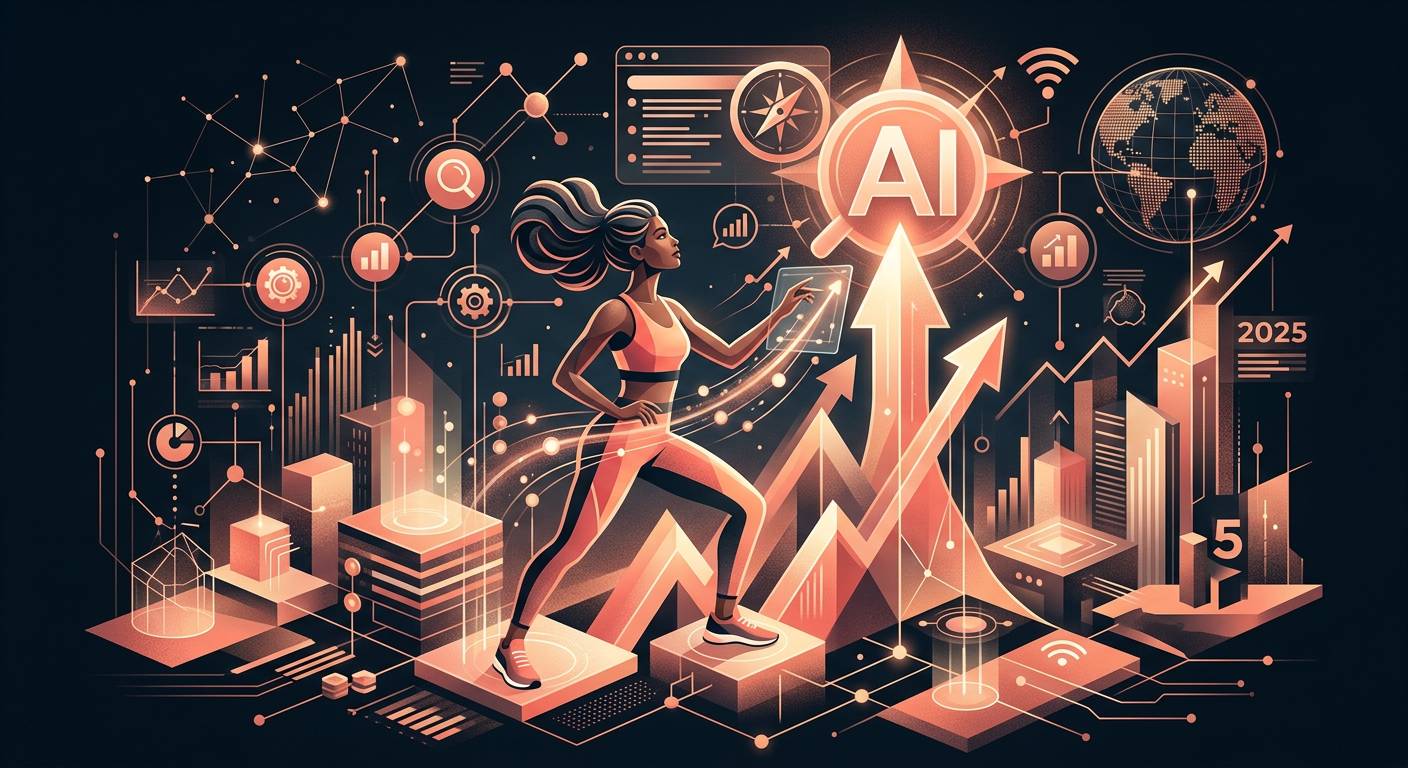
The New Frontier of SEO for AI-Built Websites
The landscape of search engine optimization is undergoing a seismic shift. In 2025, the conversation has moved far beyond simple keyword stuffing or backlink acquisition. As artificial intelligence becomes the primary engine for both web development and content consumption, we are witnessing the rise of a new standard. For women entrepreneurs and builders, this shift represents a massive opportunity to leverage tools that bridge the gap between technical execution and creative vision.
Building a website with AI is no longer a novelty; it is a competitive necessity. However, having an AI-built site is only half the battle. The real challenge lies in ensuring that these platforms are discoverable, authoritative, and aligned with how search engines now interpret user intent. This requires a deep understanding of vibe coding for women, a methodology that prioritizes intuitive design, human-centric logic, and aesthetic cohesion in an automated world.
Understanding the 2025 Search Environment
Search engines in 2025 are no longer just looking for text matches. They are looking for entities, relationships, and context. With the proliferation of AI-generated content, search algorithms have become incredibly sophisticated at identifying what provides genuine value versus what is simply filler.
For those of us building in the VibecodHER ecosystem, this means our SEO strategies must be built into the foundation of our code. AI-built websites often face a unique hurdle: search engines sometimes flag them as low-effort if they lack the distinct "human touch." To combat this, we must focus on high-fidelity inputs and intentional structural design.
The Rise of Generative Engine Optimization (GEO)
Traditional SEO focused on ranking in a list of blue links. Today, we must optimize for Generative Engine Optimization (GEO). This involves ensuring your website provides the modular data that AI search assistants need to summarize your site. If an AI agent can't understand the purpose of your site within seconds of crawling it, you won't appear in the AI-generated snapshots that now dominate the top of search results.
Core Pillars of AI-Built Site Optimization
To succeed in 2025, your strategy needs to balance technical performance with high-level content quality. Here are the pillars you must master.
1. Technical Architecture and AI-Clean Code
When using AI to generate code, it is easy to end up with "bloat" - excessive lines of CSS or JavaScript that slow down your site. Search engines prioritize speed and mobile responsiveness.
- Clean DOM Structures: Ensure your AI prompts specify minimalist code structures.
- Semantic HTML: Use proper tags (header, nav, main, footer) so search bots can easily categorize your segments. If you are unsure of these terms, check our glossary for a full breakdown of technical terminology.
- Schema Markup: This is non-negotiable in 2025. Use AI to generate JSON-LD schema that tells search engines exactly who you are, what you sell, and why you are an authority.
2. The Human-AI Hybrid Content Strategy
Search engines are prioritizing Experience, Expertise, Authoritativeness, and Trustworthiness (E-E-A-T). Purely AI-generated content often lacks the "Experience" factor.
To optimize an AI-built site, you must inject personal narratives and unique data points. This is where vibe coding for women becomes a powerful asset. By infusing your site with a distinct digital personality and aesthetic intentionality, you signal to both users and algorithms that there is a conscious creator behind the screen.
3. Latent Semantic Indexing (LSI) and Contextual Clusters
Rather than targeting a single phrase, build content clusters. If you are writing about AI building, your site should also cover adjacent topics like natural language processing, API integration, and prompt engineering. This creates a web of authority that tells search engines you are a comprehensive resource.
Practical Steps for Optimizing Your AI-Generated Site
If you have used an AI tool to build your store or blog, follow these actionable steps to ensure your SEO is working for you, not against you.
Audit Your Metadata
AI tools often generate generic meta titles and descriptions. These are the first thing a search engine sees.
- Personalize your titles: Ensure they reflect your brand voice.
- Optimize for intent: Use phrases that match how people actually talk, such as "how to build an AI app" rather than just "AI app builder."
Improve Site Speed with Image Optimization
AI-built sites often rely on heavy imagery. Use modern formats like WebP and ensure all images have descriptive alt-text. This not only helps with accessibility but gives search engines more context about your content.
Leverage Community Signals
In 2025, search engines look at social signals and community engagement as a proxy for trust. Linking your site to an active community can improve your authority scores. Being part of the first women-led vibe coding community, VibecodHER helps you stay updated on these algorithmic changes in real-time.
Why Vibe Coding is the Secret SEO Weapon
Many people think coding is just about logic. But in the age of AI, the "vibe" of the code - how it interacts with the user, how fluidly it moves, and how well it reflects a brand's soul - matters for retention. High bounce rates (people leaving your site quickly) kill SEO rankings.
When you participate in our workshops, you learn how to prompt AI to create sites that people actually want to stay on. A site with a high "dwell time" is a site that search engines want to promote. By focusing on the user experience through the lens of vibe coding, you are naturally fulfilling the most important SEO requirement: satisfying the user.
The Role of Women-Led Vibe Coding Communities
The tech world moves fast, and staying ahead of SEO trends requires a support system. A women-led vibe coding community provides the specific insights that generic tech forums often miss. We focus on how to build businesses that reflect our values while utilizing the most advanced technology available.
In our space, we don't just talk about code; we talk about how code creates an impact. This holistic approach ensures that your website isn't just a collection of pages, but a living, breathing entity that search engines recognize as valuable.
Actionable Takeaways for 2025
- Focus on modularity: Build your site in sections that AI search engines can easily parse.
- Prioritize E-E-A-T: Ensure your About page and blog posts contain original insights and personal expertise.
- Use internal linking: Link to relevant resources like a glossary to keep users engaged and define complex terms.
- Optimize for Voice and AI Chat: Use conversational language in your headers to match how people ask questions to AI assistants.
- Stay Updated: The rules of SEO change monthly. Surround yourself with other builders who are testing new strategies every day.
Building a website with AI is the first step toward digital independence. Optimizing it for the world to see is the second. As we navigate 2025, the blend of technical precision and human intuition will be the hallmark of successful digital brands.
Frequently Asked Questions
How does AI-generated content affect my SEO ranking?
AI-generated content is not penalized by search engines like Google, provided it is high-quality and created for humans rather than just for search engines. The key is to edit, refine, and add personal expertise to AI drafts to ensure they meet the E-E-A-T standards. Pure, unedited AI content may be flagged as spam if it provides no unique value.
What is vibe coding and how does it help with SEO?
Vibe coding is a methodology that focuses on the sensory and intuitive aspects of software development. For SEO, it helps by creating highly engaging, aesthetically pleasing, and user-friendly websites. High user engagement metrics, such as low bounce rates and high time-on-site, are significant ranking factors in modern search algorithms.
Do I need to know how to code to optimize my AI-built website?
You do not need to be a professional developer, but having a basic understanding of how code is structured can be incredibly helpful. Using a glossary to learn terms like 'metadata,' 'JSON-LD,' and 'crawling' will empower you to give better prompts to your AI tools and audit the output for SEO errors.
Is schema markup really necessary for 2025?
Yes, absolutely. Schema markup helps search engines understand the context of your content in an increasingly crowded digital space. It is particularly important for appearing in AI-powered search features and rich snippets, which often have higher click-through rates than standard search results.
How can I stay ahead of SEO changes as a woman in tech?
The best way to stay ahead is to join a community of like-minded builders. Engaging in a women-led vibe coding community allows you to share observations, test strategies, and learn about algorithm updates before they become mainstream. Continuous learning through workshops is also vital for maintaining your edge. Success in the new era of search is about more than just numbers - it is about creating a digital presence that resonates. By combining the speed of AI with the intentionality of vibe coding, you can build a website that doesn't just rank, but truly represents your vision. Ready to take your AI building to the next level? Join the free VibecodHER community and start building with us today.