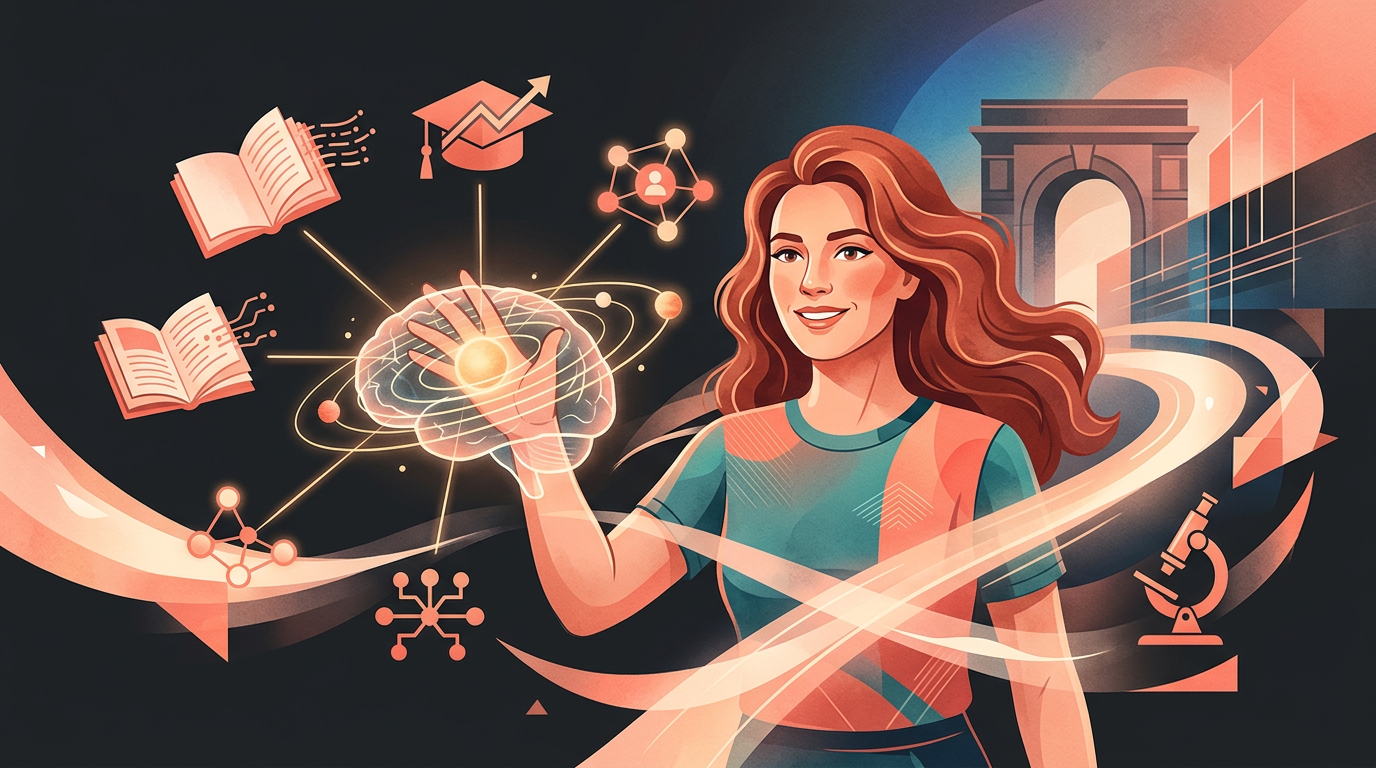
The Paradigm Shift: Why the Future of Education and AI Automation are Inseparable
Traditional educational frameworks are currently navigating a massive transformation. For decades, the model of learning focused on rote memorization and the acquisition of static skills. However, as we look toward the future of education and AI automation, the focus is shifting away from what we know and toward how we orchestrate technology to solve problems. This shift represents a fundamental change in the human-computer relationship, moving from manual logic to natural language intent.
AI automation is not merely an additive tool in the classroom; it is the infrastructure of a new intellectual era. In this landscape, the ability to communicate with Large Language Models (LLMs) becomes the primary literacy. This transition allows creators, especially those who have historically been sidelined in technical fields, to reclaim their place in the innovation economy. By leveraging automation, we move from being passive consumers of technology to architects of our own digital solutions.
Understanding Vibe Coding and Its Role in Learning
The concept of vibe coding has emerged as a revolutionary way to interface with technology. Instead of getting bogged down in the syntax of Python or JavaScript, learners focus on the high-level logic and the aesthetic or functional "vibe" they want to achieve. This is particularly impactful when considering vibe coding for women, as it removes the gatekeeping often associated with traditional computer science degrees.
In the context of local education, vibe coding allows students to focus on the "Why" and the "What" rather than just the "How." When you can describe a functional application in plain English and let AI handle the heavy lifting of the code, education becomes about creative leadership and strategic thinking. This creates a more inclusive environment where diverse perspectives can flourish without the barrier of technical syntax. You can explore more about these terms in our glossary.
The Democratization of Technical Skills
One of the most profound impacts of the future of education and AI automation is the democratization of high-level technical skills. Historically, building a software product required years of specialized training. Today, AI-driven automation tools allow a teacher, a small business owner, or a student to build functional prototypes in hours.
This shift is central to the mission of VibecodHER, which stands as the first women-led vibe coding community. By focusing on the intersection of human intuition and automated execution, we are seeing a rise in specialized tools built by the people who actually use them. This is the essence of democratic education: giving the tools of production to the learners themselves.
Moving from Consumption to Creation
In the old education model, students consumed content curated by experts. In the new model, students use AI automation to create their own learning environments. Imagine a scenario where a student needs to understand complex economic theories. Instead of just reading a textbook, they use an AI agent to build a simulation of a local market, iterating on the parameters through natural language prompts. This hands-on, automated approach cements knowledge in a way that passive reading never could.
How AI Automation Personalizes the Learning Journey
One-size-fits-all education has long been a bottleneck for individual progress. The future of education and AI automation solves this by introducing hyper-personalization. AI agents can analyze a learner's pace, interests, and gaps in knowledge to provide a customized curriculum in real-time.
- Adaptive Content Delivery: AI tools can rewrite complex technical documentation into a tone that resonates with the specific learner.
- Instant Feedback Loops: Automation allows for immediate grading and constructive feedback, preventing students from reinforcing bad habits or misunderstandings.
- Support for Non-Traditional Learners: Those transitioning careers can use AI to bridge the gap between their existing skills and new technical requirements.
For those looking to dive deeper into these practical applications, our workshops offer hands-on experience in building these automated workflows.
The Rise of the Polymath Creator
As AI takes over the repetitive tasks of coding, data entry, and basic analysis, the value of the "Polymath Creator" rises. This is an individual who understands multiple disciplines and can use AI to synthesize them into something new. The future of education and AI automation encourages students to be generalists who are masters of orchestration.
In this environment, communication skills become more critical than ever. The ability to prompt an AI effectively requires clarity of thought, precise language, and an understanding of logical structures. These are the skills we cultivate within our community, where collaboration and collective intelligence drive the learning process.
Bridging the Gender Gap through Vibe Coding
Tech has historically been a male-dominated field, often due to systemic barriers in early computer science education. However, the move toward intent-based programming—or vibe coding—is changing the narrative. Being part of a women-led vibe coding community provides a safe and empowering space for women to experiment with these new tools.
When the focus shifts from the cold logic of traditional code to the expressive potential of AI automation, more women are finding their voice in the tech world. This isn't just about making coding easier; it's about shifting the culture of technology to be more empathetic, intuitive, and inclusive.
Practical Steps to Embrace the Future of Education and AI Automation
If you are a learner or an educator looking to stay ahead of the curve, here are actionable steps to integrate these concepts into your daily routine:
1. Master the Art of the Prompt
Treat AI as a sophisticated intern. Start practicing how to describe complex tasks in structured, natural language. Focus on providing context, defining the desired output format, and specifying the constraints. This is the foundation of vibe coding.
2. Experiment with No-Code and Low-Code Tools
Before diving into complex programming, explore tools that use AI to automate workflows. See how you can connect different applications to perform tasks without manual intervention. This builds an automation mindset that is essential for the modern workforce.
3. Join a Niche Learning Collective
Education is no longer a solitary journey. Joining a community that focuses on these emerging technologies will accelerate your growth. Exposure to how others are using AI to solve problems will give you a library of mental models to draw from in your own work.
4. Focus on Ethics and Critical Thinking
As automation becomes more prevalent, the human role moves toward oversight. Learn to critically evaluate the outputs of AI. Understand the ethical implications of automated decision-making and how to curate AI-generated content for accuracy and bias.
Building a Sustainable Career in the AI Era
The fear that AI will replace jobs is frequently discussed, but the reality is more nuanced. AI is replacing tasks, not necessarily entire roles. The people who will thrive in the future are those who know how to use AI to augment their own capabilities. This is why the future of education and AI automation is so vital—it equips the next generation with the high-level oversight skills required for the 21st century.
In sectors like marketing, design, and even law, AI is automating the "grunt work," allowing professionals to focus on high-level strategy and client relationships. Education must reflect this reality by teaching students how to manage AI systems effectively. This creates a workforce that is resilient to technological shifts and capable of continuous self-education.
Conclusion: Your Place in the New Digital Frontier
We are standing at the threshold of a new era where the barriers between human imagination and technical execution are dissolving. The future of education and AI automation is bright, inclusive, and incredibly productive. By embracing tools like vibe coding and joining supportive networks like the first women-led vibe coding community, you are not just preparing for the future—you are actively building it.
The journey from student to creator has never been shorter. Whether you are looking to pivot your career, scale your business, or simply satisfy your curiosity, the automated tools available today are the keys to your success. The most important step is simply to start.
Join the free VibecodHER community to begin your journey into the world of AI building and vibe coding today.
Frequently Asked Questions
What exactly is vibe coding, and how does it relate to education?
Vibe coding is a method of developing software and digital tools by using natural language and AI-driven automation rather than traditional manual programming. In education, it allows students to focus on problem-solving, logic, and creativity without needing to master complex syntax first, making technical creation more accessible to everyone.
How will AI automation change the role of teachers?
Teachers will transition from being primary sources of information to becoming facilitators and mentors. AI will handle the repetitive aspects of instruction, such as grading and basic explanations, allowing teachers to focus on fostering critical thinking, emotional intelligence, and collaborative projects among their students.
Is it necessary to learn traditional coding in the age of AI automation?
While understanding the basics of logic remains important, the need to memorize specific coding languages is decreasing. The future of education and AI automation emphasizes the ability to work alongside AI, focusing on architectural design and system oversight rather than writing every line of code manually.
How can women benefit from the shift toward AI-centric education?
AI-centric education and vibe coding for women provide a pathway into tech that bypasses traditional gatekeeping. By focusing on intent and creative output, these tools allow women to leverage their unique perspectives and problem-solving skills, supported by inclusive environments like a women-led vibe coding community.
Where can I start learning about AI building and automation?
The best way to start is by joining a community of like-minded creators who are already experimenting with these tools. Engaging in hands-on projects, attending workshops, and staying updated on the latest AI trends will help you build the necessary skills for the future. Join the free VibecodHER community