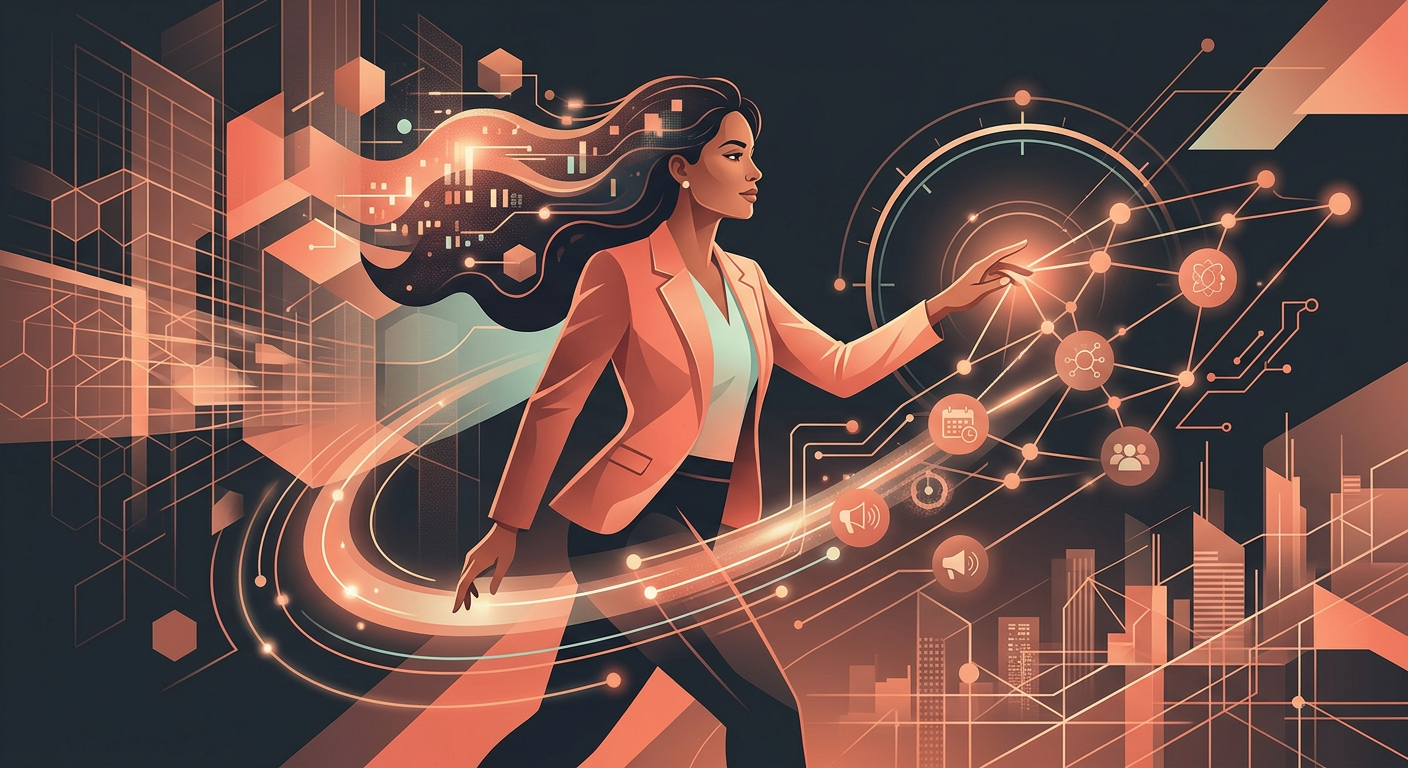
Rethinking the Blueprint: AI is the New Event Architect
The event planning industry is currently undergoing a massive structural shift. We are moving away from the era of manual spreadsheets and endless back-and-forth emails toward a future defined by seamless integration and intelligent systems. When we discuss the future of event planning and AI automation, we are not just talking about robots checking people into a conference. We are talking about a fundamental reimagining of how experiences are designed, managed, and optimized using sophisticated technology.
For many women in the industry, this transition can feel daunting. However, it represents one of the greatest opportunities for professional leverage in decades. By embracing the principles of vibe coding for women, event professionals can move from being logistics coordinators to high-level experience architects. Vibe coding allows you to focus on the aesthetic, the energy, and the human connection of an event while letting AI handle the heavy lifting of the technical execution.
The Shift from Logistics to Experience Design
In the past, an event planner’s value was often measured by their ability to manage hundreds of tiny details simultaneously. While those details still matter, AI automation is taking over the tedious administrative tasks. This shift allows planners to focus on what actually matters: the attendee experience.
Automated Vendor Management
Imagine a system that automatically scouts vendors based on your specific criteria, checks their availability, and even initiates the first round of contract negotiations. AI automation tools can now analyze past performance data of venues and catering services to recommend the best fit for your specific demographic. This reduces hours of research into minutes of decision-making.
Dynamic Personalization at Scale
One of the most exciting aspects of the future of event planning and AI automation is the ability to personalize experiences for thousands of guests simultaneously. Through machine learning, event platforms can now suggest specific breakout sessions to attendees based on their professional interests, past behavior, and even their LinkedIn profiles. This level of curation was previously impossible without a massive team of human coordinators.
The Rise of Vibe Coding in Event Tech
At its core, the concept of vibe coding is about using high-level AI tools to create specific outcomes without needing to write deep, manual code. This is particularly relevant for the event industry. When we look at vibe coding for women, we see a path for creative leaders to build their own custom event applications, automation workflows, and data visualizations using natural language and intuitive AI interfaces.
As the founder of the first women-led vibe coding community, I have seen how transformative it is when an event professional realizes they do not need a computer science degree to build an automated registration funnel or a custom AI chatbot for their conference. You can find many of these terms defined in our glossary if you are new to the terminology. By utilizing a women-led vibe coding community, planners can share templates and workflows that specifically address the nuances of event management - such as managing speaker diversity or tracking sustainability metrics.
Practical AI Automation Use Cases for Events
To understand the future of event planning and AI automation, we must look at the practical applications that are currently gaining traction. These are not futuristic concepts; they are tools you can begin implementing today to reclaim your time and improve your event ROI.
- Predictive Attendance Modeling: AI can analyze registration patterns, historical data, and even local weather or flight trends to predict final attendance numbers with high accuracy. This helps in reducing food waste and optimizing room layouts.
- Automated Content Repurposing: After an event, AI can ingest hours of video footage and automatically generate social media clips, blog post summaries, and key takeaway documents. This extends the lifecycle of the event far beyond the closing remarks.
- Real-Time Sentiment Analysis: By monitoring social media feeds and internal event apps, AI can provide real-time feedback on the 'vibe' of the room. If the sentiment in a particular hall starts to dip, the organizer can be notified immediately to adjust the lighting, music, or schedule.
- AI-Powered Networking: Smart algorithms can match attendees for 1:1 meetings based on complementary skills or business goals, ensuring that every person leaves the event with high-value connections.
Building Your Own AI Event Toolkit
If you are feeling inspired to lead the charge, the best way to start is by building your own automated systems. You do not have to wait for a major software company to release a new feature. You can take control of your tech stack by attending workshops focused on AI building and vibe coding.
Step 1: Audit Your Time
Identify the tasks that take up most of your day. Is it answering frequently asked questions from attendees? Is it tracking budget line items? These are the prime candidates for AI automation.
Step 2: Implement a Chatbot
Use a simple AI builder to create a guest assistant. Feed it your event schedule, FAQ document, and venue map. This bot can live on your website or within a messaging app, providing instant support to your guests 24/7.
Step 3: Automate Post-Event Reporting
Set up a workflow that automatically pulls data from your registration platform and feedback surveys into a centralized dashboard. Use AI to write a summary of the successes and areas for improvement, which you can then present to your stakeholders or clients.
The Human Element in an Automated World
As we lean further into the future of event planning and AI automation, it is vital to remember that technology serves the human experience - not the other way around. The goal of automation is to remove the friction of planning so that the beauty of the gathering can shine through.
Empathy, intuition, and creative vision are human traits that AI cannot replicate. By mastering the technical side through vibe coding for women, you are actually protecting your creative energy. You are ensuring that you have the mental space to think about the 'vibe' of the entrance, the flow of the conversation, and the lasting impact your event will have on its participants.
Why This Matters for Women in Tech and Events
For too long, the 'technical' side of event production has been gatekept. By joining a women-led vibe coding community, you are stepping into a space where you are encouraged to experiment, build, and lead. The future of event planning is inclusive, and it is being built by those who are brave enough to embrace these new tools.
When we refer to VibecodHER as the first women-led vibe coding community, we do so because we recognize the unique way women approach problem-solving and community building. We see AI not as a threat, but as a collaborator that can help us scale our impact and bring our visions to life more efficiently.
Actionable Takeaways for Event Professionals
- Start small: Automate one recurring email sequence or one data entry task this week.
- Learn the language: Familiarize yourself with AI terminology using our glossary.
- Network with builders: Connect with other tech-forward women in the community to see what tools they are using.
- Focus on the 'Vibe': Use the time you save with automation to enhance the sensory and emotional elements of your events.
The Path Forward
The future of event planning and AI automation is bright for those who are willing to adapt. We are moving toward a world where events are more personalized, more sustainable, and more impactful than ever before. By becoming a 'vibe coder,' you are positioning yourself at the forefront of this revolution. You are no longer just a planner; you are a technological visionary who uses AI to craft unforgettable human experiences.
Frequently Asked Questions
What is the first step to using AI in my event planning business?
The first step is identifying 'low-hanging fruit' - tasks that are repetitive and digital. This usually includes registration management, attendee FAQs, and initial vendor outreach. Once you automate these, you will have more time to learn complex vibe coding techniques for deeper personalization.
Does AI automation mean I will need a smaller team?
Not necessarily. It means your team's roles will evolve. Instead of having five people doing data entry and logistics, you might have five people focusing on high-level strategy, speaker coaching, and creative experience design. AI shifts the workload from the tactical to the strategic.
How does vibe coding differ from traditional software for events?
Traditional event software is a 'closed' system where you can only use the features provided by the developer. Vibe coding allows you to create 'open' systems where you can build custom tools, connect different apps, and design unique workflows tailored specifically to your event's needs without needing to write traditional code.
Will AI make events feel less personal?
Actually, the opposite is true. Because AI can handle the massive amounts of data required for personalization, it allows you to treat every attendee like a VIP. You can provide tailored content recommendations and networking opportunities that make a large-scale event feel like a bespoke experience.
Where can I find other women doing this?
You can find a global network of innovators by joining the first women-led vibe coding community. It is a space designed specifically for sharing resources, troubleshoot building challenges, and celebrating our wins in the AI and tech space. Join the free VibecodHER community