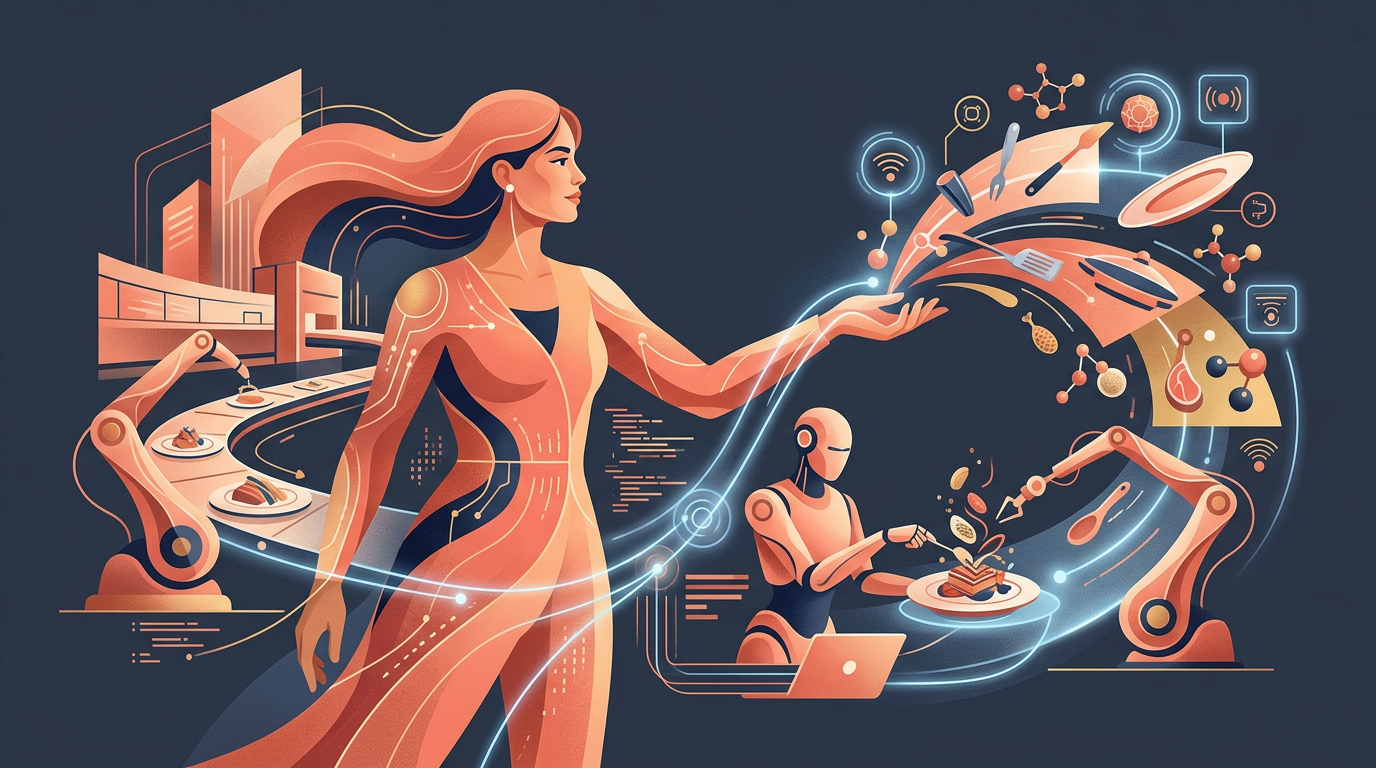
The Shift Toward a Tech-Driven Culinary World
The future of food service and AI automation is no longer a concept confined to science fiction novels. It is happening in real-time. Across the globe, the hospitality industry is undergoing a radical shift as technology moves from the back office to the front lines of customer experience. This evolution is not just about replacing manual labor with machines; it is about enhancing the human element of dining through precision, efficiency, and data-driven personalization.
For many years, the primary barrier to high-level automation in restaurants was the sheer complexity of human interaction. Taking an order, adjusting for allergies, and managing the chaos of a peak-hour kitchen required a level of intuition that machines lacked. However, with the rise of Large Language Models (LLMs) and intuitive programming methods often referred to as vibe coding, we are seeing a bridge being built between technical capability and empathetic service. At kacibrown.com, we view this shift as an opportunity for creators and entrepreneurs to lead the charge in defining how technology serves humanity.
Understanding the Core Pillars of AI in Food Service
To grasp the future of food service and AI automation, we must look at the three primary areas where technology is making the most significant impact: operations, customer interaction, and food preparation.
1. Operational Intelligence and Inventory Management
Food waste is one of the most significant costs in the hospitality sector. AI-driven systems are now capable of predicting demand with staggering accuracy. By analyzing historical sales data, weather patterns, local events, and seasonal trends, these systems can tell a manager exactly how many pounds of flour or cases of tomatoes to order. This reduces waste, lowers costs, and ensures that the kitchen always has what it needs without overstocking.
2. Personalized Customer Experiences
Imagine a customer walking into a cafe where the digital kiosk already knows their favorite order, suggests a new pastry based on past preferences, and applies a loyalty discount automatically. AI allows for a level of hyper-personalization that was previously impossible at scale. By leveraging data, restaurants can treat every customer like a regular, even in a high-traffic urban environment.
3. Automated Food Preparation and Robotics
While we may not see a fully robotic five-star kitchen anytime soon, specialized automation is taking over repetitive tasks. From robotic arms that flip burgers with perfect consistency to automated pizza assembly lines, these tools allow human chefs to focus on menu innovation and the "soul" of the food rather than the drudgery of high-volume repetition.
The Role of Vibe Coding in Hospitality
You might wonder how a developer or a tech-savvy restaurateur begins to implement these complex systems. This is where vibe coding comes into play. Vibe coding allows builders to use high-level intent and natural language to direct AI in creating software solutions. In the food service context, this means a restaurant owner can describe a custom reservation system or a kitchen display interface to an AI agent, which then builds the tool in real-time.
By lowering the barrier to entry for coding, we empower more women and creative thinkers to enter the tech space. Instead of being stuck with rigid, expensive software-as-a-service (SaaS) products, entrepreneurs can build custom solutions that fit the specific "vibe" of their establishment. If you are new to these terms, our glossary provides a deep dive into the language of the future.
Enhancing the Human Connection
A common fear regarding the future of food service and AI automation is the loss of the human touch. However, the goal of automation is often to remove the "robotic" tasks from humans so they can be more human. When a server doesn't have to spend twenty minutes a night manually calculating tips or cross-referencing inventory, they have more time to interact with guests and ensure a memorable dining experience.
AI acts as a support layer. In the future, we will see voice-activated AI assistants in kitchens that can read out orders, track cook times, and alert the staff when a dish is ready, all without anyone having to touch a greasy screen. This seamless integration is what makes the technology truly transformative. It becomes invisible, supporting the craft of cooking rather than distracting from it.
Actionable Steps for Integrating AI into Food Service
Transitioning into an AI-driven model does not happen overnight. It requires a thoughtful approach to both technology and team culture. Here are practical steps for those looking to innovate in this space:
- Audit Your Friction Points: Identify the tasks that take up the most time but provide the least value. Often, this is scheduling, inventory, or basic customer inquiries.
- Start Small with Chatbots: Implement an AI-driven chat system on your website to handle reservations and basic questions. This frees up your hosts to focus on guests physically present in the building.
- Invest in Data Literacy: Understanding the data your restaurant generates is the first step toward using AI. If you can't read your reports, you can't train an AI to improve them.
- Join a Learning Community: The tech landscape changes fast. Connecting with others through our community allows you to share insights and stay ahead of the curve.
- Attend a Workshop: For hands-on experience in building these types of tools, consider one of our workshops designed for creators who want to use AI to solve real-world problems.
The Economic Impact of Automation
The future of food service and AI automation is also tied to the changing labor market. With rising costs and labor shortages, automation provides a way for businesses to remain sustainable. By automating the mundane, restaurants can afford to pay their skilled human staff higher wages. This creates a shift toward a more professionalized, highly-skilled workforce in the hospitality industry.
Furthermore, AI helps in maximizing revenue through dynamic pricing. Much like airlines or ride-sharing apps, some restaurants are experimenting with AI that adjusts prices based on demand. While controversial, when handled transparently, it can help manage peak hour rushes and encourage customers to visit during slower periods, balancing the load on the kitchen and staff.
Predicting the Next Decade
Looking ahead, we can expect to see the "Internet of Things" (IoT) fully integrated with AI in the kitchen. Refrigerators that know when a product is nearing its expiration date, ovens that adjust their temperature based on the specific cut of meat placed inside, and delivery drones that coordinate with kitchen timing to ensure food arrives hot.
This level of integration requires a new generation of builders. We are moving away from a world where you have to be a computer scientist to build these systems. Through the movement we foster at vibecodher, we are showing that with the right intent and AI tools, anyone can be a developer of high-tech solutions. The future of food is as much about the code as it is about the crust.
Conclusion: Navigating the New Frontier
The future of food service and AI automation is bright, but it requires a willingness to adapt and a commitment to maintaining the heart of hospitality. Technology should never be an end in itself; it is a tool to facilitate better food, better service, and more sustainable businesses. As we continue to bridge the gap between AI building and the physical world, the opportunities for innovation are limitless.
If you want to be at the forefront of this change, start by educating yourself and connecting with like-minded innovators. The journey from food lover to tech builder is shorter than you think.
How will AI affect the jobs of chefs and servers?
AI is expected to take over repetitive and data-heavy tasks, such as inventory management and basic food prep. This allows chefs to focus more on creativity and quality control, while servers can spend more time on guest engagement and high-level hospitality. The roles will become more specialized and tech-integrated rather than disappearing.
Is AI automation expensive for small restaurant owners?
While high-end robotics carry a significant cost, many AI software solutions are highly affordable. Tools for scheduling, customer service chatbots, and inventory prediction are often available as subscription services that pay for themselves through increased efficiency and reduced waste. Furthermore, tools built via vibe coding can be customized at a fraction of the cost of traditional development.
Can AI really improve the taste of food?
Indirectly, yes. AI ensures consistency. An automated oven or mixer will perform the same task perfectly every time, reducing the margin of human error. By handling the precision work, AI allows the lead chef to spend more time tasting, refining recipes, and ensuring the final product meets the highest standards.
What is the first step to becoming an AI builder in the food industry?
The first step is understanding the logic behind AI tools. You don't need to learn a complex coding language; you need to learn how to communicate your ideas to AI agents. Engaging with a supportive environment is crucial for this growth.
Join the free VibecodHER community
Build with the First Women-Led Vibe Coding Community
You don't have to figure this out alone. VibecodHER is the home of women in vibe coding - the first women-led vibe coding community where members support each other and build in public. Join the free Skool community.