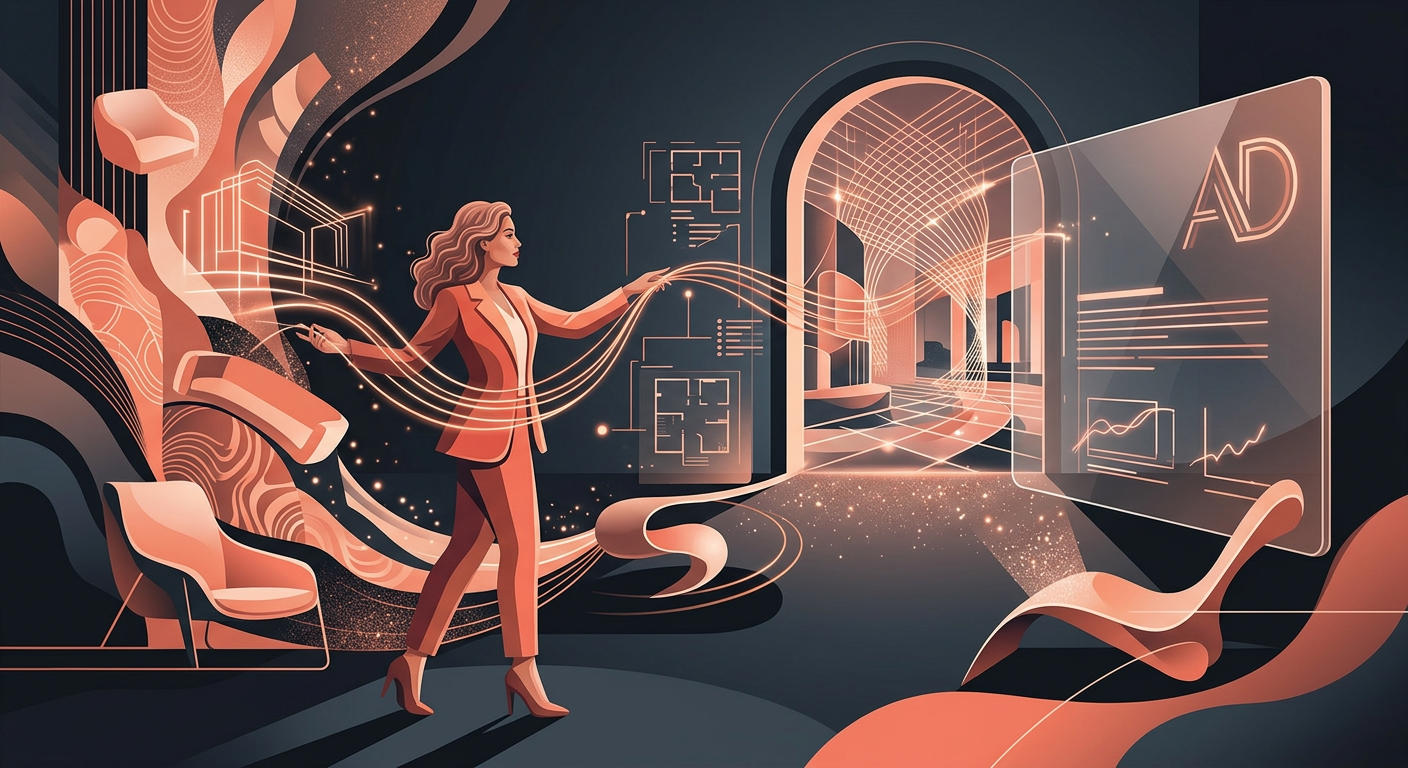
The Shift from CAD to Code: A New Era for Design
The interior design industry is currently standing at a crossroads. For decades, the path to becoming a designer involved mastering complex technical software, understanding structural engineering, and navigating endless supply chains. While those foundational skills remain essential, the arrival of artificial intelligence (AI) has shifted the goalposts. We are no longer just looking at 3D renderings; we are looking at the era of automated spatial intelligence.
The future of interior design and AI automation is not about replacing the human eye or the tactile sensibility of a designer. Instead, it is about removing the friction between an idea and its realization. By leveraging AI, designers can move from manual drafting to high-level system orchestration. This evolution is deeply personal to us at kacibrown.co, where we champion vibe coding for women as a way to reclaim time and technical agency in creative fields.
Understanding AI Automation in Spatial Contexts
AI automation in interior design encompasses everything from generative layout planning to automated procurement systems. Imagine a workflow where a designer inputs the dimensions of a room, a preferred aesthetic, and a budget, and an AI agent instantly generates dozens of viable floor plans that adhere to local building codes. This is not science fiction; it is the natural progression of industry technology.
Key areas where automation is making an impact include:
- Generative Design: Using algorithms to explore thousands of design permutations based on specific constraints like natural light, traffic flow, and furniture scale.
- Automated Specification: AI tools that can scan a mood board and automatically find matching, in-stock items from a pre-approved list of vendors.
- Virtual Staging and Real-time Rendering: Transitioning from static images to immersive, AI-generated environments where clients can change wall colors or flooring in real-time using natural language commands.
As we explore these tools, many women in the industry find themselves wanting to go deeper than just using off-the-shelf apps. This is where vibecodher comes into play, providing the technical foundation to build custom solutions rather than just being a consumer of them.
The Rise of Vibe Coding in Design
The term "vibe coding" refers to the process of using AI to build software and automate tasks through natural language and intent, rather than strictly writing syntax. In the context of interior design, this means a designer can "code" an automation that organizes their client feedback or updates their project management board without needing a computer science degree.
At VibecodHER, we recognize this as the first women-led vibe coding community, focused on ensuring that the future of tech is accessible to creative professionals. When you learn to automate your design business, you stop being a worker in the system and start being the architect of the system itself. This shift is vital for women-led firms that want to scale without burnout.
How AI Automation Solves the Designer's Dilemma
Most designers cite the same pain points: administrative overhead, tedious documentation, and the bridge between concept and execution. AI automation targets these specific bottlenecks.
Generative Space Planning
Traditional space planning is a manual process that involves measuring, drawing, and iterating. AI-driven generative design can analyze a residential or commercial footprint and suggest the most efficient layouts. It can calculate the exact clearance needed for a dining chair or the ideal placement for a kitchen work triangle in seconds. This allows the designer to focus on the "vibe" - the textures, colors, and emotional resonance of the space - while the AI handles the logistics.
Intelligent Procurement and Logistics
One of the most time-consuming aspects of design is procurement. AI agents can now be programmed to track orders, manage shipping delays, and suggest alternates for out-of-stock items. By building custom AI builders, designers can create a dedicated "assistant" that lives in their dashboard and manages the millions of details that usually live in a messy spreadsheet. You can find many of these technical terms explained in our glossary.
Building Your Own Design Tools
We are moving away from the era of "one size fits all" software. The future of interior design and AI automation belongs to the designer who builds her own tools. Whether it is a custom GPT trained on your unique design aesthetic or an automated lead-qualifying bot, the power is in the hands of the creator.
If you are interested in moving beyond basics, our workshops offer hands-on guidance for integrating AI into your creative workflow. Imagine having a tool that automatically generates a client-facing proposal based on your rough sketches and voice notes. This is the level of efficiency that vibe coding enables.
Practical Steps to Integrate AI into Your Design Practice
- Audit Your Workflow: Identify the tasks you hate most. Is it creating invoices? Is it searching for the perfect rug? These are prime candidates for automation.
- Start with Generative Visuals: Use tools like Midjourney or DALL-E to generate concepts. Use these to communicate "mood" to the client before doing the heavy lifting of CAD work.
- Join a Community: Technology moves fast. Being part of a community of like-minded innovators helps you stay ahead of the curve without feeling overwhelmed.
- Experiment with No-Code/Low-Code: Use platforms that allow you to connect your favorite apps. Automating the flow of information between your CRM and your design software is a great first step.
The Human Element: Why Designers are Irreplaceable
A common fear is that AI will make designers obsolete. On the contrary, AI makes the human element more valuable. AI can generate a thousand layouts, but it cannot understand the sentimental value of a client's heirloom furniture or the specific way the morning light hits a kitchen nook in a way that makes a house feel like a home.
The future of interior design and AI automation is a partnership. The AI handles the data, the repetition, and the technical constraints. The designer provides the empathy, the intuition, and the vision. By participating in a women-led vibe coding community, you ensure that your voice and your unique design perspective are integrated into the tools of tomorrow.
Transforming Client Experiences
Client expectations are shifting. They want faster turnarounds and more immersive previews. AI allows designers to meet these demands without sacrificing quality. High-fidelity renders that used to take days can now be produced in hours. This transparency builds trust and reduces the "fear of the unknown" that often prevents clients from committing to bold design choices.
Furthermore, AI can help designers practice more sustainably. By automating material waste calculations and energy efficiency simulations, designers can create spaces that are not only beautiful but also environmentally responsible. This holistic approach to design is made possible through the synergy of human intent and machine precision.
FAQ: The Future of Interior Design and AI Automation
Will AI replace the need for interior designers?
No. AI is a tool that enhances creativity, not a replacement for human intuition. While AI can automate technical tasks and generate suggestions, the final curation and emotional connection of a project require a human designer. Designers who embrace AI will find they have more time for the high-level creative work that clients value most.
What is the first step to learning AI for my design business?
Start by identifying a single repetitive task, such as organizing project photos or writing product descriptions. Experiment with existing AI tools to solve that one problem. To go deeper and learn how to build your own custom solutions, joining a community like VibecodHER is the best way to learn alongside other women in the tech and design space.
Can I use AI to help with building codes and regulations?
Yes, AI is becoming increasingly proficient at analyzing building codes and zoning laws. Specialized AI agents can be fed local regulatory documents to check if a design is compliant. This reduces the risk of errors and speeds up the permitting process, though a human should always verify the final details.
Mastery Through Vibe Coding
The most successful designers of the next decade won't necessarily be the ones who are the best at drawing, but the ones who are the best at directing AI. This is the heart of vibe coding for women. It is about taking the creative spark and using technology to amplify it a thousandfold.
We are building a future where your design business is as smart as the homes you create. By automating the mundane, you free your mind to explore the magnificent. Whether you are a solo practitioner or leading a large firm, the transition into an AI-augmented workflow is the most significant competitive advantage you can gain today.
If you are ready to stop feeling overwhelmed by tech and start using it as your greatest creative asset, we invite you to take the next step. Join the conversation and start your journey into the world of AI automation with a group of women who are paving the way.