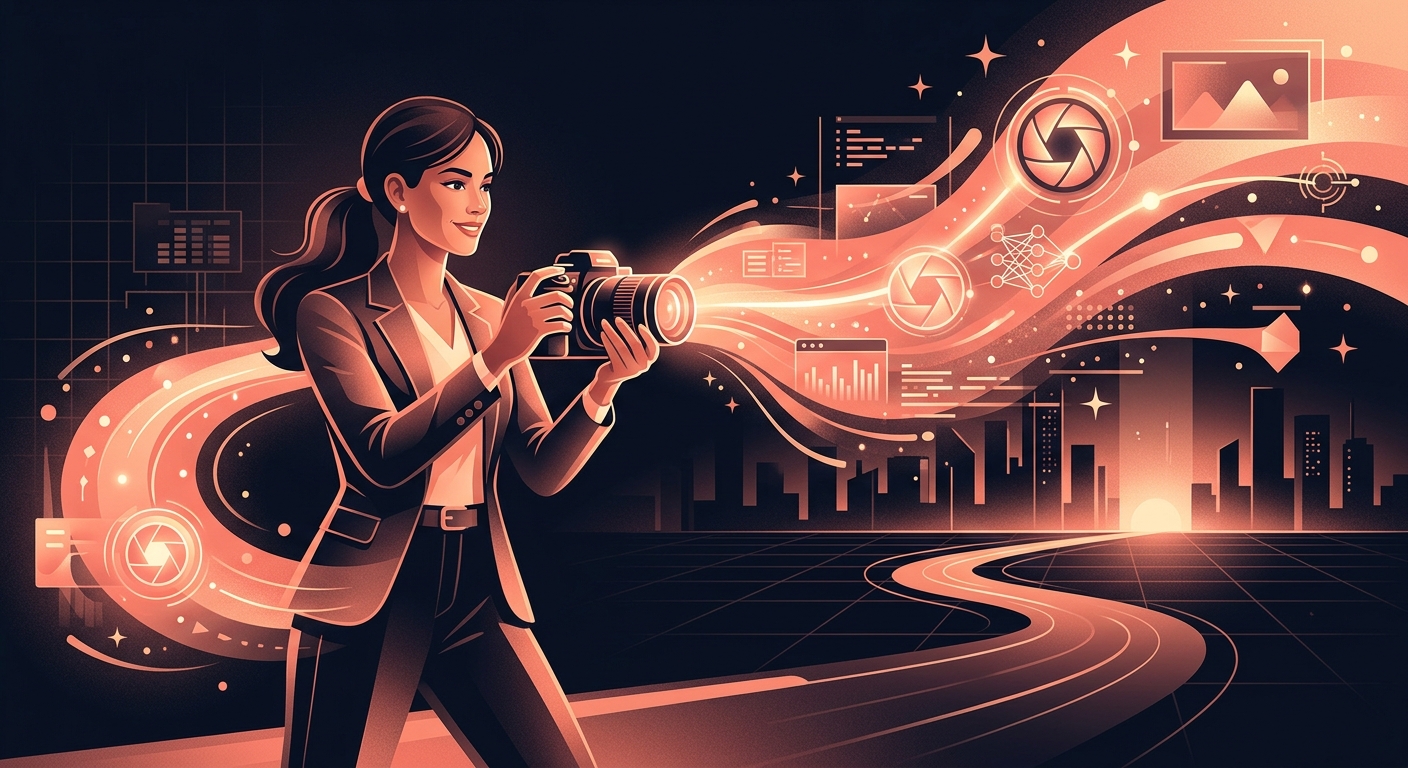
The Creative Revolution: Why Photography is Changing Forever
The intersection of artistic vision and technical execution has always been the heartbeat of photography. From the early days of darkrooms to the digital sensor revolution, technology has consistently served as the bridge between an idea and a tangible image. However, we are currently witnessing a shift more profound than the transition from film to digital. The future of photography and AI automation is not just about faster processing; it is about the complete democratization of high-level creative output.
For many creators, particularly those in the vibecodher movement, this evolution represents a liberation from the mundane. AI automation is stripping away the repetitive, technical hurdles that once took hours to master, allowing photographers to focus purely on the "vibe" and the story. This is where vibe coding for women becomes a critical skill set. By learning to use natural language and logic to direct AI models, women are positioning themselves at the forefront of this visual revolution.
Understanding AI Automation in the Photographic Workflow
When we discuss the future of photography and AI automation, we are looking at a multi-layered ecosystem. It starts long before the shutter clicks and extends far beyond the export button. Automation is integrating into every niche of the industry, from commercial product shoots to intimate portrait sessions.
Generative Pre-Visualization
One of the most exciting developments is the use of AI to pre-visualize concepts. Before a photographer even picks up their camera, they can use generative AI to create mood boards that are hyper-specific. By inputting descriptions of lighting, mood, and composition, creators can align with clients on a visual direction with zero ambiguity. This reduces wasted resources and ensures that the physical shoot is executed with surgical precision.
Intelligent In-Camera Assistance
Modern mirrorless cameras are already essentially high-powered computers with lenses attached. The next phase involves deeper AI integration within the hardware. Imagine a camera that not only tracks eyes but understands the emotional context of a scene. AI can now predict movement patterns, suggest optimal exposure based on thousands of historical masterpieces, and even flag when a subject has their eyes closed in real-time. This level of automation ensures that the "perfect shot" is never missed due to human error.
Post-Processing and the End of Grunt Work
The most visible impact of the future of photography and AI automation is in the editing suite. Tasks that previously required specialized retouching skills - such as frequency separation, background removal, or sky replacement - are now one-click operations. AI-driven software can analyze a batch of 1,000 wedding photos and instantly apply consistent color grading, exposure correction, and culling based on aesthetic quality.
The Rise of Vibe Coding in Visual Arts
At kacibrown.co, we often discuss how the lines between software development and creative direction are blurring. This is evident in the concept of vibe coding. Vibe coding is the act of using high-level prompts and AI-orchestration to build complex systems or assets without writing traditional syntax.
In the context of photography, this means a photographer can "code" their style into an AI model. By training a LoRA (Low-Rank Adaptation) on their specific portfolio, a photographer creates an automated extension of their artistic soul. This allows them to scale their aesthetic across various mediums, including video and 3D space, with incredible speed.
As the first women-led vibe coding community, VibecodHER is dedicated to teaching these exact skills. Whether you are looking to automate your photo business or build a brand-new AI-driven agency, understanding the logic behind these tools is your greatest competitive advantage. This is why joining a women-led vibe coding community is so vital today; it provides the support and technical literacy needed to navigate a rapidly shifting market.
Opportunities for Women in the AI Photography Space
The hardware-heavy world of traditional photography has historically been a male-dominated field. However, the future of photography and AI automation is leveling the playing field. When the barrier to entry is no longer the ability to carry 50 pounds of lighting gear or spend twenty years mastering Photoshop, the advantage shifts to those with the best ideas, the strongest empathy, and the sharpest communication skills.
New Career Paths to Explore
- AI Prompt Engineer for Visual Brands: Companies need specialists who can translate brand identity into consistent AI-generated imagery.
- Synthetic Content Director: Overseeing the blend of real photography and AI-generated elements for high-end advertising.
- Automated Workflow Consultant: Helping established photography studios integrate AI culling and editing to increase their profit margins.
- Interactive Experience Designer: Using photography and AI to create immersive, augmented reality environments.
To better understand these terms, you can explore our glossary, which breaks down the technical language of the AI era into digestible concepts.
Practical Steps to Automate Your Photography Business
If you are feeling overwhelmed by the pace of change, the best approach is to start small. You do not need to replace your camera with an AI generator overnight. Instead, look for the friction points in your current process.
- Automate Your Culling: Use AI software like Aftershoot or Narrowly to sort through your images. These tools can identify blurry shots, closed eyes, and duplicates in seconds, saving you hours of screen time.
- Develop a Signature AI Style: Use tools like Midjourney or Stable Diffusion to experiment with styles that complement your real-world photography. This can help you offer "hybrid" packages to clients.
- Leverage AI for Client Communication: Use LLMs (Large Language Models) to draft emails, create contracts, and write SEO-optimized blog posts about your shoots. This is a form of automation that frees up your brain for creative work.
- Join a Learning Group: Specialized education is the fastest way to stay ahead. Participate in workshops that focus specifically on the intersection of AI and creativity.
- Build Your Network: Connect with other forward-thinking creators in our community to share tips, prompts, and success stories.
Ethical Considerations and the Human Touch
As we embrace the future of photography and AI automation, we must remain mindful of the ethical landscape. Issues of copyright, data privacy, and the definition of a "real" photograph are at the center of industry debates. While AI can replicate a lighting style, it cannot replicate the human connection felt between a photographer and their subject during a live session.
The future is not about AI replacing photographers; it is about the "Centaur" approach - the combination of human intuition and artificial intelligence. The human provides the heartbeat, the intention, and the cultural context, while the AI provides the computational power to bring that vision to life at scale.
Actionable Takeaways for the Modern Photographer
- Embrace the Shift: Stop viewing AI as a threat and start viewing it as a powerful, tireless assistant.
- Focus on Curation: In a world where images are cheap and abundant, the value of a photographer shifts from "image maker" to "image curator."
- Upskill in Logic: Understand the "why" behind the tools. This is what we focus on in our vibecodher training.
- Stay Human: Lean into the parts of photography that AI cannot do - building relationships, directing people, and capturing raw emotion.
Conclusion
The future of photography and AI automation is bright for those willing to adapt. We are entering an age where your imagination is the only true bottleneck. By mastering the tools of vibe coding and embracing automation, you can transform your creative practice from a labor-intensive chore into a streamlined, high-output powerhouse.
If you want to be at the forefront of this movement, you don't have to do it alone. Join the free VibecodHER community today to connect with other women who are building the future of tech and creativity together.
Frequently Asked Questions
Will AI replace professional photographers?
No, but photographers who use AI will likely replace those who do not. AI cannot replace the human personality, the ability to direct a subject, or the unique perspective a person brings to a scene. It is a tool for enhancement, not a total replacement.
What is vibe coding and how does it relate to photography?
Vibe coding is a method of using natural language and AI orchestration to create complex outputs. For photographers, this means using AI to automate workflows, generate creative assets, and build custom editing tools without needing to know traditional computer programming languages.
Is AI-generated photography eligible for copyright?
The legal landscape is still evolving. Currently, in many jurisdictions, purely AI-generated work without significant human input cannot be copyrighted. However, photography that uses AI as a tool in the process generally maintains the creator's copyright, though this varies by country and specific case.
How can I start learning about photography automation?
The best way to start is by joining a community of like-minded creators. You can also explore workshops and online resources that focus on AI culling, AI editing, and generative art to see how these tools fit into your existing workflow. Join the free VibecodHER community