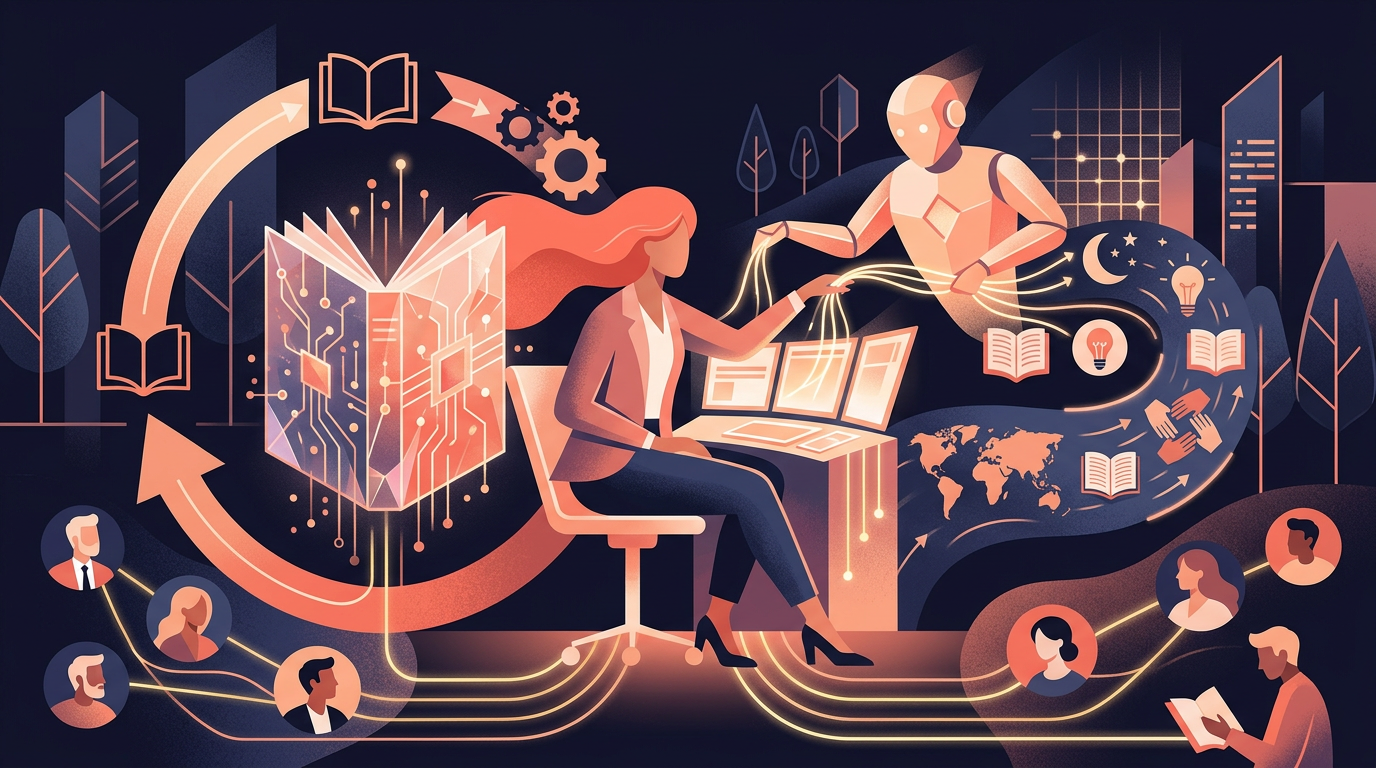
The Shift from Traditional Publishing to Intelligent Systems
The landscape of sharing ideas is undergoing a seismic transformation. For decades, the barrier to entry in publishing was defined by gatekeepers, expensive distribution networks, and manual production cycles. Today, we are witnessing the birth of a new paradigm where the future of publishing and AI automation converge to democratize the power of the written word. This shift is not merely about replacing human writers with machines, but about augmenting human creativity with systems that handle the heavy lifting of formatting, distribution, and data analysis.
In this evolving space, authorship is no longer just about putting pen to paper or fingers to keys. It is about architecting systems. This is where the concept of vibe coding enters the frame. Instead of getting bogged down in the minutiae of technical integration, creators can now use natural language to direct AI agents in managing their publishing workflows. By focusing on the intent and the 'vibe' of the content, women in tech are leading the charge in building automated ecosystems that turn a single core idea into a multi-channel media empire.
Understanding AI Automation in the Publishing Lifecycle
To understand the future of publishing and AI automation, we must look at the lifecycle of a piece of content. Traditionally, this involved brainstorming, drafting, editing, formatting, SEO optimization, publishing, and social media promotion. Each step was a manual hurdle that could take days or weeks.
Content Ideation and Research
AI models now act as sophisticated research assistants. They can scan thousands of academic papers, top-ranking blog posts, and social media trends to help authors identify gaps in the market. By using automated research loops, a publisher can identify what their audience is searching for before the audience even knows they need it. This proactive approach ensures that the output stays relevant and authoritative.
Automated Production Workflows
Imagine a scenario where a blog post is drafted, and the moment it is finalized, an AI agent automatically generates a newsletter summary, five LinkedIn posts, a Twitter thread, and a script for a short-form video. This is the reality of modern AI automation. By utilizing tools that talk to one another through APIs, creators can build 'set and forget' systems that allow them to focus entirely on the high-level strategy and creative vision.
Dynamic SEO and Metadata
One of the most tedious aspects of publishing is the technical side of SEO. Vibe coding for women allows creators to describe the desired visibility of their work in plain English. Automated systems can then handle the meta tags, schema markup, and internal linking structures. For those looking to master these technical terms, our /glossary provides a deep dive into the language of the future.
The Rise of Vibe Coding in Creative Industries
We are moving toward a world where the 'how' of technology becomes invisible, leaving only the 'what' and the 'why.' This is the essence of vibe coding. For a writer or a publisher, this means you do not need to be a software engineer to build a complex automated publishing house. You simply need to be able to communicate your vision to an AI.
As the first women-led vibe coding community, VibecodHER is at the forefront of this movement. We believe that when women have the tools to automate the technical barriers, they can dominate the intellectual and creative landscape. By leaning into the /vibecodher methodology, publishers can move from being content creators to being system architects.
Consider the potential of building a custom AI agent that understands your unique brand voice. Every time you feed it a raw idea, it refines that idea into a polished manuscript that adheres to your specific stylistic preferences. This level of personalization, powered by AI, ensures that automation does not lead to generic content, but rather to a more amplified version of the creator's unique perspective.
Personalized Consumption: The Reader's Experience
The future of publishing and AI automation is not just about the creator; it is equally about the reader. We are moving away from static, one-size-fits-all content toward dynamic experiences.
- Adaptive Content: Future e-books and articles could change their complexity based on the reader's prior knowledge.
- Instant Translation: AI automation allows for the immediate localization of content into dozens of languages, breaking down global barriers.
- Audio-First Integration: Automated high-fidelity text-to-speech means every blog post is simultaneously a podcast, catering to the growing demand for audio content.
By participating in our /workshops, you can learn how to build these automated bridges between your content and your global audience. The goal is to create a frictionless path from your mind to the reader's screen or ears.
Navigating the Ethical Landscape and Quality Control
With great power comes the responsibility of maintaining integrity. As AI automation becomes more prevalent, the value of the 'human in the loop' increases. Authenticity becomes the primary currency in an era of infinite content.
Publishers must establish rigorous automated quality checks. This includes fact-checking bots, plagiarism detection, and bias audits. In our /community, we frequently discuss how to maintain a high ethical standard while leveraging the speed of AI. The future belongs to those who use machines to scale their humanity, not those who use machines to replace it.
Actionable Steps to Automate Your Publishing Strategy
If you are ready to embrace the future of publishing and AI automation, here is a roadmap to get started:
- Audit Your Current Workflow: List every manual task you perform from the moment you have an idea to the moment you hit 'publish.'
- Identify Repeatable Tasks: Look for things like social media scheduling, image generation, and formatting that can be offloaded to AI tools.
- Build Your First 'Vibe' System: Start small. Use a tool like Zapier or Make to connect your writing platform to your social media accounts. Use natural language prompts to describe how you want the AI to summarize your work.
- Join a Supportive Network: Don't build in isolation. Connect with others who are navigating this space. Join the free VibecodHER community to see how other women are using vibe coding to revolutionize their creative output.
- Iterate and Refine: Automation is not a one-time setup. As AI models improve, your systems should evolve. Regularly revisit your prompts and workflows to ensure they still capture your intended 'vibe.'
The Role of Community in a Tech-Driven World
As we lean further into automation, the need for human connection and communal learning grows. Technology can provide the efficiency, but community provides the context and the encouragement. Being part of a women-led vibe coding community gives you access to shared prompts, troubleshooting help, and the collective wisdom of pioneers who are defining this new era.
By mastering the future of publishing and AI automation today, you are positioning yourself as a leader in a world where creativity is limited only by your ability to describe your vision. The barriers are falling, and the tools are within your reach.
FAQ: Understanding AI and Publishing
What exactly is vibe coding in the context of publishing?
Vibe coding refers to the process of using natural language and intent to build software systems and automated workflows. In publishing, it means describing your desired content distribution and production cycle to an AI, which then builds the technical connections for you, rather than you having to write code manually.
Will AI replace human authors in the future of publishing?
No. While AI will handle the technical and repetitive aspects of publishing, the human element - original thought, personal experience, and creative voice - remains irreplaceable. AI is a tool for amplification, allowing authors to spend more time on their core creative work and less time on administrative tasks.
How can I start automating my content distribution without a technical background?
You can start by using 'no-code' or 'low-code' automation platforms that integrate with AI. By defining simple 'if this, then that' rules and using AI to generate summaries or social posts, you can build a robust publishing system without knowing how to write traditional software code.
Why is a community-focused approach important for women in this space?
Historically, technical domains have been male-dominated. A community like VibecodHER provides a safe and empowering space for women to experiment with new technologies like AI and vibe coding. It fosters collaboration over competition, helping more women take leadership roles in the future of tech and publishing.
Ready to dive deeper into the world of AI-driven creation? Join the free VibecodHER community and start building your future today.