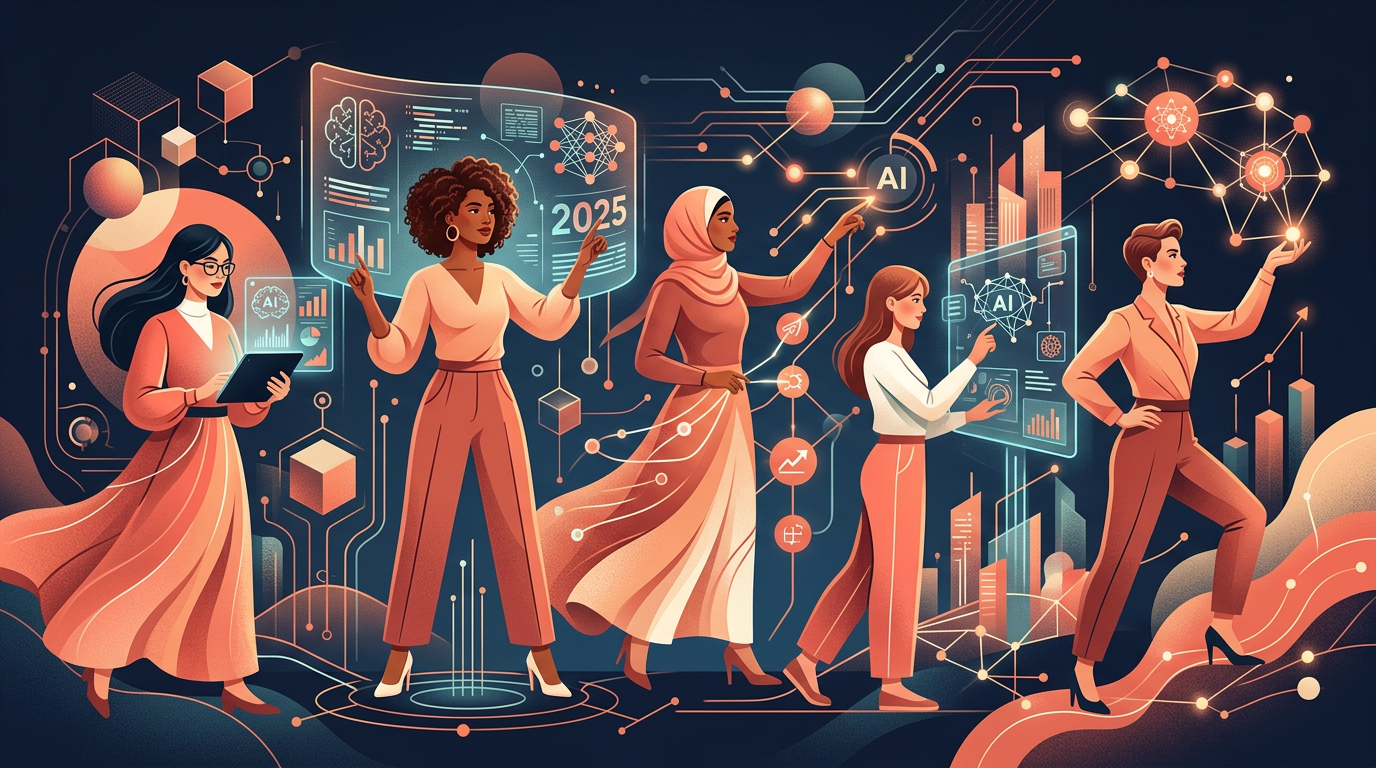
The Shift Toward Inclusive Intelligence in 2025
The artificial intelligence landscape is undergoing a radical shift. While the early years of the AI boom were dominated by foundational model development, 2025 marks the era of application, intuition, and ethical integration. At the forefront of this movement are women entrepreneurs who are not just building software, but redefining the relationship between humans and machines. These women-founded AI startups are moving beyond the code to focus on the 'vibe' - the user experience, the ethical implications, and the creative potential of generative tools.
For many years, the technical barrier to entry in the startup world was high. However, with the rise of vibe coding for women, the narrative is changing. Founders are leveraging natural language and intuitive design to build complex systems that were once reserved for those with deep computer science backgrounds. This democratization of technology is resulting in a surge of innovative companies led by women who prioritize problem-solving over syntax.
As we look toward the 2025 horizon, these startups are not just following trends; they are setting them. By focusing on niche markets, empathetic AI, and sustainable development processes, they are proving that the future of tech is diverse. At VibecodHER, we believe that when women build, they build with purpose. Let's explore the pioneers worth watching this year.
Leading the Charge: Emerging Female Founders in AI
The startups making waves in 2025 share a common thread: they solve real-world problems using advanced Large Language Models (LLMs) while maintaining a human centric approach. This balance is critical in a world where AI can often feel cold or impersonal.
Generative Design and Creative Autonomy
One of the most exciting sectors is the intersection of AI and creative industries. Several women-founded startups are moving away from simple image generation into deep, collaborative design tools. These platforms allow users to iterate on branding, user interfaces, and even architectural layouts through conversational interfaces. Instead of clicking buttons, founders are using descriptive language to shape their vision. This shift is a core component of what we teach in our workshops, where the emphasis is on using AI to amplify creative intent.
Imagine a platform that handles the technical heavy lifting of CSS and React while a founder focuses on the brand's aesthetic and core functionality. This is the essence of the new startup wave - tools that empower non-technical founders to build high-quality digital products without a traditional engineering team.
Ethical AI and Bias Mitigation
As AI becomes more integrated into daily life, the need for transparency and fairness is paramount. Several women-led startups are dedicated to building 'audit layers' for LLMs. These tools help companies ensure their AI outputs are free from harmful biases and align with global safety standards. By centering ethics in the development process, these founders are creating a more sustainable and trustworthy tech ecosystem. If you are unfamiliar with terms like 'algorithmic bias' or 'hallucination,' you can find detailed explanations in our glossary.
The Rise of Vibe Coding and Low-Code Innovation
A significant trend for 2025 is the mastery of development environments that favor intuition over traditional coding structures. This movement, often referred to as vibe coding, allows founders to describe the functionality they want in plain English. The AI then translates these 'vibes' into executable code.
This approach is particularly powerful for women entering the tech space from non-traditional backgrounds. VibecodHER is proud to be the first women-led vibe coding community, providing a space where women can learn to harness these tools to launch their own startups. The focus is no longer on how many languages you know, but on how effectively you can communicate with the machine to achieve a desired output.
In a women-led vibe coding community, the barriers to entry crumble. We see founders launching MVPs (Minimum Viable Products) in weeks rather than months. This speed to market is a competitive advantage that many of the top startups in 2025 are utilizing to outpace larger, slower competitors.
Practical Steps to Launch Your AI Startup in 2025
If you are inspired by the success of these women-founded startups, there has never been a better time to start your own journey. Here are actionable steps to move from idea to execution:
- Define your niche: Don't try to build the next general purpose AI. Instead, solve a specific problem in a sector you understand deeply, such as healthcare, education, or fashion.
- Choose your stack wisely: Leverage 'no-code' and 'low-code' AI builders that allow for rapid prototyping. Tools like Cursor, Replit, and specialized LLM wrappers are your best friends.
- Focus on the data: The quality of your AI depends on the data it processes. Find unique datasets that give your startup a proprietary edge.
- Build in public: Share your progress with a supportive community to get feedback early and often. This builds a loyal user base before you even launch.
- Prioritize user experience: In 2025, a functional product is not enough. It must feel intuitive and delightful to use.
The Role of Community in Scaling Female-Led Tech
Success in the AI space is rarely a solo endeavor. The startups that thrive in 2025 are those backed by strong networks. Access to mentorship, peer review, and emotional support is just as important as access to capital. This is why joining a structured group is vital for any aspiring female founder.
Within a women-led vibe coding community, founders can share system prompts, troubleshoot integration issues, and stay updated on the latest AI model releases. This collaborative environment fosters innovation by allowing founders to stand on the shoulders of those who have navigated the hurdles before them. Whether you are building an AI-driven personal assistant or a complex data analytics tool, having a sounding board of like-minded women is a game changer.
Exploring Specific Sectors for Growth
As we analyze the market, certain sectors appear particularly ripe for disruption by women-led AI ventures:
Healthcare and Wellness
Women founders are uniquely positioned to address gaps in the healthcare market, particularly in areas like reproductive health, menopause management, and mental wellness. AI startups in this space are using predictive modeling to provide personalized health insights, making high-quality care more accessible.
Sustainable Fashion and Retail
AI is being used to minimize waste in the fashion industry by optimizing supply chains and creating virtual fitting rooms. Startups led by women are at the forefront of this, combining a passion for sustainability with cutting edge machine learning to transform how we consume products.
EdTech and Lifelong Learning
The way we learn is changing. AI-powered platforms that adapt to an individual's learning style are becoming the standard. Women founders are creating tools that empower other women to upskill in technical fields, creating a virtuous cycle of growth and empowerment.
Why 2025 is Your Year to Build
The technological tools available today are more powerful and accessible than at any point in history. The transition from "I wish this existed" to "I built this" is now a matter of intention rather than years of academic training. By embracing the principles of vibe coding and leveraging the support of a global network, you can transition from a spectator to a leader in the AI revolution.
Remember, every major startup began as a small project. The founders we are watching in 2025 started by simply experimenting with prompts and building basic prototypes. They didn't wait for permission; they started building. You have the vision, and now, with the right community and tools, you have the means to execute it.
Common Challenges and How to Overcome Them
Despite the accessibility of AI, founders still face challenges. Funding remains a significant hurdle for women in tech. However, the lower costs associated with vibe coding mean you can get further on less capital. By building a robust MVP and demonstrating user traction, you make your startup a much more attractive investment.
Technical overwhelm is another common issue. When the pace of AI development feels too fast, return to the basics. Focus on the core problem your startup solves and ignore the noise of every new model release unless it directly improves your product. Staying grounded in your mission will help you navigate the fast moving tech landscape.
Final Thoughts on the Future of AI
The trajectory of AI is being rewritten by women who see the world differently. These founders are not just creating another piece of software; they are building ecosystems that reflect values of equity, creativity, and human connection. As we watch these startups grow in 2025, let their success serve as a blueprint for your own aspirations.
Join the free VibecodHER community to start your journey today. Whether you are a seasoned developer or just starting to explore the world of vibe coding, you'll find the resources and support you need to build something extraordinary.
What are the best AI tools for non-technical founders in 2025?
In 2025, tools like Cursor for code generation and Replit for deployments are essential. For those focusing on the aesthetic and user experience, platforms that allow for natural language design adjustments are key. These tools enable you to build complex features by describing your vision, making them perfect for founders who want to focus on strategy and product-market fit rather than syntax.
How does vibe coding differ from traditional programming?
Traditional programming requires learning specific syntax and rules for different languages like Python or JavaScript. Vibe coding, however, uses Large Language Models to interpret the 'vibe' or intent behind a request. You provide a high-level description of what you want to achieve, and the AI generates the underlying code. This approach is highly effective for rapid prototyping and is a core part of the movement within our women-led vibe coding community.
Is it too late to start an AI startup in 2025?
Absolutely not. While foundational models are established, the era of specialized, niche applications is just beginning. There are thousands of industries that have yet to be properly disrupted by AI. By focusing on a specific problem and building a dedicated user base, you can establish a successful startup regardless of when you begin.
Where can I find a mentor for my AI startup?
Finding a mentor is much easier when you are part of a niche community. Look for groups that focus specifically on women in tech and AI development. Networking within a community of peers who are also building can lead to organic mentorship opportunities and valuable partnerships.
Ready to become the next founder we watch? Join us and take the first step toward building your future.