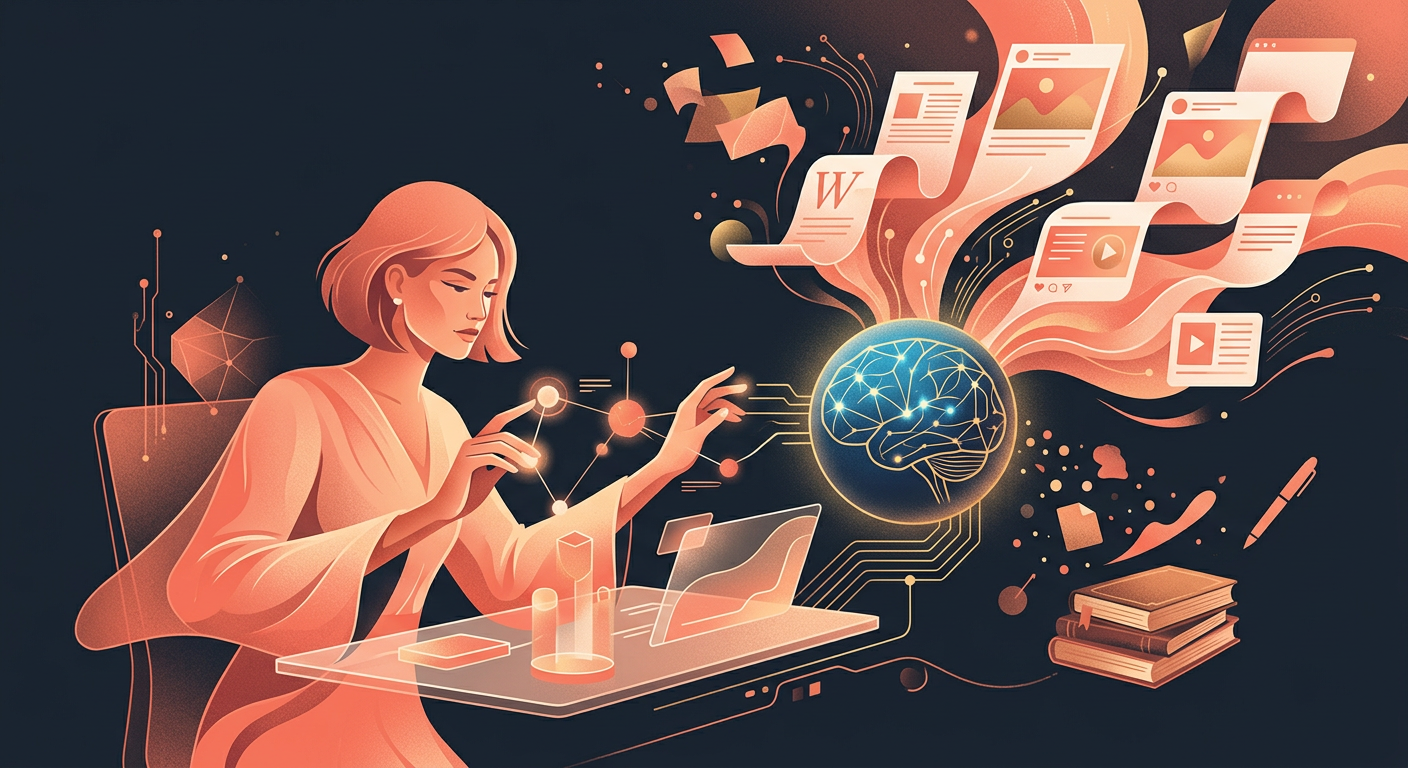
The New Era of Content Creation: Merging Creativity with AI
Content creation used to be a linear, manual process. You would sit down, stare at a blinking cursor, and labor over every sentence for hours. While the artistic soul of writing remains vital, the mechanics of how we produce and distribute media have fundamentally shifted. If you are looking to scale your personal brand or business without burning out, learning how to automate content creation using AI tools is no longer optional - it is a superpower.
At the heart of this transformation is a concept we call vibe coding. This is the practice of using high-level instructions, intent, and aesthetic direction to guide AI models in building exactly what you need. Instead of getting bogged down in technical minutiae, you become the director of an automated creative studio. This tutorial will walk you through the exact steps to build an automated content engine that saves you hours every week while actually improving the quality of your output.
Before we dive into the technical details, it is helpful to familiarize yourself with some of the terminology we use in the glossary. Understanding the difference between large language models and autonomous agents will help you navigate the complex world of automation more effectively.
Step 1: Defining Your Creative Vibe and Strategy
Before you touch a single AI tool, you must define the soul of your content. Automation without a clear vision leads to generic, robotic output that fails to resonate with a human audience. We call this defining your vibe.
Characterizing Your Brand Voice
Ask yourself: what does my brand sound like? Is it authoritative and structured, or playful and experimental? When you automate content creation using AI tools, your primary job is to provide the 'vibe' that the AI will follow.
Mapping Your Content Pillars
Identity three to five core topics that you want to be known for. These pillars will serve as the foundation for your automated workflows. Without these constraints, AI can often drift into off-topic territory.
The Importance of Human-in-the-Loop
Automation is not about removing the human; it is about liberating the human from repetitive tasks. The most successful creators use AI to handle the heavy lifting while they focus on the final 10% of polish and emotional connection. This philosophy is central to what we teach in our workshops, where we show you how to maintain your unique spark in an automated world.
Step 2: Selecting Your AI Content Stack
To build a robust automation engine, you need a stack of tools that talk to each other. You do not need dozens of expensive subscriptions; you just need a few core components that handle different parts of the creative process.
- The Brain (LLMs): Tools like ChatGPT, Claude, or Perplexity act as the drafting and ideation engine. These are where your high-level vibe coding takes place.
- The Connector (Automation Platforms): Zapier or Make.com are the glue. They move data from your brain to your publication channels.
- The Visualizers: Midjourney or Canva AI handle the aesthetic elements, ensuring your content is visually striking.
- The Distribution Hub: Platforms like Buffer or FeedHive allow you to schedule the final output across multiple channels.
By integrating these tools, you create a seamless pipeline. If you are new to this technical side of things, our vibecodHER resources provide specific guides for women who want to master the building side of tech without needing a computer science degree.
Step 3: Building Your Automated Ideation Engine
One of the biggest hurdles in content creation is simply thinking of what to say. You can automate this entire phase. Imagine a system where you put in one long-form idea, and the AI generates thirty days of content ideas based on that single spark.
The Multi-Channel Prompting Strategy
Instead of asking an AI for "ten blog ideas," use a multi-channel approach. Feed the AI a transcript of a video or a raw voice memo you recorded while walking. Ask it to:
- Extract the core arguments and insights.
- Reformat those insights into five Twitter threads.
- Create three LinkedIn post outlines that focus on professional growth.
- Design a structure for a long-form blog post.
Setting Up the Automation
You can set up an automation where every time you save a link to a "swipe file" in Notion, an AI agent automatically analyzes the link and generates three content hooks based on its content. This turns your daily reading habit into an automated content bank.
Step 4: Mastering the Art of Vibe Coding in Content
When we talk about vibe coding in the context of content, we are talking about the deliberate design of prompts and systems that reflect your personality. To truly automate content creation using AI tools, you must go beyond simple instructions.
Using Persona-Based Prompting
Do not tell the AI to "write a blog post." Tell it to "write a blog post as a tech-savvy female founder who values transparency, avoids corporate jargon, and loves using analogies from nature." This level of detail changes the output from generic to deeply personal.
Iterative Feedback Loops
The first draft is rarely the final one. Use an iterative process where the AI provides a draft, you provide a "vibe check" (critique), and the AI adjusts. Over time, you can save these successful patterns as templates within your automation software.
Step 5: Automating Visual Content and Social Assets
Written content is only half the battle. To stand out, you need visuals. You can now automate the creation of social media graphics and images that match your brand's aesthetic.
Dynamic Image Generation
Tools like Midjourney allow you to create a specific style guide (your visual vibe). Once you have a prompt that produces the look you want, you can reuse elements of that prompt in every automation. For example, if your brand vibe is "cyberpunk neon," you ensure that every image generated by your automation includes those aesthetic descriptors.
Video Repurposing
AI tools can now take a long-form video and automatically identify the most viral-worthy moments. They can crop the video for TikTok or Reels, add captions, and even write the descriptions. This allows you to turn one hour of video into weeks of social content with minimal manual effort.
Step 6: Distribution and Logistics Automation
The final step in the tutorial is getting your content out into the world. After the AI has written the post and generated the image, the automation should move that content into your scheduling tool.
- Review Stage: Always have a final review step. Your automation should send a notification to your phone or Slack with the final draft. You give it a quick read, make one or two human edits, and hit "approve."
- Automated Cross-Posting: Once a blog post is published on your site, use a tool like Zapier to automatically create a summary post for LinkedIn and a promotional tweet. This ensures your content works hard across all platforms without extra effort from you.
For those who want to see these workflows in action, joining our community is the best way to see how other creators are implementing these exact strategies in real-time.
Practical Use Case: The 60-Minute Content Month
To show you the power of these systems, let us look at a hypothetical scenario. Imagine a creator who spends one hour a month recording a deep-dive audio file about their niche.
- The audio is automatically transcribed.
- An AI agent breaks the transcription into four weekly blog posts.
- Another agent generates twenty social media posts from those blogs.
- A visual AI creates custom graphics for every single post.
- All content is queued in a scheduler for the creator to approve in one 20-minute session.
This is the reality when you effectively automate content creation using AI tools. You move from being a manual laborer to being a high-level creative strategist.
Actionable Takeaways for Your Automation Journey
- Start Small: Do not try to automate everything at once. Begin by automating your content ideation or your social media captions first.
- Focus on the Prompt: The quality of your automated output is a direct reflection of your prompting skills. Spend time refining your "vibe" instructions.
- Keep an Archive: Keep a folder of your best-performing AI-generated content. Use these as "few-shot" examples in your future prompts to train the AI on what works for your audience.
- Build in Human Checks: Never let an automation post directly to your main channels without at least one human glance. This protects your brand reputation and allows for that final touch of personality.
Frequently Asked Questions
Will AI-automated content hurt my SEO?
Search engines focus on the helpfulness and quality of the content rather than how it was produced. As long as your automated content provides genuine value to the reader, follows proper formatting, and includes human oversight to ensure accuracy, it can perform exceptionally well in search rankings. The key is to avoid generating repetitive, low-value spam.
Do I need to know how to code to automate my content?
No, you do not need traditional coding skills. The rise of vibe coding and no-code tools like Zapier or Make.com means you can build complex systems using logic and natural language. While a basic understanding of how data moves between apps is helpful, the barrier to entry has never been lower for non-technical creators.
How do I keep my content from sounding like a robot?
This is where your unique brand voice or "vibe" comes in. By providing the AI with specific stylistic guidelines, personal anecdotes, and a clear point of view, you can guide it to mimic your natural writing style. Always add a layer of human editing to inject current events, personal opinions, or specific nuances that AI might miss.
What are the best tools for a beginner to start with?
For beginners, I recommend starting with ChatGPT for brainstorming and drafting, Canva Magic Studio for visuals, and Buffer for scheduling. These tools are user-friendly and integrate well with one another. As you grow more comfortable, you can explore more advanced automation platforms like Make.com to connect everything together into a seamless workflow. Are you ready to stop struggling with your content calendar and start building your automated empire? The future of tech belongs to those who can bridge the gap between human creativity and machine efficiency. Join the free VibecodHER community
Build with the First Women-Led Vibe Coding Community
You don't have to figure this out alone. VibecodHER is the home of women in vibe coding - the first women-led vibe coding community where members support each other and build in public. Join the free Skool community.