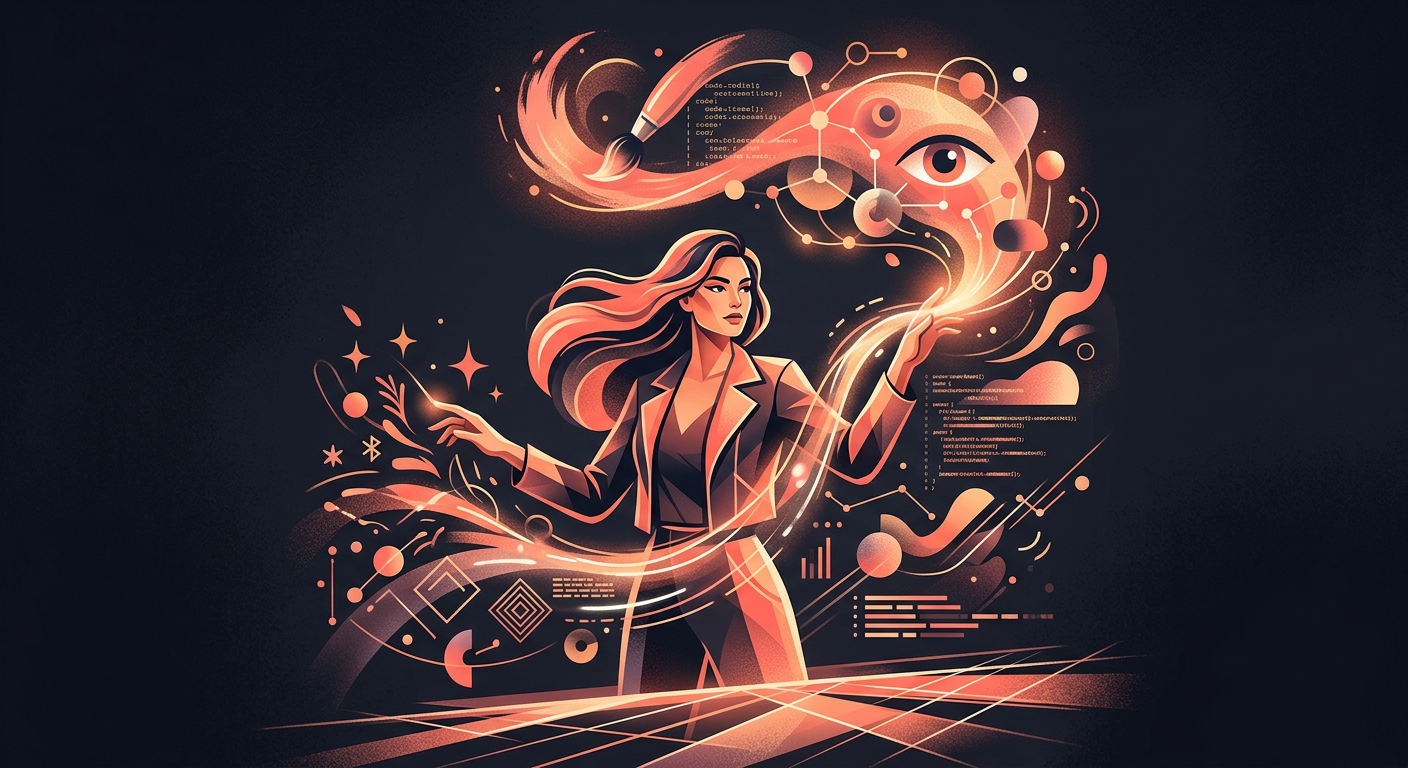
The Digital Renaissance: Why Vibe Coding Creatives are the New Vanguard
The landscape of creative expression is shifting beneath our feet. For decades, the barrier to entry for building digital tools was the "syntax wall"-the requirement to master complex programming languages like C++, Java, or Python just to bring a digital vision to life. But a new movement, pioneered by visionaries like Kaci Brown and the VibecodHER community, is dismantling that wall.
Welcome to the era of vibe coding creatives artists.
Vibe coding is not just a technical shift; it is a creative revolution. It describes the process of using natural language, aesthetic intuition, and high-level conceptual thinking to direct Large Language Models (LLMs) to generate functional software. For artists, this means the "vibe"-the feeling, the intent, and the visual direction-becomes the source code.
In this deep dive, we explore how vibe coding creatives artists are bridging the gap between imagination and execution, and why this movement is specifically empowering women and non-binary creators to claim their space in the tech ecosystem.
Defining the "Vibe": The Artist’s Advantage in AI
When we talk about vibe coding creatives artists, we are talking about a specific type of logic. While traditional programmers focus on how a function should run, vibe coders focus on what a solution should feel like and why it should exist.
The Shift from Syntax to Semantics
For an artist, the canvas has always been the interface. Whether it's a painter with a brush or a musician with a DAW (Digital Audio Workstation), the goal is to translate an internal state into an external medium. Vibe coding allows the "prompt" to act as the brush.
| Feature | Traditional Coding | Vibe Coding |
|---|---|---|
| Primary Tool | IDEs, Compilers, Debuggers | LLMs (Claude, GPT-4), Natural Language |
| Learning Curve | High (Months/Years to master syntax) | Intuitive (Focuses on communication) |
| Output | Executed logic | Holistic digital experiences |
| Ideal User | Software Engineers | Creatives, Designers, Visionaries |
As Kaci Brown often emphasizes at VibecodHER, the "vibe" is not vague; it is a sophisticated set of instructions based on taste and curation. Artists already possess the most important skill for this new era: aesthetic judgment.
How Vibe Coding Creatives Artists are Building the Future
Artists are using vibe coding to bypass the traditional gatekeepers of the tech world. By leveraging AI as a "junior developer" that handles the boilerplate code, creators can focus on the soul of their projects.
1. Interactive Portfolios and Immersive Galleries
Gone are the days of sterile, template-driven websites. Vibe coding allows artists to describe complex interactions-like a gallery where the background colors change based on the viewer's scroll speed or an interactive 3D environment that reacts to mouse movements-without writing a single line of JavaScript by hand.
2. Custom Creative Tools
Many vibe coding creatives artists are building their own niche tools. For example, a poet might build an AI-powered "rhyme and metaphor" engine that suggests imagery based on their specific writing style. By "coding the vibe" of their own creative process, they create tools that are hyper-personalized.
3. Generative Art and Data Visualization
Artists are now using vibe coding to process vast amounts of data and turn them into visual stories. By describing the data relationship they want to see, they can prompt AI to generate the D3.js or Canvas code necessary to visualize complex emotional trends or environmental datasets.
The VibecodHER Methodology: Empowering the Creative Mind
At VibecodHER, we believe that tech belongs to the dreamers. Founded by Kaci Brown, our community is built on the premise that you don't need a Computer Science degree to be a builder. We focus on the "Founder-Creator" hybrid.
The Power of Curation over Construction
For vibe coding creatives artists, the work is increasingly about curation. You don't need to know how to build a engine from scratch if you know how to steer the car. Our workshops teach creatives how to:
- Write iterative prompts: Refining the "vibe" until the output matches the vision.
- Debug via dialogue: Talking to the AI to fix errors rather than hunting through brackets.
- Integrate aesthetics: Ensuring that the functional code maintains the artistic integrity of the project.
By joining our founding members, artists get access to a support system that values their creative intuition as much as technical output.
Overcoming the "Imposter Syndrome" in Tech
One of the greatest hurdles for vibe coding creatives artists is the feeling that they aren't "real" coders. This is a narrative we are actively changing.
If you can describe a complex emotional landscape, you can describe a complex user interface. If you can compose a song with multiple layers of harmony, you can orchestrate a multi-step AI workflow. Vibe coding is the ultimate equalizer because it values clarity of vision over memorization of syntax.
Check out our glossary to see how we’re redefining tech terms to be more inclusive of the creative process.
Step-by-Step: From Artist to Vibe Coder
If you are an artist looking to start your journey into vibe coding, follow this practical framework:
- Define the "Vibe" First: Before opening a chat interface, write down the three core feelings your project should evoke. Is it "Minimalist, Brutalist, and Fast"? Or "Whimsical, Soft, and Interactive"?
- Use Natural Language Specs: Describe your project as if you were explaining it to a highly skilled but literal-minded assistant. "I want a web page that feels like a 90s zine but functions like a modern e-commerce site."
- Iterate and Refine: The first output is rarely perfect. Use the "vibe check" method. Ask the AI: "This is a good start, but the transitions feel too mechanical. Can you make them feel more organic and fluid?"
- Community Feedback: Share your "vibe" with others. The VibecodHER community is the perfect place to get feedback on both your creative direction and your technical implementation.
The Economic Impact: Artists as Technical Founders
Vibe coding is turning artists into technical founders. When the cost of building an MVP (Minimum Viable Product) drops from $50,000 in development fees to $20 a month for an AI subscription, the power dynamic shifts.
Vibe coding creatives artists are now launching their own SaaS (Software as a Service) platforms, custom app experiences, and digital products. They are no longer just "hired guns" for visual assets; they are the architects of the entire digital experience.
Why Women and Non-Binary Artists Lead this Space
The traditional tech world has often been exclusionary. However, the world of art and design has long been a haven for diverse voices. As coding becomes a language-based, intuitive skill, those who have been historically marginalized in tech are finding that their communication skills and creative empathy are their greatest assets.
Kaci Brown founded VibecodHER to ensure that as this technology evolves, women are at the forefront, not the sidelines. Our blog regularly features stories of artists who have transitioned into "vibe coding" stars, proving that the future of tech is feminine, creative, and vibe-led.
Case Study: The "Vibe-Coded" Interactive Poem
Consider the case of an illustrator who wanted to create a "living sketchbook." Traditionally, she would have needed to learn Three.js or hire a developer.
Instead, she used vibe coding to:
- Describe the physics of "digital ink" that drips when the phone is tilted.
- Prompt the creation of a custom CSS filter that makes the screen look like parchment.
- Integrate a simple AI script that generates a new sketch prompt every morning.
The result was a viral app that stayed true to her unique hand-drawn aesthetic but functioned with the complexity of a professionally developed tool. This is the power available to vibe coding creatives artists today.
Tools of the Trade for Vibe Coding Creatives
To succeed as a vibe coder, you need the right stack. While the "vibe" is the most important part, these tools help translate that vibe into reality:
- Claude 3.5 Sonnet: Widely considered the best for understanding nuance and artistic direction.
- Cursor: An AI-first code editor that allows you to "vibe code" directly within your project files.
- v0.dev: Excellent for "vibe coding" the UI/UX components of a website.
- Midjourney/DALL-E 3: For generating the visual assets that define the aesthetic "vibe."
Conclusion: Join the Movement
The intersection of art and AI is not a threat to creativity; it is an expansion of it. Vibe coding creatives artists are the bridge between what is and what could be. By focusing on intent, emotion, and aesthetic precision, you can build digital worlds that were previously locked behind the gates of complex syntax.
Are you ready to stop being a user of tools and start being a builder of vibes? Visit our VibecodHER page to learn how you can get started, or sign up for our next round of workshops to master the art of vibe coding.
The future isn't just written in code-it's inspired by a vibe.
Frequently Asked Questions
What is the difference between vibe coding and traditional coding for artists?
Traditional coding requires learning specific languages and strict syntax rules. Vibe coding allows artists to use natural language and aesthetic intuition to direct AI tools to generate the code for them. This shifts the focus from "how to write the line" to "how the final product should feel and function."
Do I need to know any programming to be a vibe coder?
No prior programming knowledge is required to start vibe coding, though a basic understanding of computer logic helps. The goal of the VibecodHER community is to teach you how to communicate your creative vision to AI effectively, which handles the technical heavy lifting for you.
Is vibe coding replacing the need for developers?
Vibe coding isn't necessarily replacing developers; it is empowering a new class of "creative builders." While complex, large-scale infrastructure may still require traditional engineering, vibe coding allows artists to build MVPs, personal tools, and interactive experiences independently.
How does VibecodHER help artists learn vibe coding?
VibecodHER provides a supportive community, specialized workshops, and curated resources designed specifically for women and non-binary creatives. Founded by Kaci Brown, the community focuses on moving from "prompting" to "building" through the lens of artistic expression.
Can I actually make money as a vibe coding artist?
Absolutely. Many vibe coding creatives artists are using their new skills to build and sell digital products, launch SaaS startups, or offer high-end digital design services that include custom interactive elements that were previously too expensive or difficult to produce.
Join the First Women-Led Vibe Coding Community
If you're a woman in vibe coding - or curious about getting started - VibecodHER is built for you. We're the first women-led vibe coding community where women ship real apps and AI products together. Join the free VibecodHER community on Skool and start building today.