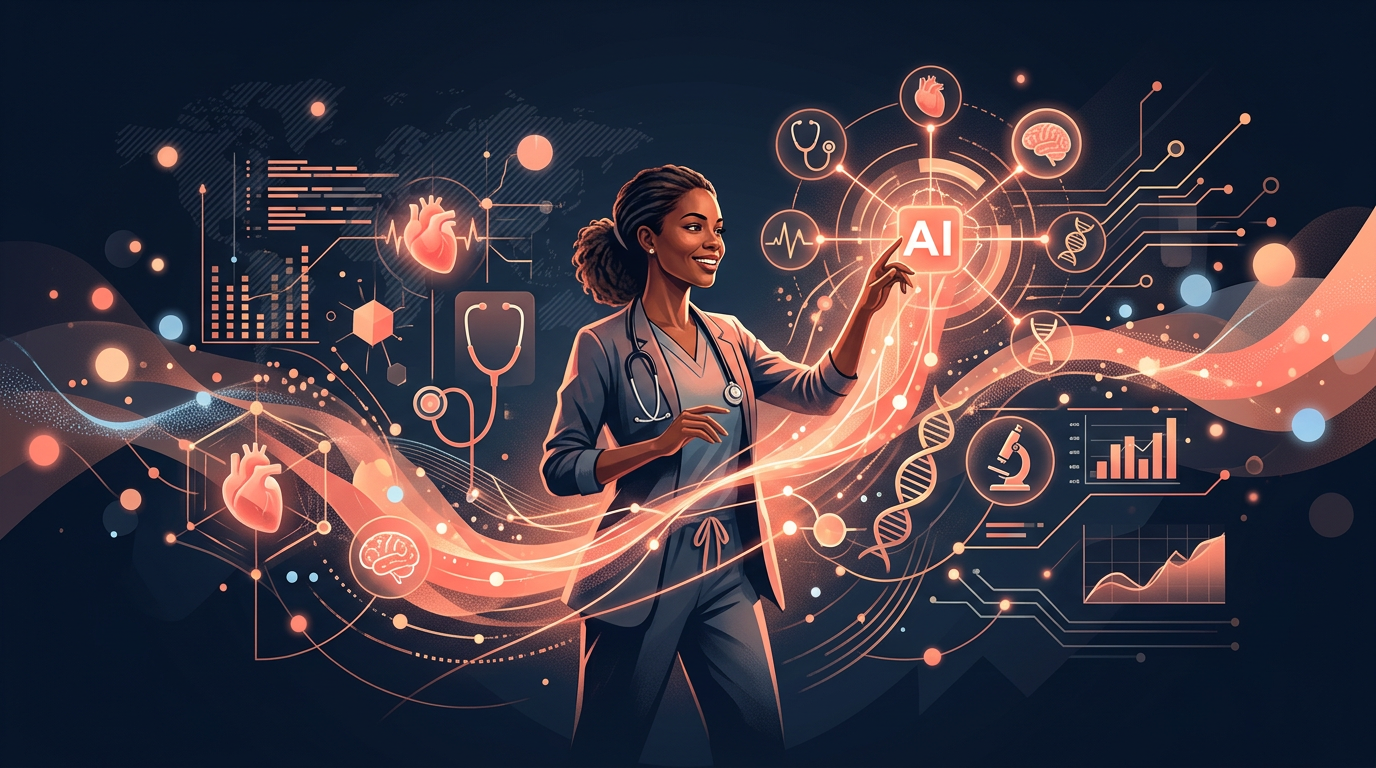
The New Era of Clinical Innovation through Vibe Coding
For decades, the intersection of medicine and technology has been defined by a significant barrier to entry. Doctors, nurses, and medical administrators often identify inefficiencies in their daily workflows, yet they lack the traditional programming skills required to build solutions. This dynamic is shifting rapidly with the rise of vibe coding for healthcare professionals. This paradigm shift allows clinicians to move from being passive users of software to active creators of intelligent systems.
Vibe coding represents a transition from syntax to intent. Instead of spending years learning Python or JavaScript, healthcare providers can now use natural language and intuitive interfaces to dictate how an application should behave. This democratization of software development is particularly vital in high-stakes environments where nuance and context-specific knowledge are more valuable than the ability to write clean code. By focusing on the vibe or the behavioral logic of an application, medical professionals can build tools that actually understand the day-to-day realities of patient care.
At VibecodHER, we believe that the next generation of healthcare breakthroughs will not come from traditional tech hubs alone. They will come from the bedside. When nurses and practitioners are empowered to design their own supportive AI, we see a reduction in burnout and an increase in patient safety. This is more than just a trend; it is a fundamental restructuring of who gets to innovate in the medical space.
Understanding Vibe Coding in a Medical Context
To grasp the impact of this movement, one must first understand what vibe coding actually entails. In the traditional sense, software development is rigid. One misplaced semicolon can crash a hospital database. Vibe coding, however, utilizes Large Language Models (LLMs) to interpret high-level instructions.
For a healthcare professional, this might look like describing a requirement: "I need a tool that cross-references these specific patient discharge notes with our recent medication list to flag any potential drug interactions that are subtle rather than obvious." The AI handles the backend architecture, the API integrations, and the data processing, while the clinician focuses on the clinical accuracy and the user experience. You can find more foundational terms in our glossary.
This approach removes the intimidation factor. Many women in the healthcare sector have historically been excluded from deep-tech development due to time constraints and systemic barriers. The emergence of the women-led vibe coding community provides a space where these professionals can collaborate, share templates, and build ethical AI tools that prioritize empathy and precision over mere data processing.
Why Healthcare Professionals Are Natural Vibe Coders
Healthcare providers are already trained in a form of algorithmic thinking. Differential diagnosis is essentially a sequence of logic gates aimed at reaching a conclusion based on input data. Nurses manage complex variables and prioritize tasks based on shifting environments. These are the exact skills needed for high-level AI orchestration.
- Pattern Recognition: Clinicians are experts at spotting anomalies in patient data. This is the core of effective AI prompting.
- Communication: Successful vibe coding requires clear, descriptive language. Healthcare providers spend their careers translating complex medical jargon for patients.
- User-Centric Design: A doctor knows exactly where a software interface fails during an emergency. They can design "vibes" that are streamlined for high-pressure situations.
Practical Applications of Vibe Coding in Healthcare
There are numerous ways that vibe coding for healthcare professionals can be applied immediately to improve the quality of work and care. These applications do not require a massive IT budget or a team of developers.
Personalized Patient Education Systems
Imagine a nurse practitioner who notices that patients frequently struggle to understand their post-operative care instructions. Traditional pamphlets are too generic. Using vibe coding, she can build a custom interface where she inputs the patient's specific surgery, age, and lifestyle factors. The AI then generates a personalized, empathetic, and culturally sensitive recovery plan. The vibe of the tool is designed to be "supportive, clear, and encouraging," something a standard developer might overlook.
Automated Administrative Triage
Administrative burden is a primary driver of physician burnout. A clinic manager could use vibe coding to create an intelligent triage system for incoming patient emails. Instead of a simple keyword search, the AI is instructed to "sense the urgency and clinical category of these messages." It then sorts them into priority levels, ensuring that a patient with chest pain is flagged instantly while a routine prescription refill is queued for later.
Research and Case Study Synthesis
For those working in research, keeping up with the latest medical journals is impossible. A vibe coder can set up an agentic workflow that scans specified journals and extracts data points relevant to their specific patient population. By participating in workshops, healthcare workers can learn how to bake their specific clinical skepticism into the AI, ensuring it does not hallucinate findings.
Overcoming Barriers: Ethics and Security
While the potential of vibe coding for women in medicine is immense, it comes with the responsibility of maintaining patient privacy and data security. The transition to AI-driven tools must be handled with a focus on HIPAA compliance and ethical safeguards.
When we talk about the first women-led vibe coding community, we are talking about a group that prioritizes safety. In our community, we discuss how to build wrappers around existing AI models that ensure no sensitive patient data is ever used for training purposes. We advocate for a human-in-the-loop approach. Vibe coding should never replace a clinician's judgment; it should amplify it.
Actionable Steps for Getting Started
If you are a doctor, nurse, or healthcare administrator looking to dive into this world, the path is clearer than ever before.
- Identify the Friction: Keep a log for one week of every time you find yourself frustrated by a software limitation or a repetitive manual task.
- Define the Vibe: Ask yourself, if you had a brilliant assistant who knew medicine but not your specific patient, what instructions would you give them? This is the start of your prompt engineering journey.
- Join a Learning Hub: You do not have to do this alone. Finding a community of like-minded women who understand both the clinical and technical hurdles is essential.
- Start Small with No-Code Tools: Use platforms that allow you to link different AI services together using logic instead of code.
- Iterate and Refine: The beauty of vibe coding is that you can change the behavior of your tool instantly by simply updating your description of how it should act.
The Role of Mentorship and Community
Innovation thrives in collaborative environments. The medical field is notoriously siloed, but vibe coding breaks those walls down. When a pediatric nurse in New York builds a successful AI tool for managing chronic asthma, she can share that "vibe" with a colleague in London through a global women-led vibe coding community.
This exchange of knowledge accelerates progress. Instead of waiting years for a central IT department to approve a software update, clinicians are iterating in real-time. This agility is what characterizes the current landscape of AI building. By staying connected through the VibecodHER community, medical professionals can ensure they are at the forefront of this technological revolution without losing the heart of their practice.
Hypothetical Scenario: The Resident's Assistant
Consider an overworked surgical resident. She finds that her team misses small updates in patient status during shift changeover. She decides to use vibe coding to create a "Digital Handover Sync." She instructs the AI to look at the last six hours of nursing notes and highlight only the delta - the changes in heart rate, oxygen levels, or mental status. She sets the tone to be "concise and clinical." Within an afternoon, she has a prototype that her team can use to ensure no patient detail falls through the cracks. This is the power of being a vibe coder.
Conclusion: Your Clinical Knowledge is Your Best Code
The most important takeaway for any healthcare professional is that your specialty knowledge is more valuable than coding syntax. The AI knows how to code; it does not know how it feels to tell a patient a difficult diagnosis or how to manage a busy ER. By leaning into vibe coding, you are taking control of the tools you use every day.
We are entering a phase where the best software is built by the people who actually use it. This shift empowers women in white coats to become the architects of the future of medicine. Whether you are improving patient outcomes or simply trying to get home in time for dinner by automating your charting, vibe coding is the key to a more efficient and human-centered healthcare system.
If you are ready to start building your own AI tools and want to connect with other innovators, we invite you to take the next step. Join a movement that celebrates the intersection of tech and empathy.
Join the free VibecodHER community
Frequently Asked Questions
Is vibe coding safe for patient data?
Safety depends entirely on how the tools are built. When vibe coding for healthcare, it is crucial to use enterprise-grade AI models that offer data privacy guarantees. Healthcare professionals should focus on building tools that handle logic and formatting without sending identifiable patient information to public models. Always consult with your organization's compliance officer before implementing new workflows.
Do I need to know any programming languages to start?
No. The core philosophy of vibe coding is that natural language is the command. While a basic understanding of how data flows can be helpful, you do not need to write code. Your ability to describe a process and set the intended outcome (the vibe) is the primary skill required. We provide resources to help you bridge this gap at VibecodHER.
How much time does it take to build a basic AI tool?
With current vibe coding tools, a functional prototype can often be built in an hour or two. The focus is on rapid iteration. Instead of months of development, you can describe a tool, test its output, and refine its instructions in real-time. This speed allows healthcare professionals to solve problems as they arise.
Can vibe coding help with medical research?
Absolutely. Vibe coding excels at synthesizing large amounts of qualitative data. You can build AI agents that assist in literature reviews, organize findings into specific themes, or even help draft grant applications by ensuring the tone matches various institutional requirements. It is a powerful assistant for any academic or clinical researcher. Join the free VibecodHER community