The New Era of Retail Intelligence
Retail has always been about more than just transactions; it is about the intersection of product, people, and presentation. However, for decades, the technology used to manage these elements remained the domain of specialized IT departments. Retail professionals, who understand the nuances of customer sentiment and floor flow better than anyone, often found themselves forced to use rigid software that did not quite fit their needs.
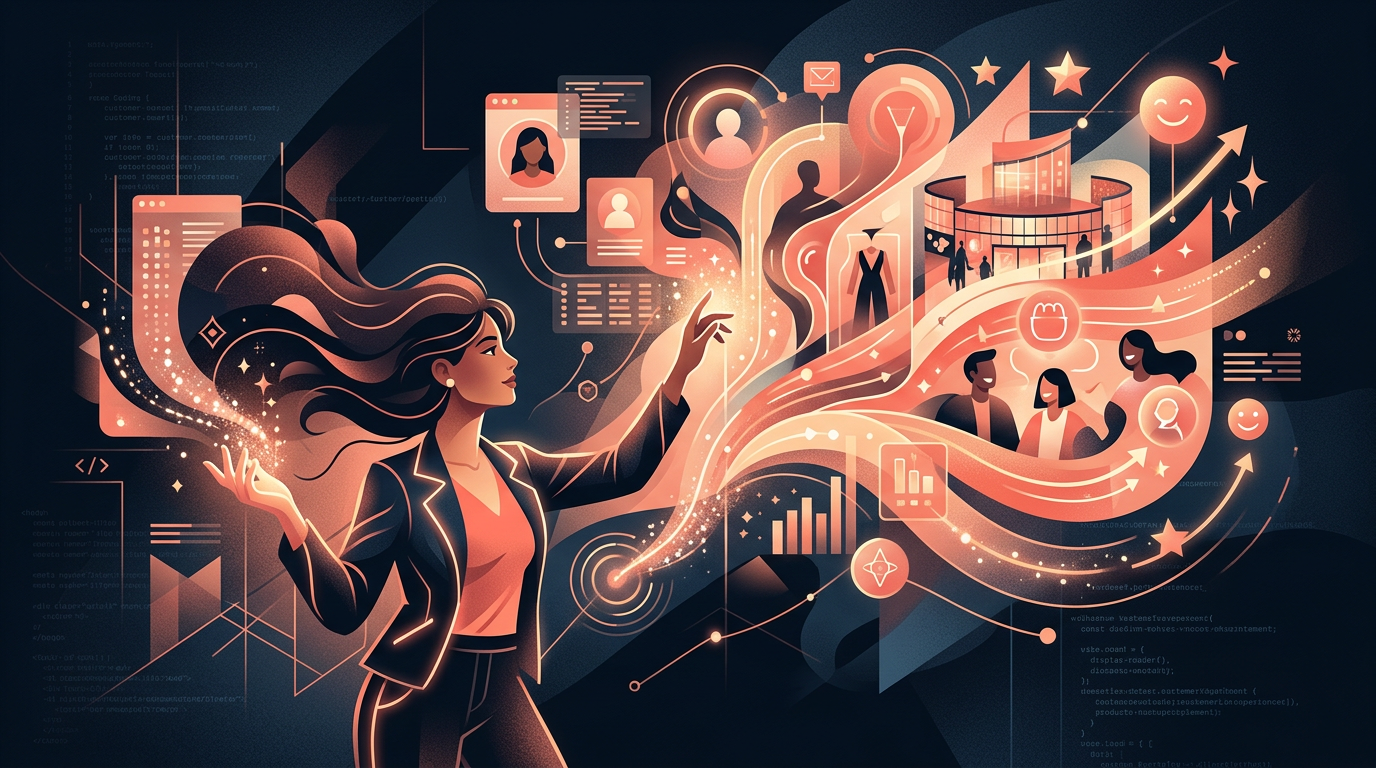
This gap is closing rapidly. We are entering a phase where the ability to create software is no longer restricted to those who have spent years studying syntax and algorithms. Vibe coding for retail professionals is the bridge between industry expertise and technical execution. By leveraging Large Language Models (LLMs) and intuitive AI agents, those in the retail space can now build custom solutions that reflect the specific "vibe" of their brand and the practical needs of their storefront.
Whether you are managing a boutique, overseeing regional operations, or designing a global e-commerce strategy, understanding how to communicate intent to an AI is the most valuable skill you can acquire. This shift represents a democratization of creation that empowers women in tech and retail to build their own futures.
Understanding Vibe Coding for Retail Professionals
To grasp the impact of this movement, one must first understand what vibe coding actually entails. Unlike traditional software development, which requires writing every line of code manually, vibe coding focuses on high-level intent. You provide the vision, the logic, and the aesthetic requirements, and the AI translates that into functional code.
For a retail professional, this means you can describe a problem, such as a fractured loyalty program or an inefficient stock-checking process, and work with an AI to build a custom application to solve it. This approach is particularly powerful because it values domain expertise over technical jargon. You do not need to be a developer to understand that a customer’s shopping journey feels clunky. With vibe coding, you are the architect, and the AI is the builder.
Integrating vibe coding for women in retail allows for a more empathetic and intuitive approach to tech development. It encourages the creation of tools that prioritize human connection rather than just raw data processing. By focusing on the "vibe" - the overall feeling and effectiveness of the user experience - retail leaders can ensure their digital tools match their physical brand identity.
Practical Applications of Vibe Coding in the Retail Space
How does this look in practice? The applications are limited only by your imagination, but several key areas are already seeing significant transformation through human-led, AI-assisted development.
Personalized Shopping Assistants
Imagine a scenario where a small boutique owner wants to offer the same level of personalized service to online customers as she does to those who walk through her front door. Using vibe coding, she can build a custom AI stylist assistant that integrates with her current inventory. By describing the brand's aesthetic - perhaps "bohemian chic with a focus on sustainable fabrics" - she can program the AI to suggest outfits based on customer preferences, weather patterns, and past purchases. This is not a generic chatbot; it is a tool infused with the specific brand DNA that only the owner understands.
Inventory and Supply Chain Optimization
Inventory management is often the most stressful part of retail. Traditional systems are frequently over-complicated or lack the specific reporting features a business needs. A retail manager can use vibe coding techniques to create a dashboard that alerts them when stock levels are inconsistent with projected seasonal trends. By describing the necessary logic - "Notify me when linen shirts are low but only if the local forecast predicts temperatures over 80 degrees" - the manager creates a highly specific, high-value tool without needing a computer science degree.
Customer Engagement and Loyalty Tools
Generic loyalty points often fail to drive real engagement. Retail professionals can use AI to build custom rewards systems that recognize high-value behaviors, such as social media mentions or attending in-store events. By defining the vibe of the loyalty program as "community-focused and exclusive," the professional ensures the resulting software reflects those values.
To better understand the terminology used in these builds, you can explore our /glossary, which breaks down the essential language of the AI-driven world.
The Role of Community in Technical Empowerment
Transitioning from a traditional retail role into a tech-adjacent or "vibe-first" developer role can feel daunting. This is where community support becomes essential. Building in a vacuum is difficult; building alongside other women who are navigating the same challenges is transformative.
As part of the first women-led vibe coding community, women in retail can share their custom-built prompts, troubleshoot logic errors, and celebrate successful deployments. The shared knowledge within a women-led vibe coding community accelerates everyone's growth. When one person figures out how to integrate a Shopify API using an AI agent, the entire community benefits from that discovery.
If you are looking for structured ways to start building, our /workshops offer hands-on guidance for turning retail concepts into functional AI prototypes. The goal is to move from a consumer of technology to a creator of it.
Actionable Steps to Start Vibe Coding Today
If you are ready to take control of your retail tech stack, follow these steps to begin your journey:
- Identify a Friction Point: Look at your daily retail operations. What is the one task that takes too long or feels unnecessarily manual? This is your first project.
- Deconstruct the Logic: Before talking to an AI, write down the steps of the process. How does a customer move from "just looking" to "checking out"? What data points are involved?
- Select Your Tools: Start with accessible AI platforms. You do not need a complex development environment to begin. You just need a clear vision and a way to communicate it.
- Iterate and Refine: The first version of your tool will not be perfect. The beauty of vibe coding is the ability to chat with the AI to refine the results. If the interface doesn't feel right, tell the AI to adjust the CSS to match your brand colors.
- Join a Training Program: To formalize your skills, check out the /vibecodher program, which is specifically designed to help women master these new technical workflows.
- Connect with Peers: Don't do it alone. The /community page is a great place to find inspiration and see what other retail professionals are building.
Why Retail Professionals are Ideally Suited for AI Building
Retail professionals possess a unique set of skills that make them excellent vibe coders. They are naturally adept at multi-tasking, they understand human psychology, and they are experts at problem-solving under pressure. These are exactly the traits needed to guide an AI toward a successful output.
In traditional coding, the barrier to entry was the language itself. In the era of vibe coding, the barrier to entry is the quality of your ideas and your ability to describe them. Retailers have spent their careers refining the "vibe" of their stores, the "vibe" of their service, and the "vibe" of their branding. Translating that into software is simply a new way of expressing an existing expertise.
This shift also offers a path for career longevity. As automation changes the retail landscape, those who can build and manage the automation will be the leaders of the industry. By learning to code with AI now, you are future-proofing your career and ensuring that the human element of retail is never lost to purely algorithmic decisions.
The Future of Retail is Human-Centered AI
We are moving toward a future where every store, no matter how small, has its own custom software ecosystem. This ecosystem will not be bought off a shelf; it will be built and maintained by the people who work there. It will be a reflection of the team's creativity and the brand's unique character.
For the retail professional, this is an invitation to step into a new role. You are no longer just a manager or a buyer; you are a creator. You are an architect of experiences. Vibe coding gives you the tools to ensure that the technology serves the people, not the other way around.
Join the free VibecodHER community to begin your journey and connect with leaders who are redefining what it means to work in retail and tech.
Do I need to know how to code to start vibe coding?
No, you do not need traditional coding knowledge. Vibe coding is about using natural language to communicate your vision to an AI, which then generates the code for you. While understanding basic logic is helpful, your industry expertise is much more important than knowing specific programming languages.
What kind of retail tools can I build with vibe coding?
You can build a wide range of tools, including custom inventory trackers, AI-powered customer stylists, personalized loyalty dashboards, and automated employee scheduling systems. If you can describe the workflow, you can likely build a tool for it using vibe coding techniques.
How long does it take to see results?
One of the biggest advantages of vibe coding is its speed. Unlike traditional development which can take months, you can often create a functional prototype of a tool in a single afternoon. The process is iterative, meaning you can continuously improve the tool as you use it and gather feedback from your customers and team.
Is vibe coding expensive for a small business?
Actually, vibe coding can be very cost-effective. Many of the AI tools used for vibe coding have free or low-cost tiers, and because you are building the tools yourself, you save on the high costs of hiring external software developers. It allows you to create high-end, custom solutions on a modest budget.
Ready to transform your retail career? Join the free VibecodHER community today and start building with us.