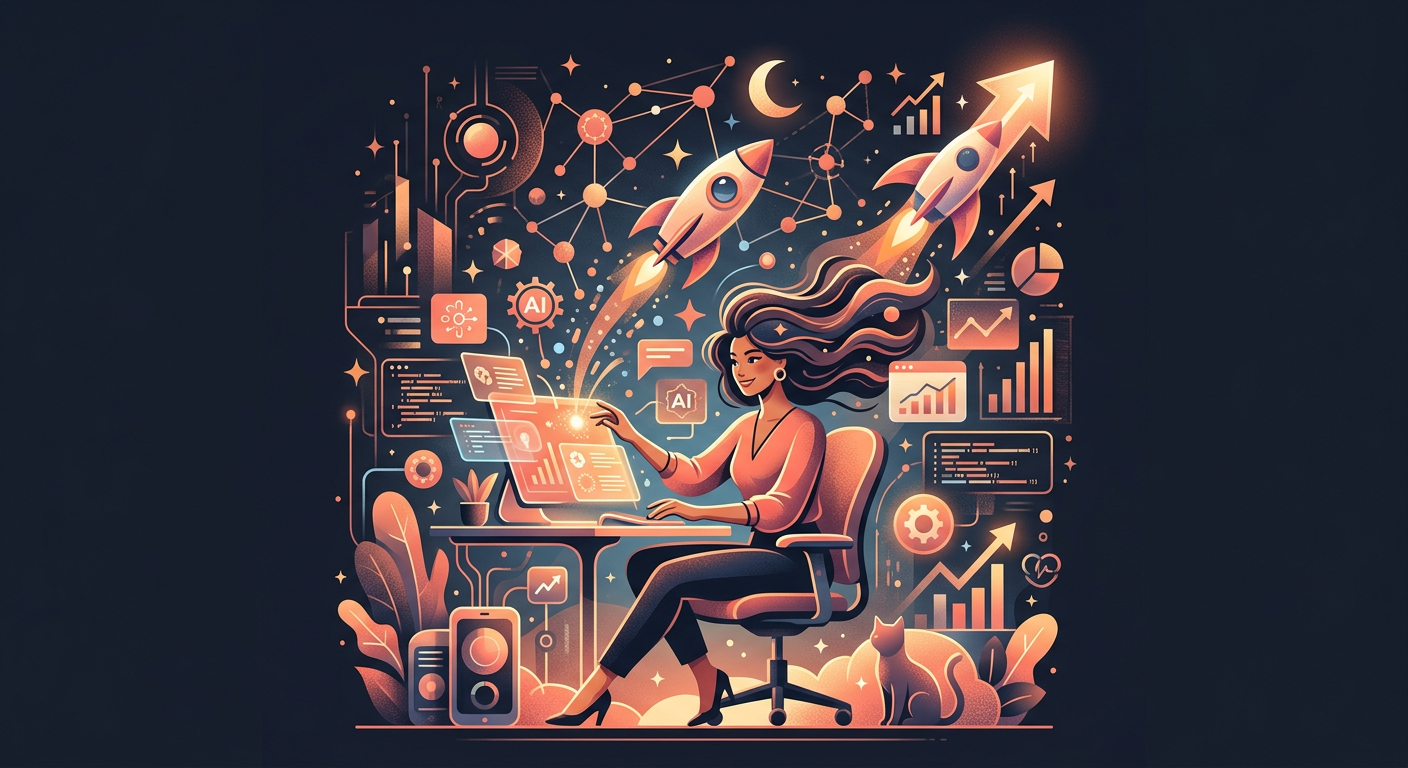
The New Era of Solopreneurship: Why Vibe Coding Changes Everything
For years, the barrier to entry for building custom software was either a computer science degree or a massive budget for developers. Solopreneurs often found themselves stuck between generic off-the-shelf tools that didn't quite fit their needs and the high cost of custom development. That dynamic has shifted permanently. We are now entering the age of the 'vibe coder,' where intuition, creative vision, and natural language are the primary tools for creation.
Mastering vibe coding tips for solopreneurs is not just about learning a new tech trend; it is about reclaiming your time and expanding your capabilities. Vibe coding allows you to describe what you want a program to do, iterate on its 'feel' and functionality using AI, and deploy solutions without getting bogged down in syntax errors. For women building businesses, this represents a democratization of technical power that was previously gatekept.
Understanding the Vibe Coding Mindset
Before diving into the technical mechanics, it is essential to understand the philosophy. Vibe coding is the practice of using Large Language Models (LLMs) to handle the heavy lifting of code generation while the human acts as the creative director and architect.
Instead of worrying about semicolons or memory management, you focus on the flow, the user experience, and the logic. This is particularly powerful for solopreneurs who need to wear multiple hats. You are no longer just the CEO; you are a product visionary who can actually build the product. If you are new to these terms, checking out our glossary can help you ground your understanding of the technical vocabulary used in this space.
Actionable Vibe Coding Tips for Solopreneurs
1. Master the Art of the 'High-Vibe' Prompt
The quality of your software is directly proportional to the clarity of your vision. When vibe coding, do not just ask for a 'calculator app.' Instead, describe the atmosphere and the specific problem it solves.
Imagine you are building a client onboarding portal. Instead of technical jargon, describe the steps: 'I want a sleek, minimalist interface where a user can upload a PDF, have it analyzed for key dates, and automatically add those dates to a shared calendar.' By focusing on the outcome and the user journey, you provide the AI with the context it needs to generate functional, high-quality code.
2. Embrace the Iterative Loop
Rarely does a vibe-coded project work perfectly on the first prompt. The secret to success is the iteration. If the AI generates something that is 80% there, do not start over. Use conversational feedback to refine the remaining 20%.
- Be specific about errors: If a button does not work, tell the AI exactly what happens when you click it.
- Ask for explanations: Request the AI to explain why it chose a specific structure. This helps you learn the underlying logic over time.
- Style as you go: Use natural language to adjust the aesthetics. 'Make the buttons more rounded' or 'Use a soft pastel color palette' are valid coding instructions in this new paradigm.
3. Leverage the Power of Community
Building in a vacuum is the fastest way to hit a plateau. One of the most significant vibe coding tips for solopreneurs is to surround yourself with others who are experimenting with these same tools. This is where VibecodHER, the first women-led vibe coding community, comes into play.
By joining a women-led vibe coding community, you gain access to shared prompts, troubleshooting advice, and the collective wisdom of others who are building AI-driven businesses. You can find more about this collaborative environment at /community.
Building Your Vibe Coding Tech Stack
To be an effective solopreneur in this space, you need the right tools. While the landscape changes rapidly, the core components usually involve:
- A Lead LLM: Tools like Claude 3.5 Sonnet or GPT-4o act as your lead developer.
- An AI-Integrated IDE: Cursor is currently the gold standard for vibe coding because it allows the AI to see your entire codebase and make edits directly.
- Deployment Platforms: Vercel or Replit allow you to take the code generated by your 'vibes' and push it live to the internet with one click.
For those who want a guided deep dive into setting up this stack, our workshops provide hands-on training to get you from idea to live application in record time.
Vibe Coding for Women: Breaking the Tech Barrier
Historically, the tech industry has not always been welcoming to women, especially those from non-technical backgrounds. Vibe coding for women represents a significant shift because it values communication, empathy, and holistic thinking - skills that many women entrepreneurs already possess in abundance.
When we talk about vibe coding, we are talking about a form of expression. It is about taking the 'vibe' of your brand and translating it into a digital tool that serves your community. Whether you are building a custom CRM for your coaching business or a niche marketplace, vibe coding removes the friction between your idea and its execution. Learn more about our mission to empower women in this space at /vibecodher.
Practical Use Cases for Solopreneurs
How does this actually look in a day-to-day business? Consider these hypothetical examples of what you can build using these vibe coding tips:
- Custom Content Repurposers: Build a tool where you drop in a YouTube link and it automatically generates three LinkedIn posts, five tweets, and a blog outline based on your specific brand voice.
- Client Dashboards: Instead of using messy spreadsheets, create a private portal where clients can track their progress, download resources, and message you directly.
- Automated Lead Magnets: Create interactive quizzes or calculators that provide instant value to your website visitors, capturing leads while you sleep.
The Path Forward: From Consumer to Creator
The transition from being a consumer of software to a creator of software is a profound identity shift for a solopreneur. It moves you from a position of dependency on third-party platforms to a position of sovereignty. You no longer have to wait for a feature request to be granted by a large software company; you can simply build it yourself.
As you begin your journey, remember that the goal is not to become a traditional programmer. The goal is to use AI as a lever to amplify your unique vision. Keep your prompts clear, stay curious, and lean into the support of a community that understands your goals.
Frequently Asked Questions
Do I need to know any programming languages to start vibe coding?
No, you do not need to be proficient in languages like JavaScript or Python to start. While a basic understanding of how code is structured can be helpful, vibe coding focuses on using natural language instructions. The AI handles the syntax, while you handle the logic and the 'vibe.' Over time, you will naturally start to recognize patterns in the code.
What is the best AI tool for vibe coding currently?
While many LLMs are capable, Cursor (an AI-powered code editor) combined with Claude 3.5 Sonnet is widely considered the most effective setup for vibe coding. Cursor allows the AI to index your files, meaning it understands the context of your entire project rather than just one snippet of code at a time.
Is vibe coding secure for building business applications?
Yes, but it requires mindfulness. When vibe coding, you should follow standard security best practices, such as never hard-coding API keys or passwords into your prompts. You can ask the AI to 'write this code using environment variables for security' to ensure your sensitive data stays protected.
How long does it take to build a functional app with vibe coding?
For a solopreneur using vibe coding techniques, a simple functional prototype can often be built in a single afternoon. More complex applications with databases and user authentication may take a few days of iteration. The key is to start small, get a 'minimum viable vibe' working, and then layer on features. Ready to start your journey and build the future of your business? Join the free VibecodHER community today and connect with other women who are revolutionizing tech through vibe coding.