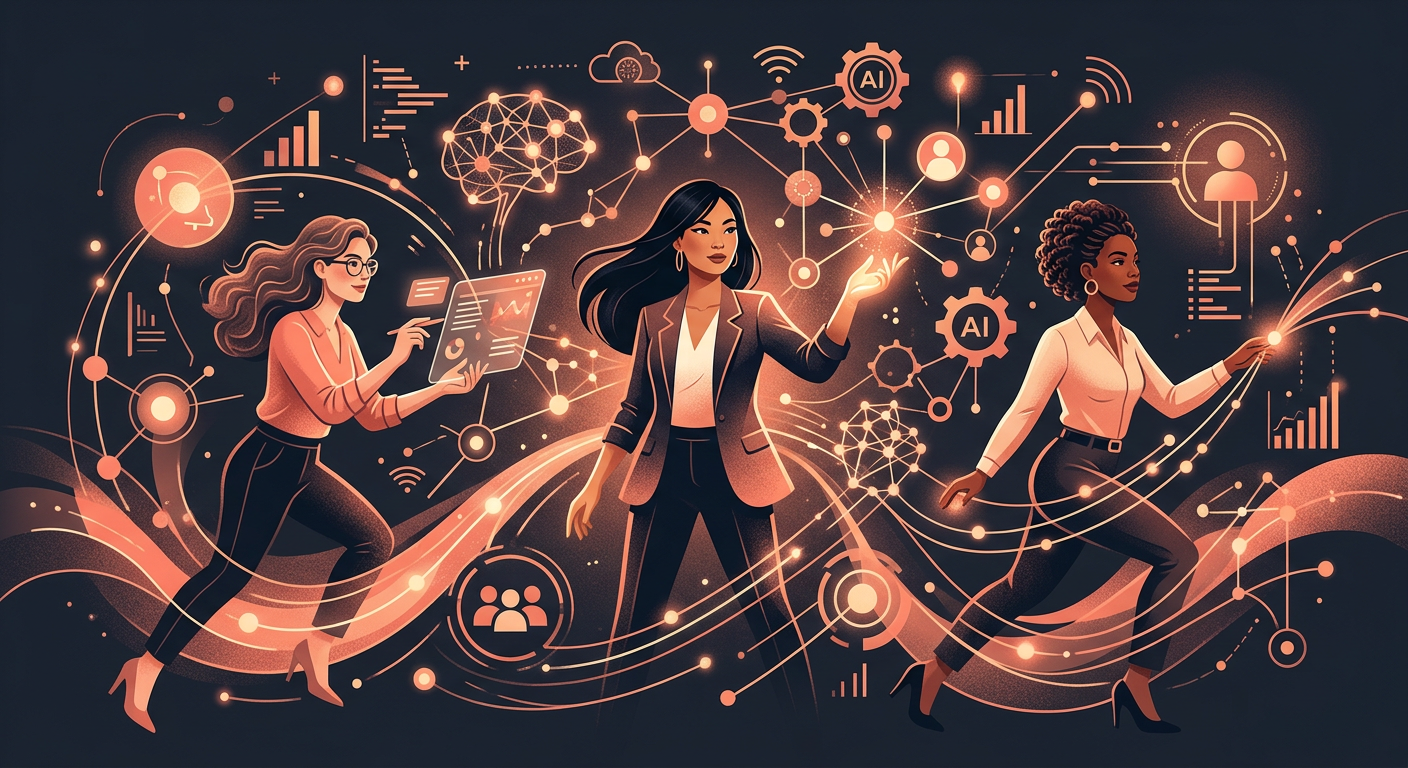
The Shift: Why Women are Leading the Coaching AI Revolution
The landscape of professional development and personal growth is undergoing a tectonic shift. For decades, the coaching industry relied on a linear model: time for money. However, a new wave of female founders is breaking this cycle by integrating artificial intelligence into their core business strategies. These women are not just using AI tools; they are architecting custom solutions that allow them to scale their impact without sacrificing their well-being.
This movement represents a significant departure from traditional software development. By focusing on vibe coding for women, these leaders are prioritizing intuition, user experience, and emotional resonance in their technical builds. They are proving that you do not need a computer science degree to build sophisticated AI agents that can coach, mentor, and guide thousands of people simultaneously.
Understanding the Power of Vibe Coding
At the heart of this revolution is a concept known as vibe coding. Rather than getting bogged down in the syntax of traditional programming languages, vibe coding focuses on directing Large Language Models (LLMs) through natural language and high-level conceptual frameworks. It is about the "vibe" of the output - the tone, the personality, and the specific value it provides to the user.
For many women in the coaching space, this approach is liberating. It allows them to act as the architect and creative director of their tech stack. By leveraging tools like Cursor, Replit, or custom GPTs, they are building applications that reflect their unique coaching methodologies. This transition is naturally supported by VibecodHER, which serves as a launchpad for those ready to move from consumer to creator.
The Rise of the AI-Enhanced Coach
Imagine a world where a business coach can offer 24/7 support to their clients without ever being online. This is the promise of the AI revolution. Women leading this charge are developing "Digital Twins" - AI agents trained on their specific frameworks, past coaching calls, and written content.
These AI agents serve several purposes:
- Scalability: Providing instant feedback to hundreds of students in a course.
- Accessibility: Lowering the barrier to entry for high-level coaching insights.
- Data Insights: Identifying common roadblocks among clients by analyzing AI interaction patterns.
By building these tools, women are positioning themselves as tech-forward leaders in an industry that was previously dominated by manual labor. They are not just coaches; they are product owners and innovators.
Overcoming the Technical Barrier
One of the biggest hurdles for women entering the AI space is the misconception that it requires deep mathematical knowledge. In reality, the current era of AI is more about communication than computation. The ability to articulate a vision, define a process, and refine an output is the most valuable skill set in the age of generative AI.
To help bridge this gap, many are turning to a women-led vibe coding community to find mentorship and peer support. Sharing prompts, debugging logic, and celebrating successful deployments helps normalize the presence of women in technical roles. This collaborative spirit is essential for sustaining the momentum of the AI coaching revolution.
Practical Steps to Build Your Coaching AI
If you are a coach or consultant looking to join this movement, the path forward is clearer than ever. You do not need a massive budget or a team of developers to get started.
Step 1: Audit Your Methodology
Before touching any code, you must define your process. What are the common questions you answer? What are the specific steps you take a client through? Documenting your "secret sauce" is the first step in training an AI to think like you. You can find common terminology for this process in our glossary.
Step 2: Choose Your Tools
Start small. You might begin with a custom GPT tailored to your brand voice. As you become more comfortable, you can move into building custom web applications using no-code or low-code platforms that integrate with OpenAI or Anthropic APIs. Attending specialized workshops can dramatically speed up this learning curve.
Step 3: Iterate and Refine
AI building is a process of constant refinement. You will likely find that your first version needs adjustment. This is where the "vibe" comes in. You tweak the instructions until the AI responds with the same empathy and clarity that you would provide in a live session.
The Importance of Community in Tech
Transitioning into the tech space can feel isolating, especially in fields that have historically excluded women. This is why VibecodHER was established as the first women-led vibe coding community. It is a space designed specifically to empower women to take up space in the AI industry.
In this environment, technical questions are met with practical answers, and the focus remains on how technology can serve human connection. Whether you are curious about API integrations or you are trying to perfect your first prompt, having a support system is the difference between giving up and crossing the finish line.
Reclaiming Time and Impact
The most profound result of women leading the coaching AI revolution is the reclamation of time. When the repetitive parts of coaching are automated, the coach is free to focus on high-level strategy, creative direction, and deep human connection where it matters most.
Consider the impact of a wellness coach who uses an AI agent to track client habits and provide motivational nudges. The coach no longer spends hours sending check-in texts; instead, they spend their time developing new programs or speaking at conferences. The AI handles the logistics while the human handles the heart.
Ethical Considerations and the Human Touch
As women lead this charge, there is a strong emphasis on ethical AI. This includes transparency about when an AI is being used and ensuring that the data provided by clients is handled with care. The goal is not to replace the human coach but to amplify them. The "vibe" in vibe coding ensures that the technology remains aligned with the coach's values and the client's needs.
Actionable Takeaways for Aspiring AI Leaders
- Start with one specific problem: Do not try to automate your entire business at once. Pick one task - like client onboarding or FAQ handling - and build an AI solution for it.
- Focus on prompt engineering: Treat your prompts like instructions for a brilliant intern. Be specific, provide examples, and set clear boundaries for the AI's behavior.
- Join a movement: Do not build in a vacuum. Engaging with others who are on the same journey will provide you with new perspectives and faster solutions to technical hurdles.
- Embrace the title of 'Builder': You are no longer just a service provider. By creating AI tools, you are building digital assets that have long-term value.
The Future is Collaborative
The coaching AI revolution is not a solo journey. It is a collective movement of women who are tired of the old way of doing business and are ready to embrace the possibilities of the future. By combining the power of LLMs with the innate emotional intelligence of the coaching industry, women are setting a new standard for what it means to be a leader in tech.
What is vibe coding and how does it apply to coaching?
Vibe coding is a method of creating software where the user interacts with AI using natural language to describe the desired outcome and 'feel' of a program, rather than writing manual code. For coaches, this means building custom apps or bots that interact with clients in their specific brand voice and methodology without needing to learn complex programming syntax.
Do I need to know how to code to build a coaching AI?
No, you do not need traditional coding skills. The current wave of AI tools allows you to build sophisticated systems using plain English (or your native language). By understanding how to structure your thoughts and instructions, you can act as the developer of your own AI tools. Participating in workshops is a great way to start if you feel overwhelmed.
How does AI impact the relationship between coach and client?
When used correctly, AI enhances the relationship by providing the client with immediate support and resources. It allows the coach to focus their live interactions on deep-seated issues and breakthroughs, while the AI handles the routine education and accountability aspects of the coaching relationship.
How can I join other women building in this space?
Connecting with a dedicated group of innovators is the best way to stay ahead. You can Join the free VibecodHER community to access resources, network with other female builders, and get support as you navigate the coaching AI revolution.