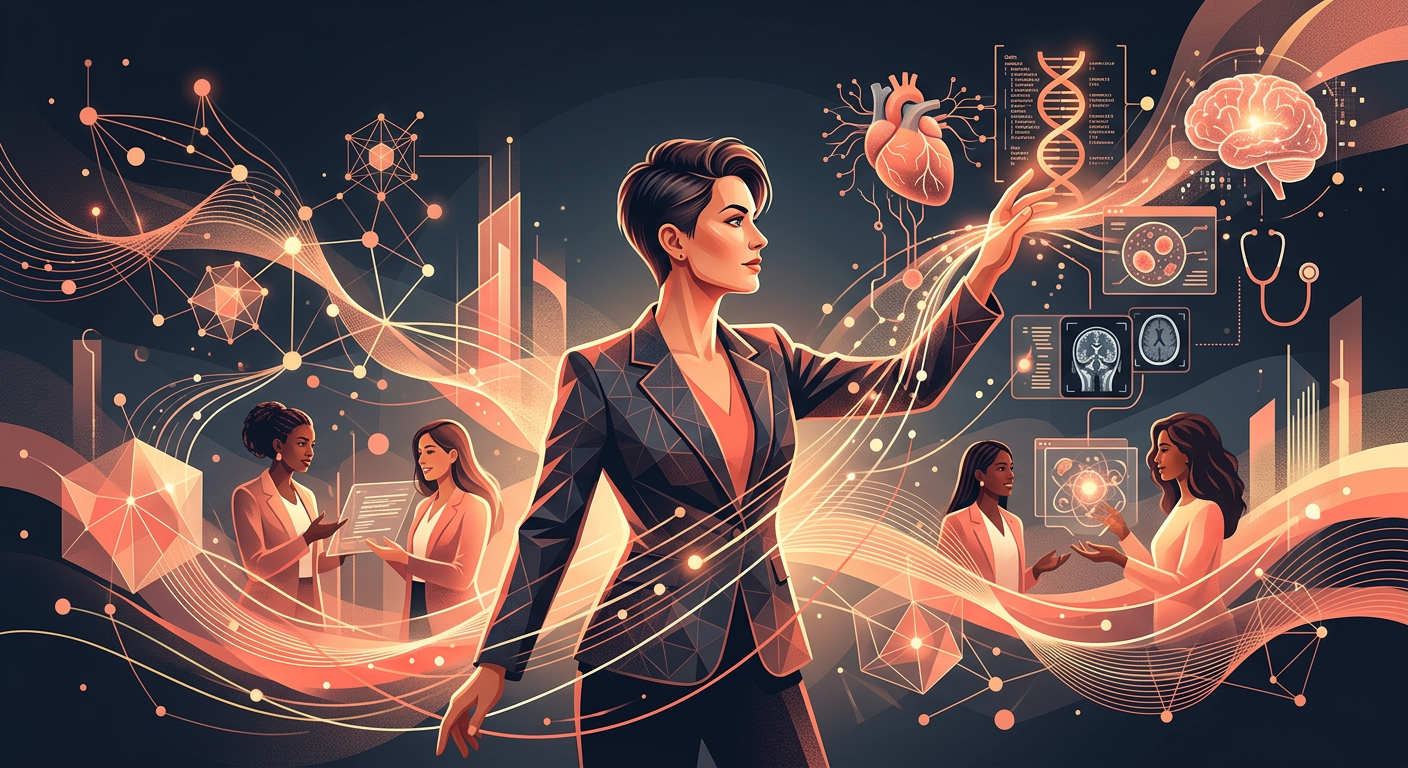
The Shift in Medical Technology Innovation
The intersection of artificial intelligence and medicine is no longer a futuristic concept. It is our current reality. At the center of this transformation, we are seeing a significant surge in women leading the healthcare AI revolution. This shift represents more than just a change in workforce demographics; it is a fundamental redirection of how we build technology to serve human health. For years, the digital tools used by doctors and patients were built by generalists who did not always account for the nuanced experiences of diverse patient populations. Today, female developers, clinicians, and innovators are changing that narrative by building tools that prioritize empathy, accuracy, and accessibility.
As we explore this evolution, we must acknowledge that the traditional barriers to entry in tech are dissolving. You no longer need a decade of computer science theory to build a functional medical triage app or a wellness tracker. Through the rise of natural language programming and modular design, women are leveraging their unique perspectives to solve complex medical problems. This is where the concept of vibe coding becomes essential. By focusing on the intent and the user experience rather than just the syntax of the code, women are creating more intuitive healthcare interfaces than ever before.
Why Women are Essential to Healthcare AI
Healthcare is inherently personal. It requires an understanding of biology, psychology, and social dynamics. When we look at the data, women often make the majority of healthcare decisions for their families. This perspective is invaluable when designing AI systems. If the people building the algorithms have a deep understanding of the patient journey, the resulting product is naturally more effective.
Women leading the healthcare AI revolution are focusing on areas that have historically been overlooked. From maternal health monitoring to diagnostic tools specifically calibrated for female physiology, these innovators are closing the gender data gap. By practicing vibe coding for women, creators can build platforms that feel supportive rather than clinical. They are moving away from the cold, robotic interfaces of the past and toward systems that feel like an extension of care.
Breaking the Mirror Effect in Data
AI is only as good as the data it is fed. In many medical studies, male subjects were historically the default. When women lead AI projects, they are more likely to identify and correct these biases. This is not just about fairness - it is about safety. An AI trained predominantly on male heart attack symptoms might miss the more subtle signs often presented by women. Female leaders in this space are ensuring that the medical models of tomorrow are inclusive by design.
From Prototyping to Implementation
Building an AI solution in the healthcare space requires a blend of technical capability and ethical responsibility. Many women transition into this field by first understanding the vocabulary of the industry. If you are new to these concepts, our glossary provides a foundational understanding of the terms used in the modern tech ecosystem. Once the language is mastered, the jump to building becomes a matter of choosing the right tools.
Imagine a nurse practitioner who notices a repetitive bottleneck in patient intake. Using modern AI building blocks, she can develop a customized tool that automates the collection of symptoms while flagging high-risk cases for immediate attention. This is not a hypothetical future; it is happening now. By participating in workshops, many women are learning how to take these ideas from a simple concept to a deployed application without needing to master traditional coding languages from scratch.
The Power of Vibe Coding in Patient Care
Vibe coding is about the flow, the feeling, and the underlying intent of the software. In a healthcare setting, the "vibe" of an application can determine whether a patient feels empowered or overwhelmed. Women-led vibe coding community members are at the forefront of this movement, emphasizing that software should adapt to the human, not the other way around.
When women apply these principles to healthcare AI, they focus on:
- Semantic Clarity: Ensuring the AI explains its reasoning in terms patients and doctors can understand.
- Symptom Nuance: Creating interfaces that allow for descriptive, qualitative data entry rather than just binary checkboxes.
- Accessibility: Designing for varied levels of digital literacy to ensure no patient is left behind.
VibecodHER: Pioneering a New Path
Innovation thrives in community. As we look at the landscape of technology, VibecodHER stands out as the first women-led vibe coding community. This platform provides the space for women to experiment with AI tools, share their builds, and support one another in technical ventures. In the context of healthcare, this collaborative spirit is vital.
When a developer in our community shares a breakthrough in how they parsed medical datasets using AI, it helps ten others refine their own healthcare apps. This collective intelligence accelerates the pace of the healthcare AI revolution. It moves us away from siloed corporate development and toward an open environment where the best ideas win regardless of the creator's traditional background.
Actionable Steps for Aspiring Healthcare AI Leaders
If you are inspired by the potential of AI to transform medicine, here are the steps you can take to start leading today:
1. Identify a Specific Friction Point
Don't try to solve all of healthcare at once. Look for a specific problem - like scheduling, patient education, or symptom logging - where an AI could provide immediate relief. The more specific the problem, the better your AI model will perform.
2. Learn the Basics of AI Prompting and Logic
You do not need to be a Python expert to build transformative tools. Focus on learning how to structure logic and interact with Large Language Models (LLMs). This is the core of the vibe coding movement. You are the architect; the AI is your builder.
3. Join a Supportive Network
The path of a builder can be lonely. Surrounding yourself with other women who are also building in public will provide the motivation and technical support needed to cross the finish line. Networking with others in our community allows you to see what is working in real-time.
4. Focus on Ethical AI
In healthcare, ethics are non-negotiable. Learn about data privacy and the importance of diverse datasets. Being a leader means being a steward of patient trust. Your AI tools should be transparent and accountable.
5. Start Building (Small)
Use low-code or no-code AI platforms to build a Minimum Viable Product (MVP). Test it, get feedback, and iterate. The goal is to move from a consumer of technology to a creator of technology.
The Future of the Healthcare AI Revolution
The trajectory is clear. The future of medicine will be personalized, data-driven, and highly intuitive. By centralizing the voices of women in this process, we ensure that the technology is reflective of the entire human experience. Whether it is through developing predictive diagnostics or streamlining clinical workflows, women are the architects of a more efficient and compassionate healthcare system.
The revolution is not just about the code; it is about the vision behind the code. It is about believing that the tools we use should be as sophisticated and empathetic as the people who use them. Through vibe coding and a commitment to AI building, the barriers that once held back medical innovation are falling. We are entering an era where the best healthcare solutions are built by those who understand care most deeply.
Join the free VibecodHER community
Frequently Asked Questions
How does vibe coding differ from traditional software development in healthcare?
Traditional development often prioritizes rigid syntax and backend logic above all else. Vibe coding focuses on the interaction, the intent of the user, and the overall feel of the application. In healthcare, this means creating tools that are more human-centric, patient-friendly, and easier for clinicians to adopt without intensive training.
Can I lead healthcare AI projects if I don't have a computer science degree?
Absolutely. Many of the most successful leaders in this space are domain experts—nurses, doctors, and patient advocates—who use AI tools to solve the problems they see every day. The modern tech stack allows you to build sophisticated applications using natural language and logic rather than traditional coding.
Why is the women-led vibe coding community important for medical tech?
Community provides a safe space for experimentation, peer review, and collective problem-solving. It allows women to share insights on overcoming bias in AI and provides the resources necessary to navigate a traditionally male-dominated industry. A women-led approach ensures that the unique challenges faced by female clinicians and patients are addressed at the foundational level of the technology.
What are some examples of AI tools being built by women in healthcare?
Women are building everything from AI-driven fertility trackers and personalized mental health assistants to advanced diagnostic algorithms that detect skin cancer across diverse skin tones. The focus is usually on precision, inclusivity, and enhancing the patient-provider relationship through better data visualization and communication. Join the free VibecodHER community