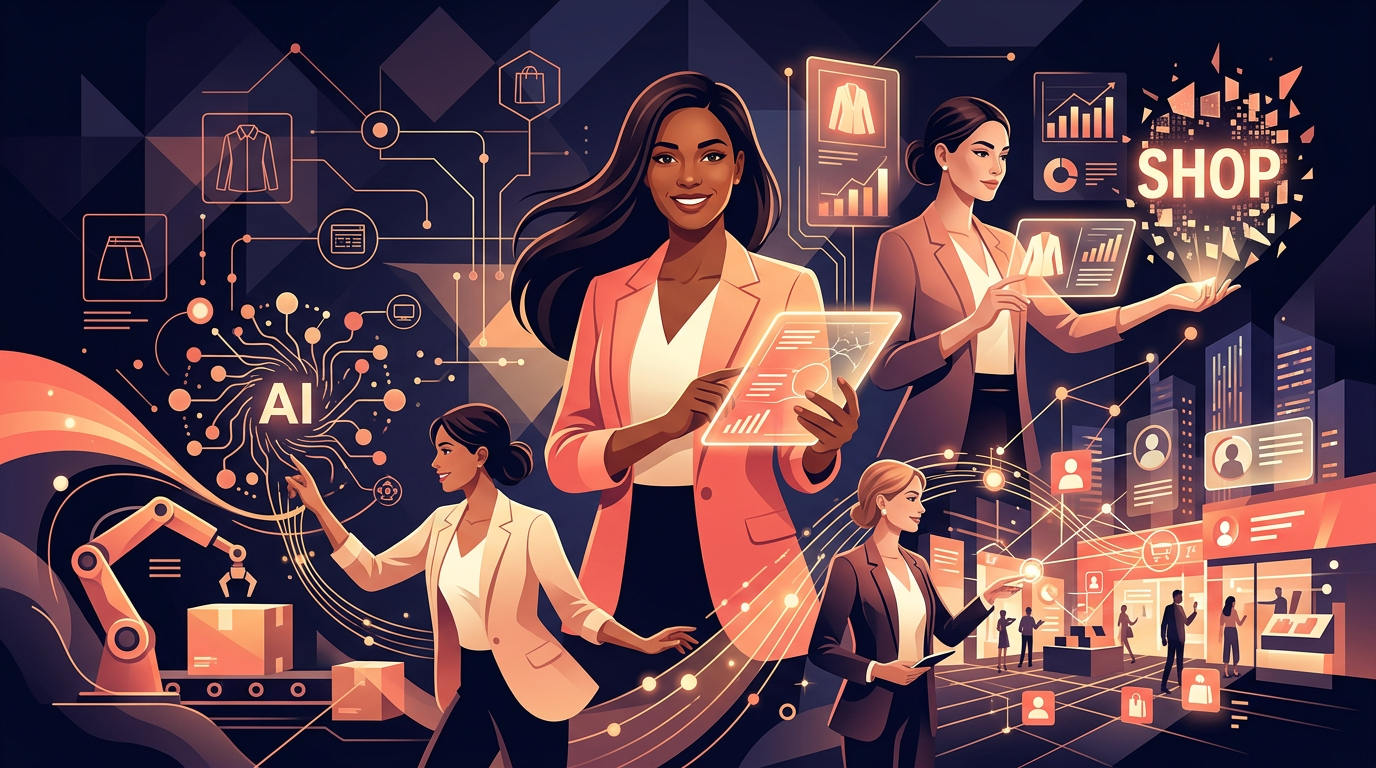
The Shift: Women Leading the Retail AI Revolution
The landscape of commerce is undergoing its most significant transformation since the invention of the internet. While technical breakthroughs often grab the headlines, the real story lies in who is building these systems and why. Today, we are witnessing a powerful wave of women leading the retail AI revolution, bringing a unique blend of empathy, aesthetic intuition, and deep technical expertise to the forefront of the industry. This movement is not just about writing better algorithms - it is about reimagining the entire relationship between brands and humans.
For years, retail technology focused on logistical efficiency and back-end optimization. However, as we enter the era of generative AI and intuitive interfaces, the focus has shifted toward the customer experience. This is where women in tech are making their most profound impact. By leveraging principles found in our glossary, such as vibe coding and semantic intent, these leaders are moving beyond rigid code to create shopable experiences that feel personal, fluid, and ethical.
Why Retail is the Perfect Sandbox for AI Innovation
Retail is inherently social and psychological. It requires an understanding of nuance, cultural trends, and emotional triggers. This complexity makes it the ideal environment for the modern AI builder. When women leading the retail AI revolution approach a problem, they aren't just looking at data points; they are looking at the 'vibe' of the interaction. This is the essence of vibecodher - the intersection of high-level technical skill and cultural intelligence.
In the traditional tech world, a developer might build a recommendation engine based purely on previous purchase history. In contrast, a female-led AI team might build a system that understands the context of a shopper's life. Maybe they are shopping for a promotion, a recovery period, or a first gallery opening. By focusing on the intent and the feeling behind the purchase, these innovators are creating tools that feel like a helpful stylist rather than a cold machine.
The Rise of the Vibe Coder in Commerce
Vibe coding is a term we use frequently to describe the movement away from manual syntax and toward high-level orchestration of AI agents. In retail, this means a founder can describe a brand's aesthetic and voice to an AI, which then builds the front-end, the inventory management, and the customer service bot to match that exact frequency.
Women are uniquely positioned to lead this shift because they have historically been the primary drivers of consumer spending and retail trends. By moving into the role of the architect through our workshops, women are finally building the tools they once only used as consumers. This shift from user to creator is the core of the retail AI revolution.
Ethical Innovation and Intentional Design
One of the most critical contributions from women leading the retail AI revolution is the focus on ethical AI and bias mitigation. Standard retail algorithms have often mirrored historical biases, leading to narrow definitions of beauty or exclusionary marketing practices. Female leaders are actively dismantling these patterns by building more inclusive datasets and transparent systems.
When we talk about the community of women in tech, we often discuss the 'why' behind the build. For many women in AI, the goal is to create more sustainable and less wasteful retail models. Imagine a retail environment where AI accurately predicts sizing across different brands, drastically reducing return rates and the carbon footprint associated with shipping. This is not a futuristic dream - it is a project currently being spearheaded by female engineers who prioritize planetary health alongside corporate profit.
Actionable Steps for Aspiring AI Leaders in Retail
If you want to join the ranks of women leading the retail AI revolution, you don't need a PhD in computer science. The bar for entry has been lowered by the very tools we are discussing. Here is how you can start contributing to this space today:
- Master Local AI Tools: Start by experimenting with LLMs (Large Language Models) to automate product descriptions or categorize inventory. Familiarize yourself with the 'vibe' of different models to see which fits your brand's voice.
- Focus on Personalization: Identify a friction point in the current shopping experience. Can AI solve it? Whether it is a better search function or a virtual try-on tool, start small and iterate.
- Join a Supportive Network: You cannot build in a vacuum. Surround yourself with others who are experimenting at the edges of what is possible. Sharing prompts, workflows, and failures is the fastest way to grow.
- Learn to Prompt with Nuance: Retail is about storytelling. Improve your ability to describe visual styles and emotional outcomes to AI generators. This is the core skill of the modern vibe coder.
Case Study: The Virtual Stylist Revolution
Consider the evolution of the virtual stylist. Early versions were essentially glorified filters. Today, female-led startups are using multimodal AI - systems that can see images and understand text - to provide genuine fashion advice. These systems can analyze a user's existing wardrobe through photos and suggest new pieces that complement what they already own. This creates a circular economy mindset that encourages intentional buying rather than mindless consumption. This focus on long-term value and customer empowerment is a hallmark of female leadership in the sector.
The Technical Backbone: Beyond the Surface
While the 'vibe' is essential, the technical execution must be flawless. Women leading the retail AI revolution are mastering the integration of various AI agents. For example, one agent might handle natural language processing to understand a customer's query, while another interacts with a real-time inventory API, and a third generates a personalized image of the product in the customer's home environment.
Orchestrating these moving parts requires a high level of systems thinking. It is about seeing the big picture and the minute details simultaneously. This dual perspective is often where female tech leaders excel. They are building 'Retail Intelligence' systems that go beyond simple automation to provide actual insights into brand health and customer loyalty.
Building for the Future of Commerce
The retail AI revolution is not just a trend; it is a fundamental shift in how we exchange value. As more women enter the space, we will see a move away from aggressive, attention-grabbing tactics toward more harmonious, integrated experiences. We are moving toward a world where technology feels invisible and the human connection feels front and center.
In our community, we see women every day who are pivoting from traditional retail roles into AI specialized positions. They are bringing their decades of 'boots on the ground' experience into the digital realm, ensuring that the next generation of AI tools is grounded in reality. This combination of domain expertise and AI literacy is the 'secret sauce' for success in the current market.
Practical Advice for Founders
If you are a founder looking to integrate AI into your retail business, start with the 'customer journey' map. Identify where the experience feels clunky or robotic. Use AI to smooth those edges. Don't build tech for the sake of tech - build it to enhance the human connection. Leverage the resources in our glossary to understand terms like RAG (Retrieval-Augmented Generation) which can help your AI answer customer questions using your specific brand data, making the interaction feel more authentic.
The Role of Community in the AI Journey
No one becomes a leader in a revolution alone. The women leading the retail AI revolution are deeply interconnected. They mentor each other, share resources, and collaborate on open-source projects. This collaborative spirit is what will ensure that the future of retail is diverse and innovative. By joining a community like vibecodher, you gain access to the collective intelligence of women who are already in the trenches, building the future one prompt at a time.
Summary of Key Takeaways
- Vibe Coding is Essential: Technical skills are the foundation, but the ability to direct AI with aesthetic and cultural intent is the differentiator.
- Ethics Matter: Female leaders are prioritizing inclusive and sustainable AI models in the retail space.
- Retail is Human: The best AI tools in commerce are those that enhance the human experience rather than replacing it.
- The Barrier is Low: With modern tools, anyone from a retail background can transition into an AI builder role by focusing on workflow orchestration.
Frequently Asked Questions
What is 'vibe coding' in the context of retail?
Vibe coding refers to using high-level AI tools and natural language to build applications and experiences. In retail, it means focusing on the overall brand feel, customer journey, and aesthetic resonance rather than manually writing every line of code. It allows creators to iterate quickly on the 'look and feel' of a shopping experience.
How can women with no coding experience enter the retail AI space?
The current AI wave favors those with domain expertise. If you understand retail, customer service, or merchandising, you already have the most important part of the puzzle. You can use 'no-code' or 'low-code' AI platforms to start building. Joining a community for workshops and peer support is the best way to bridge the technical gap.
Why are women uniquely positioned to lead this revolution?
Women drive the majority of consumer spending and have a deep understanding of the emotional and social drivers behind retail. This 'insider knowledge' is invaluable when training AI models to be more intuitive, helpful, and personalized for the end-user.
What are the biggest challenges for AI in retail right now?
The biggest challenges involve balancing personalization with privacy and ensuring that AI-driven recommendations do not create 'filter bubbles' that limit consumer choice. Women leaders are at the forefront of solving these issues through ethical data practices and transparent AI design. As we look toward the future, the influence of women in this sector will only continue to grow. We are moving past the era of 'growth at all costs' and into an era of 'growth with intent.' Whether you are a developer, a store owner, or a curious newcomer, there has never been a better time to get involved in the retail AI revolution. Join the free VibecodHER community
Where Women in Vibe Coding Build Together
Vibe coding for women is more than a category - it's a movement. VibecodHER is the first women-led vibe coding community in the world, founded to give women a space to learn, ship, and lead. Join the free community on Skool.