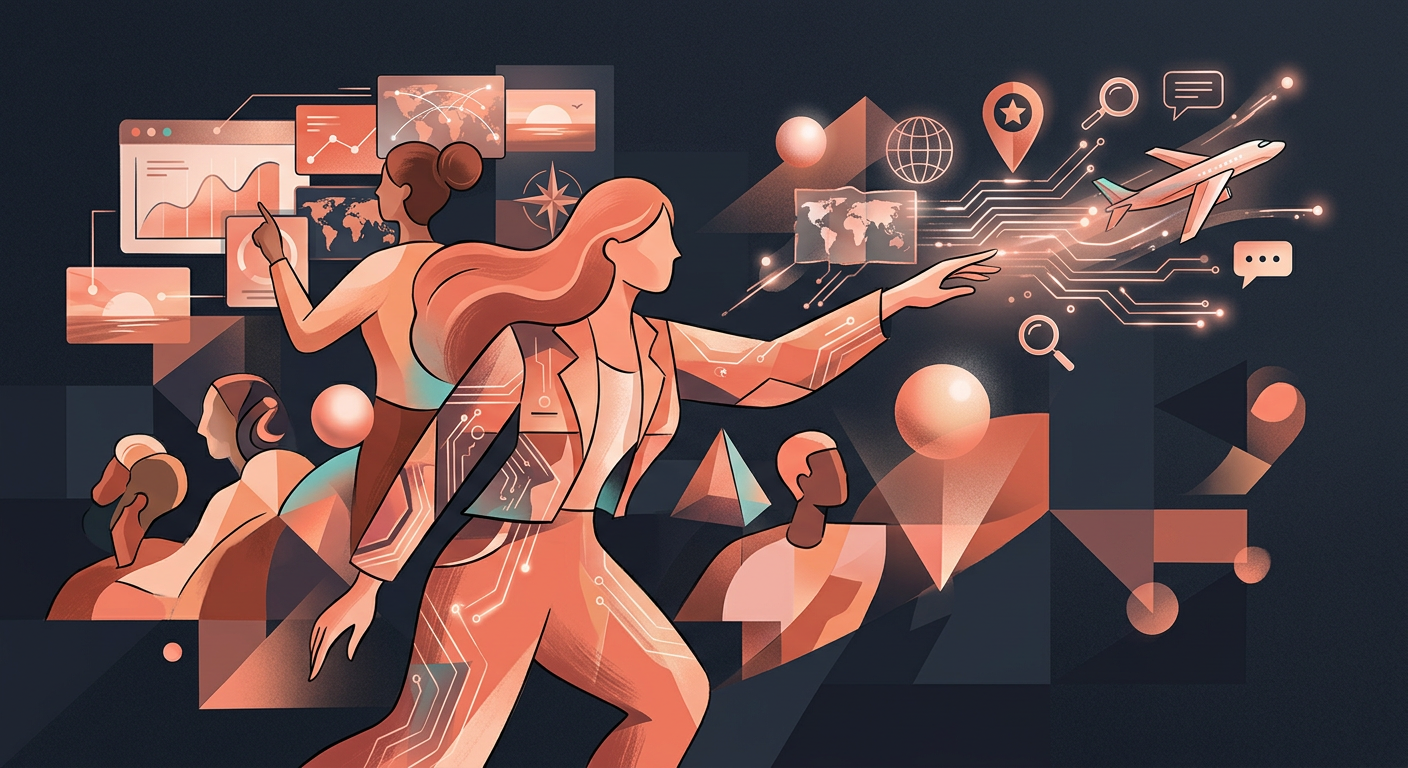
The Shift: Women Leading the Travel AI Revolution
The way we explore the world is undergoing a profound transformation. This shift is not just about faster booking engines or smarter algorithms; it is about a fundamental change in how technology connects with human desire. At the center of this movement are women leading the travel AI revolution. These innovators are moving beyond the traditional constraints of software development to embrace a more holistic approach to creation.
Historically, the tech side of travel was dominated by rigid systems. Today, the rise of generative AI and natural language processing has opened the door for a new generation of builders. These leaders are focusing on the vibe of the journey as much as the destination. By leveraging tools like Large Language Models (LLMs) and intuitive design, they are rewriting the rules of the industry.
From Traditional Coding to Vibe Coding
One of the most exciting aspects of this revolution is the transition from manual, line-by-line programming to what we call vibe coding. This concept refers to the ability to build sophisticated applications using natural language, focusing on the high-level intent and desired outcome rather than the syntax of a specific programming language. For many women entering the field, this has lowered the barrier to entry, allowing them to focus on creativity and user experience.
In the context of travel, vibe coding allows a founder to describe a complex itinerary builder that understands the nuances of a solo traveler's needs or the specific dietary requirements of a family. Instead of spending months on boilerplate code, these creators are using AI to prototype and deploy solutions in record time. This democratization of technology is a core pillar of our vibecodher initiative, where we encourage women to build without limits.
When we look at women leading the travel AI revolution, we see a focus on empathy-driven technology. It is not just about finding the cheapest flight; it is about finding the flight that matches your current energy or the hotel that feels like home. This shift toward high-context, high-vibe applications is a hallmark of female leadership in the space.
Transformative Applications of AI in Travel
The impact of AI on the travel sector is vast, ranging from hyper-personalization to sustainable tourism management. Women in this space are often at the forefront of these specific categories:
Hyper-Personalized Itineraries
Imagine a travel platform that learns your preferences through conversation. Instead of filters and checkboxes, you talk to an AI assistant that understands your love for brutalist architecture and gluten-free bakeries. Female founders are building these sophisticated agents that act as digital concierges, providing a level of service previously reserved for luxury travel agencies.
Language and Cultural Synthesis
Connecting across cultures is the heart of travel. Women leading the travel AI revolution are developing tools that go beyond simple translation. They are building systems that provide cultural context, etiquette advice, and regional slang interpretations, making travel more respectful and immersive. You can find more terms related to these developments in our glossary.
Sustainability and Logistics
AI excels at optimizing complex systems. Female leaders are using these capabilities to tackle the environmental impact of travel. By building predictive models that suggest low-carbon transport options or help manage over-tourism in sensitive areas, they are ensuring that the world remains explorable for future generations.
Building the Future: Actionable Steps for Aspiring Creators
If you are inspired by the women leading the travel AI revolution and want to start your own journey, the path is more accessible than ever. You do not need a computer science degree to start building. Here are practical steps to get involved:
- Master the Art of Prompting: Your ability to communicate with AI is your most valuable skill. Learn how to describe your vision with precision and detail.
- Explore No-Code and Low-Code Tools: Platforms that allow you to integrate API calls with visual interfaces are perfect for building travel apps quickly.
- Focus on a Niche: Don't try to build the next Expedia. Instead, build an AI tool specifically for eco-conscious hikers or female digital nomads.
- Network with Peer Builders: Community is the secret sauce of the tech world. Joining a community of like-minded women can provide the support and technical advice needed to overcome hurdles.
For those who want a structured path, participating in specialized workshops can accelerate your learning curve. These sessions often cover the practical side of AI building, from setting up your development environment to deploying your first AI-powered travel bot.
Overcoming the Technical Hurdle with Vibe Coding
Many women hesitate to lead in tech because of the perceived complexity of traditional coding. However, the travel AI revolution is proving that the ability to articulate a vision is becoming more important than the ability to write a Java script. Vibe coding allows the creator to act as a director, making the AI the lead actor that handles the heavy lifting of the code.
This shift is empowering women who come from backgrounds in tourism, hospitality, or journalism to enter the tech sector. They bring a wealth of domain expertise that a pure software engineer might lack. When you combine deep industry knowledge with AI building tools, you create products that actually solve real problems for travelers.
The Role of AI in Empowering Solo Female Travelers
Safety and community are two of the biggest concerns for solo female travelers. Women leading the travel AI revolution are specifically addressing these areas. We are seeing the emergence of AI-powered safety apps that provide real-time updates on neighborhood safety ratings, vetted accommodation listings, and local emergency contacts.
Furthermore, AI is being used to foster community. By matching solo travelers with similar interests and safety standards, AI creators are making the world feel a little smaller and a lot safer. These tools are often built with a deep understanding of the unique challenges women face when navigating new cities, ensuring that the technology is both practical and protective.
Future Trends: What is Next for Travel AI?
As we look ahead, several trends will define the next phase of the travel AI revolution:
- Voice-First Interactions: The next generation of travel apps will likely be entirely voice-controlled, allowing hands-free navigation and booking while on the move.
- Multimodal AI: Future bots will be able to see through your camera to identify landmarks in real-time or translate menus instantly just by looking at them.
- Predictive Travel: AI will move from reactive to proactive, suggesting trips based on your stress levels, calendar availability, and budget trends without you even asking.
By staying informed and remaining active in the creator space, women can ensure they remain the architects of these developments. The goal is to create technology that enhances the human experience, rather than replacing it.
Actionable Takeaways for Women in AI
- Start small: Build a basic GPT or a simple automation that helps you plan your own trips first.
- Document your journey: Share what you learn with others to build your authority and personal brand in the travel tech space.
- Use AI for everything: The best way to understand AI building is to integrate it into your daily workflow, from email drafting to travel planning.
- Stay curious: The AI landscape changes weekly. Dedicate time each week to reading up on new models and tools.
FAQ: Women Leading the Travel AI Revolution
Do I need to know how to code to build a travel AI app?
No, you do not need traditional coding skills to get started. While a basic understanding of logic is helpful, vibe coding and low-code platforms allow you to build sophisticated AI applications using natural language. Many successful travel AI tools are now created by domain experts rather than software engineers.
How is AI changing the role of travel agents?
AI is not replacing travel agents but rather augmenting their capabilities. Travel agents who embrace AI can offer much higher levels of personalization and efficiency. Women in the travel industry are using AI to handle repetitive tasks, allowing them to focus on high-touch consulting and complex itinerary planning.
What are some ethical considerations for AI in travel?
Data privacy and cultural sensitivity are paramount. When building travel AI, it is important to ensure that user data is protected and that the AI does not perpetuate cultural stereotypes. Women leaders in this space are often champions of ethical AI, focusing on creating systems that are inclusive and respectful of local cultures.
Where can I find a community of women building AI tools?
You can connect with other creators who are passionate about AI and vibe coding through various online platforms. Our focus is on providing a supportive environment for women to learn and build together. Join the free VibecodHER community to get started and meet other women leading the travel AI revolution today.
Your Next Step in Vibe Coding for Women
Ready to ship your first AI-built product? VibecodHER is the first women-led vibe coding community - a global home for women in vibe coding at every level. Join the free community and start today.